How AI Prior Authorization Improves Approval Workflows?
Table Of Content
Published Date :
20 Aug 2026
Key Takeaways
- The use of AI in prior authorization processes reduces tasks that are both mundane and repetitive by managing clinical data extraction, documentation checks, and request tracking.
- The prior authorization automation processes do not equate to the removal of the need for clinical judgment. Day-to-day tasks will be automated, but complex cases will be transferred to a qualified specialist for review.
- Prior authorization solutions speed up the process of prior authorization by informing the healthcare organizations of the pending requirement in advance and making sure everything is done correctly.
- AI prior authorization significantly improves the administrative efficiency and help reduce authorization-related scheduling delays.
- How much time does your organization spend on requesting updates from payers, correcting incomplete requests after submission, and transferring documents via disconnected systems?
For many healthcare businesses, requesting a prior authorization is still a slow, manual process. Staff members spend a lot of time resubmitting the same information, obtaining clinical documents, determining what the payer requires, and monitoring the status of request submissions.
When aligned with the organization’s workflows, payer requirements, and existing systems, AI-enabled prior authorization workflow can reduce repetitive administrative work and improve request completeness and visibility. It enables organizations to extract relevant information from clinical documents, verify that all requirements are met, identify any omissions, and track the process.
Understanding the Role of AI in Prior Authorization
AI assists in prior authorization by enabling the healthcare team to manage requests effectively and efficiently. AI-enabled software can identify relevant information, check requests for missing requirements, and route complex or time-sensitive cases for human review, subject to appropriate clinical and operational controls.
Prior authorization automation does not take away clinical judgment or administrator expertise. Instead, the AI-enabled workflow minimizes back-office work and delivers relevant information, enabling teams to focus on more complex issues.
Where Is Your Prior Authorization Process Losing Time?
Assess manual steps, fragmented systems, payer dependencies, and documentation gaps to identify where automation can create measurable operational improvements.
Operational Challenges in Prior Authorization Workflows
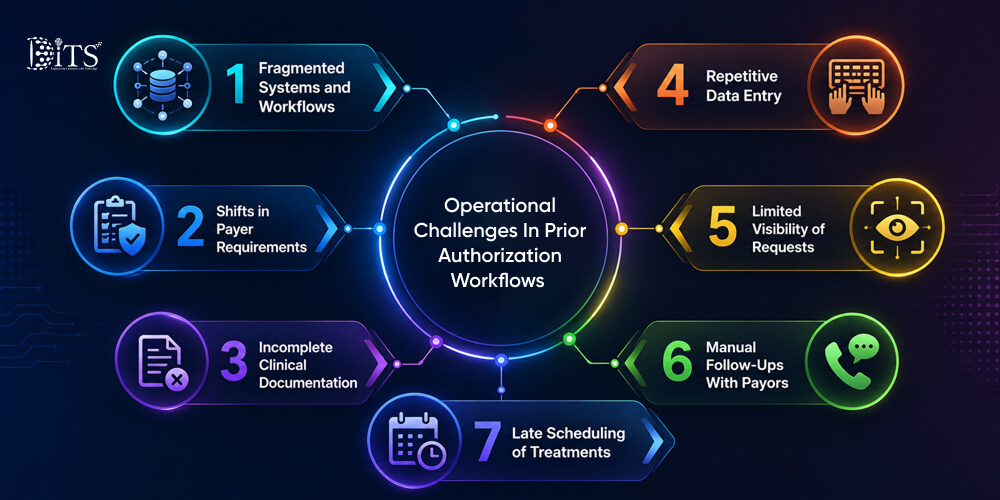
Heavy reliance on manual processes and fragmented data across EHRs and payer portals increases administrative workload and contributes to staff burnout. Common operational challenges include:
Fragmented Systems and Workflows
- Data about patients, their clinical information, insurance, and authorization are often kept in different systems.
- Clinicians have to use EHRs, portals of health insurers, spreadsheets, emails, and document management systems.
- Such fragmented systems cause duplication and difficulty maintaining consistent data.
Shifts in Payer Requirements
- Authorization policies differ among payers, plans, processes, and specialties.
- Documentation and medical necessity requirements may change over time.
- It is necessary to check various payer websites and policies by hand.
- Older policies may result in an incomplete or incorrectly filled out request.
Incomplete Clinical Documentation
- Requests may lack the physician's notes, diagnostic results, referrals, or clinical records.
- Information about medical necessity may be incomplete or not detailed enough.
- Absence of documentation usually leads to more requests for further information.
- Reworking may cause delays in authorization process and scheduling.
Repetitive Data Entry
- The same information about patients, procedures, and insurance is repeatedly entered.
- Form filling takes a lot of time, which could have been spent on something else.
- There is a possibility of making a mistake while reentering the information.
- Admin teams could face difficulties managing increasing numbers of requests.
Limited Visibility of Requests
- There might be no consolidated visibility of pending, approved, rejected, or incomplete requests.
- Critical steps might be overlooked if tracking is done manually.
- The manager may find it difficult to locate any bottleneck or old requests.
- Limited visibility makes the process of scheduling and prioritizing difficult.
Manual Follow-Ups With Payors
- There might be significant manual effort involved in accessing payor portals, calling, and emailing.
- There may be manual efforts in tracking status updates in the form of spreadsheets or internal tracking systems.
- Follow-Ups would increase administrative effort without adding much clinical value.
Late Scheduling of Treatments
- Prior Authorization may become apparent only after treatments have been scheduled.
- The absence of prior authorizations can result in appointment cancellation or rescheduling.
- This can cause delays and confusion for patients.
- It will also create scheduling problems for providers as well as underutilized capacity in the clinic.
A structured workflow analysis is an effective way of determining pain points that can be solved through prior authorization automation, integration, and modernization among others. DITS help to assess your current prior authorization workflow, identify where automation or integration could create value, and determine what should be built, bought, integrated, simplified, or validated first.
How AI Enhances Prior Authorization Approval Processes
Artificial intelligence enhances prior authorization by decreasing the amount of manual labor in the approval process. Moreover AI in healthcare enables healthcare teams to handle requests more effectively and accurately while still requiring human supervision.
Identifies Authorization Requirements Early
- Evaluates patient details, procedure codes, insurance types, and payer guidelines.
- Establishes if prior authorization is warranted before a procedure is booked.
- Facilitates teams in launching the approval process sooner.
- Minimizes postponements in scheduling caused by unforeseen authorization problems.
Extracts Relevant Clinical Information
- Pulls appropriate information from doctors' notes, referrals, diagnostic reports, and health records.
- Eliminates the need for looking through many papers manually.
- Reduces duplication of data entry for administration departments.
- Ensures proper clinical information is added to the request.
Checks Requests Against Payer Requirements
- Compares request information with payer-specific coverage criteria and documentation requirements.
- Checks whether the required clinical and administrative information is present and consistently entered before submission.
- Aids teams cope with discrepancies across payers, plans, operations, and services.
- Enhances the completeness and consistency of authorization requests.
Identifies Incomplete Information Prior to Submission
- Reads through notes on patient cases to find missing pieces of information.
- Shows any wrong diagnosis codes or inconsistencies in patients’ data.
- Lets teams know before the application is submitted.
- Helps avoid unnecessary delays and denials of claims due to incorrect information provided.
Streamlines Submission and Status Monitoring
- Fills in patient authorization requests based on existing and recorded data.
- Makes sure that documents required for submission are gathered.
- Where supported by payer connectivity and organizational controls, submits authorization requests through the appropriate channel.
- Provides updates of application approval process.
- Informs the medical staff when it is necessary to request additional pieces of information.
Routes Complex or Exceptional Cases for Human Review
- Recognizes urgent, rejected, incomplete, or clinically complicated requests.
- Routes the case to the right clinical or administrative team member.
- Assists teams in prioritizing time-sensitive requests.
- Enables qualified staff to apply clinical and administrative judgment to exceptions and case-specific decisions.
Could AI Improve Your Authorization Approval Workflow?
Evaluate where AI can reduce repetitive work, improve request completeness, strengthen tracking, and support faster authorization processing across teams.
Canadian Privacy Laws Relevant to Prior Authorization Software
The privacy requirements that apply depend on the organization, province, data flows, and service model. The following overview is not legal advice; organizations should obtain legal and privacy guidance for their circumstances.
| Compliance | Relevance |
| PIPEDA | A federal privacy law governing how covered private-sector businesses collect, use, disclose, and safeguard personal information during commercial activities. |
| PHIPA | Protects personal health information handled by healthcare organizations and professionals, including how patient information is collected, used, shared, stored, and protected |
| HIA | Protects health information and regulates how healthcare custodians collect, use, disclose, access, and safeguard patient information. |
| PIPA | Regulates how covered private-sector organizations handle customers’ and employees’ personal information, including collection, use, disclosure, protection, and certain breach obligations |
| Quebec private sector privacy law/Law 25 | Governs privacy management, consent management, privacy risk management, breach management, and personal information protection. |
| PHIA | Governs the management of personal health information about its collection, use, disclosure, protection, retention, and destruction. |
| HIPA | Provides the protection of personal health information and the privacy and access responsibilities of healthcare trustees. |
Get in touch with a reliable AI software development company which will help you become fully compliant with healthcare regulations from day one.
Why Are Healthcare Organizations Adopting AI Prior Authorization?
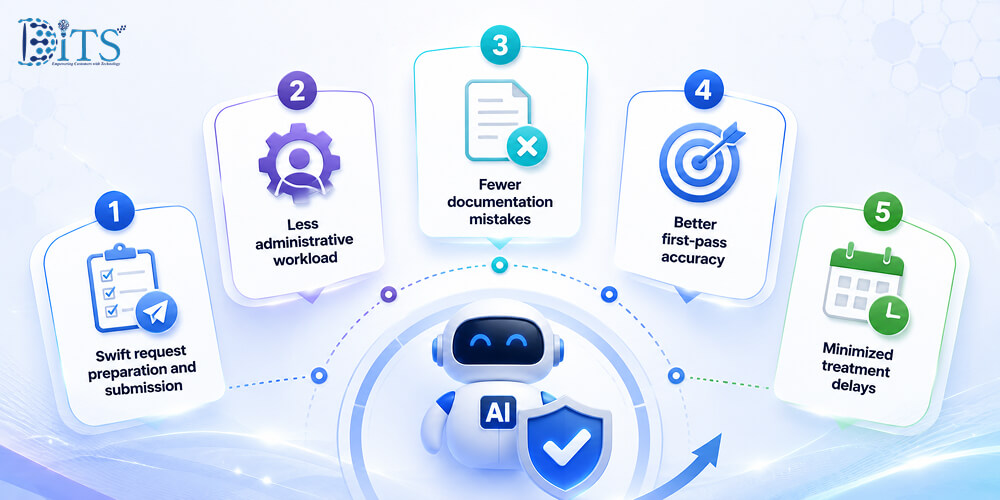
Healthcare organizations use AI-enabled prior authorization to improve operational efficiency and reduce authorization-related delays that affect the patient experience. Automating repetitive tasks can accelerate authorization request preparation, submission, and follow-up.
- Swift request preparation and submission: Helps obtain patient-relevant information, fill in the standard information required in the documents, and collect all supporting documents for the application.
- Less administrative workload: Automates repetitive tasks like data entry, document review, status checks, allowing staff to focus on issues with exceptions or complex cases.
- Fewer documentation mistakes: AI can identify documents missing from the application or catch inappropriate codes or errors in the patient’s data in time.
- Better first-pass accuracy: The AI checks the documents against payer requirements, ensuring they are correct and ready for processing.
- Minimized treatment delays: timely follow-ups and earlier requirement check mitigate the authorization issues thereby fastening the treatment process.
What to Evaluate Before Investing into AI-powered Prior Authorization Workflow
There are several features to consider that can help streamline and automate the process.
| Features | Consulting Consideration |
| Clinical Data Extraction | Identify the type of clinical documents that have the necessary data and if the data is structured, unstructured, or distributed. |
| Payer Rules Management | Establish the rate at which the payer rules change and the ability to create payers' plan-specific rules, procedure-specific rules, and specialty-specific rules. |
| Documentation Validation | Ascertain what are the most frequent causes for incomplete submissions and validate against those recurrent problems. |
| Form Automation | Determine which forms have fields that can be populated accurately and where staff intervention is essential. |
| Electronic Authorization | Evaluate payer connectivity, portal dependence, clearinghouse capability, and APIs integration capability. |
| Denial and Appeal Management | Learn about denials and analyze whether the system has a way of supporting documentation collection, re-submission, escalation, and appeals management. |
| EHR Integration | Evaluate how prior authorization capabilities and AI in EHR workflows can securely exchange patient, clinical, scheduling, and authorization data without creating additional data silos. |
| Analytics and Audits | Learn what measures are needed to analyze operations and compliance (TAT, approval performance, activity of the staff, workflows). |
Why Choose Ditstek for Prior Authorization Modernization?
As a top consulting firm, we help businesses in understanding their workflows and detect manual dependencies, delays that cause operational friction.
This gives us insight into where we need to implement automation, which processes should be handled manually, and whether there is a need for workflow modernization, system integration, medical billing software or a staged approach to modernization.
We develop a roadmap encompassing aspects such as solution architecture, artificial intelligence applications, payor rules management, integration with electronic health and medical records, data security, and more.
As a leading healthcare app development company; we have the expertise and potential to address complex business challenges and accelerate growth effectively.
FAQs
How can AI help optimize prior authorization workflows?
Artificial intelligence extracts relevant clinical data, validate authorization requests according to payer rules, highlight the missing data, and route requests. This way, it minimizes repetitive activities and allows teams to prepare more complete prior authorization requests.
What is prior authorization automation?
Prior authorization automation is the process of using software to automate steps like data gathering, form filling, documentation check, electronic request sending, tracking of its status, and follow-ups.
Can AI help decrease prior authorization delays?
Yes, it is possible. AI will be able to detect requirements for authorization faster, discover incomplete documentation before submitting the request, and alert the team when it is time to perform follow-up actions.
Which features should prior authorization software have?
A prior authorization solution should include features such as clinical data extraction, payer rule management, documentation validation, forms automation, electronic request sending, tracking of their status, analytics, integration capabilities, and audit trails.
Can prior authorization software interface with EHR and EMR systems?
Yes. It can interface with EHR and EMR systems to facilitate the flow of information on patients, clinical details, schedules, and authorizations, thereby eliminating duplication and disconnects.
When should an organization consider custom prior authorization software?
Custom prior authorization software is needed when standard prior authorization software fails to meet specific requirements. These include complex workflows, unique payer rules, specialty-specific requirements, and specialized integrations.

Nidhi Thakur
With more than 19 years of experience - I represent a team of professionals that specializes in the healthcare and business and workflow automation domains. The team consists of experienced full-stack developers supported by senior system analysts who have developed multiple bespoke applications for Healthcare, Business Automation, Retail, IOT, Ed-tech domains for startups and Enterprise Level clients.
Recent Posts

Discover how AI to improve patient experience in hospitals streamlines scheduling, communication, triage, queue management, and personalized care while enhancing operational efficiency.

Learn how IoT powers smart factories with connected devices, automation, predictive maintenance, and analytics.
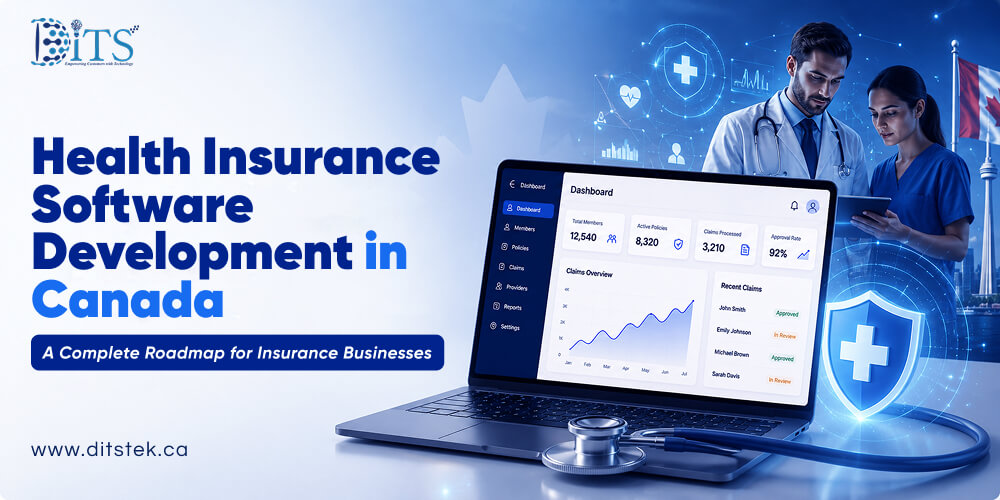
Explore health insurance software development in Canada, covering claims automation, policy management, AI, compliance, integrations, costs, and scalable platform development for insurers and insurance businesses.