How AI Improves Patient Experience in Hospitals?
Table Of Content
Published Date :
04 Aug 2026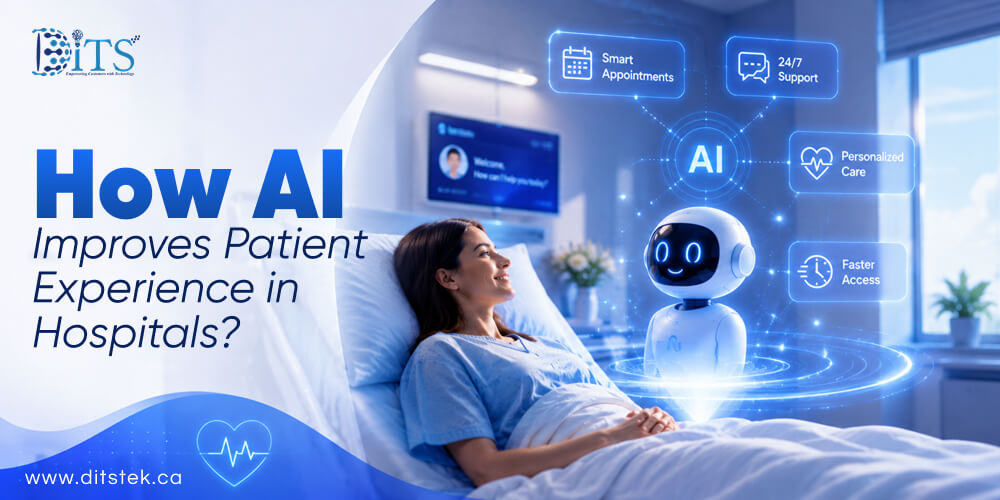
Key Takeaways
- Artificial intelligence in healthcare allows hospitals to enhance patients’ experiences as it enables clinics to avoid delays and schedule seamless appointments.
- For successful implementation of AI in healthcare, it is important to select the appropriate technology, create a sophisticated data processing system, and compliance with medical confidentiality regulations.
- Effective queue management provides an opportunity for hospitals to predict peak hours, find out where there may be bottlenecks, and organize human and other resources accordingly.
- Integration of AI with EHRs, laboratories, pharmacies, scheduling system, and patient portal makes the process of care coordination better and helps to eliminate information gaps.
What’s preventing Canadian hospitals from creating a seamless experience for their patients?
Long waits, staffing shortages, and a lack of communication can hinder the patient experience at any point along the line, from scheduling an appointment through check-in and all the way to discharge and follow-ups.
AI works tremendously when it comes to mitigating such problems without putting too much pressure on the staff in the healthcare industry. Everything from automating communication, optimizing schedules, waiting time prediction, and patient interactions is optimized, thereby allowing healthcare professionals to focus on direct patient care.
What are the Obstacles that Hospitals Face with Patients' Experience?
Apart from medical assistance, a good patient experience entails quick access to necessary services, clear information, and convenience throughout the process. However, many hospitals face difficulties due to operational strain. Below we have mentioned the challenges faced in hospitals and healthcare industry.
Long Wait Times
As an emergency department patient, the entire admission and discharge process takes a massive amount of time. This leads to a massive amount of dissatisfaction and anxiety among the patients in the entire journey.
Complex Appointment Booking
Appointment booking via telephone, lack of staff, manual rescheduling, and disconnectedness of the processes might cause much trouble for the patients who have to arrange their appointments.
Communication Gaps
Patients often need timely updates about appointments, test preparation, and possible delays. Lack of reliable communication creates confusion and even leads to missed stages of treatment.
Lack of Personalization
There are cases when standard communication does not take into account individual needs, linguistic or accessibility requirements, or even the patient's medical history.
Load on Hospital Staff
Hospital staff have to spend loads of time on scheduling, documentation, follow-ups, and data entry, eventually reducing the time spent on direct patient care.
Looking To Improve Patient Experience With AI?
Enhance every patient interaction through intelligent automation, faster service delivery, and personalized healthcare experiences across your hospital.
How does AI Improve Patient Experience in Hospitals?
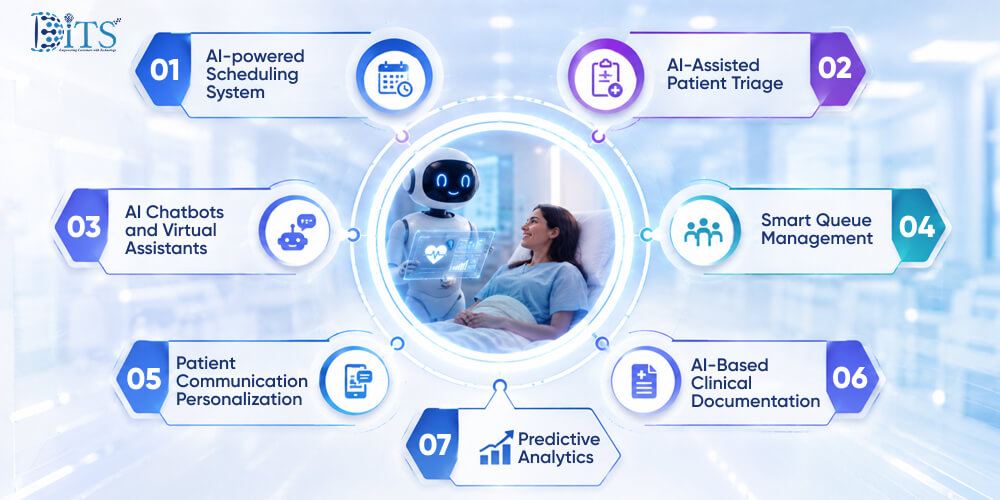
With AI the processes become smoother, highly manageable, and much simpler. Both the clinical and management teams experience seamless communication, minimized redundant tasks, and amplified communication without delays.
AI-powered Scheduling System
The AI-driven scheduling system provides an easy way for patients to make and organize their appointments without relying only on phone-based assistance. Additionally, it will assist hospitals in optimizing the available appointment slots.
- Appointment cancellation and rescheduling
- Proper time slot allocation
- Management of waiting list
- No-show prediction
AI-Assisted Patient Triage
Gathers symptoms and preliminary information about the patient prior to or upon admission. It also helps establish urgency, prioritize, and route the patient to the right department.
- Symptom data collection
- Urgency determination
- Risk assessment
- Case prioritization
- Faster department routing
AI Chatbots and Virtual Assistants
AI chatbots and virtual assistants answer regular queries from patients as well as assist in the entire hospital experience. They also help decrease calls and provide quick information to patients.
- Round the clock Patient assistance
- Appointments details
- Pre-visit information
- Hospital navigation
- Post-visit assistance
Smart Queue Management
AI systems are used to analyze patient flow, department capacity, staffing and manpower, and past demand to forecast the hospital's busiest times.
- Predicting patient volume
- Real-time queue management
- Detection of department bottlenecks
- Dynamic resource scheduling
- Prediction of wait times
Patient Communication Personalization
AI in healthcare helps hospitals personalize messages depending on the patient's preferences
- Bilingual communication
- Medication reminders
- Instruction messages
- Follow-up messages
- Channel preference communication
AI-Based Clinical Documentation
AI medical scribes turn the conversations between doctors and patients into structured records and summaries. Thus, less manual documentation is needed, and the healthcare workers have more time for their patients.
- Clinical note generation
- Consultation summaries
- Structured documentation
- Less manual data input
- Quick record filling
- Increased patient interaction
Predictive Analytics
Help hospitals pinpoint which patients may face higher risks of readmission, skipping appointments, or other health issues. Predictions enable care teams to intervene early and focus on providing follow-ups to these patients.
- Patient readmission risk prediction
- Identification of high-risk patients
- Missed appointment prediction
- Alerts for early intervention
- Follow-up planning for patients
Here we have illustrated everything in a tabular form:
| Point of Contact | Typical Barrier | AI Solution | Outcome |
| Appointment booking | Long waiting time on call | Virtual assistant | Quicker appointments |
| Arrival at hospital | Delays in registration | E-check-in system | Less waiting time |
| Hospital arrival | Lack of visibility | Queue management algorithm | Increased transparency |
| Consultation | Burden of documentation | AI medical scribe | Improved patient-doctor communication |
| Discharge | Difficulty with information | Personalized communication | Increased comprehension |
| Follow-up | Communication gaps | Automatic patient engagement | Increased continuity |
Advantages of Using AI for Enhancing Patients' Hospital Experiences
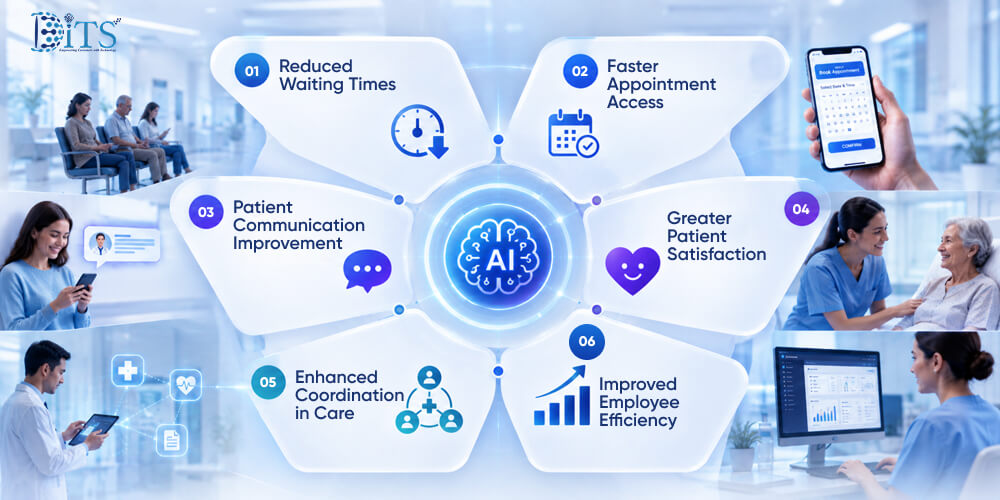
AI in healthcare enhances both patient services and hospital processes. AI, when used in the correct workflow, allows hospitals to decrease delays, facilitate communication, help employees, and ensure consistency.
Reduced Waiting Times
AI helps healthcare providers determine patient demand, identify downtime, and optimize the performance of queuing systems. Consequently, the staff can take preventive actions and reduce delays during patient registration, medical examination, diagnosis, and discharge procedures.
- Decreased patient queues
- Rapid departmental routing
- Accurate demand forecasting
- Proper allocation of resources
Faster Appointment Access
AI-based appointment management software handles automatic booking, rebooking, notifications, and waiting list services. It makes sure that patients get access to appointments quickly, and at the same time helps hospitals utilize their appointment capacity effectively.
- Fast booking process
- Less reliance on phone bookings
- Effective use of appointment slots
- Fewer canceled appointments
Patient Communication Improvement
Artificial intelligence in healthcare provide updates, reminders, instructions, and responses through preferred methods of communication that help patients stay up-to-date and eliminate any confusion along the way.
- Appointment updates in real-time
- Reminders
- Improved care instructions
- Fast response to routine inquiries
Greater Patient Satisfaction
Quick access, effective communication, and individual assistance have made things much easier for patients in the hospital environment. Patients feel more reassured, informed, and supported.
- More convenient access
- Higher level of service transparency
- Less frustration on the part of patients
- Greater trust in the process
Enhanced Coordination in Care
AI enables one to obtain data from EMR, scheduling systems, laboratories, pharmacies, and portals. Increased access to data enables a team to organize its efforts and minimize discrepancies.
- Information is shared easily
- Quick clinical transfer
- Less communication breakdown
- Better continuity
Improved Employee Efficiency
Using artificial intelligence to automate work that involves repeated tasks such as scheduling, documentation and routine communication makes the administrative workload lighter. Thus hospital employees can devote more time to direct patient support and more important tasks.
- Less manual data input
- Less documentation time
- Less workload at a call center
- More time for patient care
How to Successfully Implement AI in Hospitals
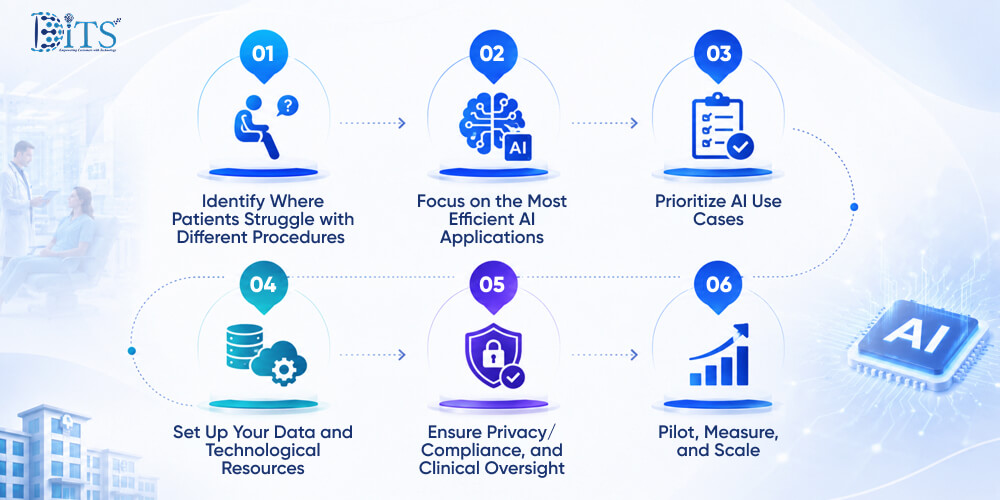
Implementing AI in healthcare is more than just about selecting the right technology. Hospitals need first to define the operational issues, check the status of their data, and incorporate artificial intelligence into their clinical processes if they want to obtain tangible changes regarding patient care.
Identify Where Patients Struggle with Different Procedures
The first step is to come up with different procedures where patients face challenges such as appointment booking, delays in waiting times for emergencies, communication, and discharge.
Focus on the Most Efficient AI Applications
The best way to start is to implement useful AI applications such as appointment booking, patient signaling, virtual assistance, queue management, and clinical documentation.
Prioritize AI Use Cases
Initiate with cases that are guaranteed to provide you with value; for example, appointment booking, dealing with patients, virtual assistants, and so on.
Set Up Your Data and Technological Resources
Make sure the data related to health is right, the infrastructure is safe, and the system is connected with the electronic health record and other respective systems.
Ensure Privacy/Compliance, and Clinical Oversight
Establish AI systems in accordance with Canadian laws about privacy, human supervision and maintaining confidentiality of patient data.
Pilot, Measure, and Scale
Implement AI in one department or workflow, compare results with KPIs like wait time and satisfaction in order to extend the implementation based on successful results.
Hire a successful AI healthcare software development firm that will provide you one stop solution for your business. Talk to our experts now!
Looking For A Trusted Healthcare AI Partner?
Partner with experienced healthcare software experts to build AI-powered solutions designed around your hospital's unique operational needs.
Ditstek's Role in Helping Hospitals Implement AI Solutions
Ditstek helps hospitals that intend to apply AI technology efficiently, safely, and on a broad basis. Our specialists first analyze patient flows, operational weaknesses, and data readiness, as well as systems that are already in use, to find out the areas where AI would pay off the most. As a leading AI software development company, we will help you guide through the entire journey be it from consulting to development and integration.
The services we provide include:
- Custom software development
- Generative AI development
- AI chatbot development
- Predictive analytics solutions
- EHR integration
- Development of APIs based on FHIR
- Legacy system modernization
- Continuous monitoring and assistance
We assist hospitals in optimizing patient experience, streamlining processes, and improving overall performance without disrupting the functioning of existing services.
FAQs
What is meant by patient experience in hospitals?
Patient experience encompasses a wide variety of topics, including how well people are communicated to, interacted with, coordinated, and all aspects and availability of services.
How would AI contribute positively to patients' experiences in hospitals?
AI helps to minimize delays in processes, assists in appointment arrangements, and makes communications and personalization of care more effective.
How is AI used in hospitals?
AI technology optimizes patient care while streamlining operations, automates admin documentation, accelerating medical imaging analysis, clinical documentation, diagnostic & imaging etc.
Can the use of AI technology help hospitals to minimize waiting times?
Yes. AI helps predict patient demand, detect workflow issues, and prioritize urgent cases, saving patients time.
How expensive is deploying AI in medical hospitals?
It depends upon several factors such as the implementation of AI, customization level, data preparation, need for integration, security, and cost for future support. Small systems like the chatbot may need a lower level of investment compared to a full AI implementation across the hospital.
How long does hospital AI implementation take?
Limited pilot implementations take a couple of months, while big implementations that include electronic health records (EHRs), data migration, privacy data reviews, validation, takes several months.

Nidhi Thakur
With more than 19 years of experience - I represent a team of professionals that specializes in the healthcare and business and workflow automation domains. The team consists of experienced full-stack developers supported by senior system analysts who have developed multiple bespoke applications for Healthcare, Business Automation, Retail, IOT, Ed-tech domains for startups and Enterprise Level clients.
Recent Posts
Explore how prior authorization software uses AI to automate workflows, reduce administrative effort, improve request accuracy, streamline approvals, and minimize treatment delays for healthcare organizations.

Learn how IoT powers smart factories with connected devices, automation, predictive maintenance, and analytics.
Explore health insurance software development in Canada, covering claims automation, policy management, AI, compliance, integrations, costs, and scalable platform development for insurers and insurance businesses.