How Outsourced Software Product Development Services Help Businesses Cut Costs
Table Of Content
Published Date :
01 Jun 2026
Key Takeaways
- Outsourced software product development services help businesses reduce development costs by eliminating recruitment expenses, lowering labor costs, and minimizing infrastructure overhead while maintaining product quality.
- Outsourcing provides immediate access to experienced development teams, allowing companies to accelerate product delivery and avoid lengthy hiring, onboarding, and training cycles.
- Flexible engagement models enable businesses to scale resources based on project needs, helping control costs and improve operational efficiency without long-term staffing commitments.
- Hidden savings come from reduced project rework, lower maintenance costs, better resource utilization, and decreased risk of project delays or delivery failures.
- Canadian startups, SMEs, and enterprises use outsourced development to launch products faster, modernize legacy systems, and access specialized technical expertise without expanding internal teams.
- Choosing the right outsourcing partner with strong processes, scalable delivery models, and AI-driven development practices helps businesses achieve long-term cost optimization and sustainable product growth.
Due to high competivie market in Canada, businesses can feel the pressure to innovate faster while keeping costs under control. Software development, once seen as a necessary investment, has become one of the most expensive areas of running a company.
Talented developers command premium salaries, benefits, infrastructure, tools, and management overhead can push annual costs into the millions.
Most companies are choosing a smarter approach: outsourced software product development services. According to a research by Statista, the software development outsourcing is growing at a CAGR of 6.20% and expected to reach $806.55bn by 2030.
When executed strategically, outsourcing can reduce fixed costs, and convert capital expenditure into operational efficiency. Organizations that partner with the right development teams are achieving 40–70% cost savings while often delivering higher quality and faster time-to-market than their fully in-house counterparts.
This blog explores the real mechanics behind these savings. We’ll break down where the biggest cost leaks occur in in-house development, how professional outsourced product development services eliminate them, and what separates high-ROI outsourcing partnerships from the ones that fail.
What are Outsourced Software Product Development Services?
At its core, this model means handing over part or the entire product development lifecycle to an external team that already has the skills, tools, and processes in place. Instead of building everything internally, businesses collaborate with a software development outsourcing company that can design, build, test, and even maintain the product.
It usually covers more than just coding. A typical engagement includes:
- Product planning and UI/UX design
- Development and integration
- Quality assurance and testing
- Deployment and ongoing support
Now, this often gets confused with other models, so it’s worth clearing that up.
- Software development outsourcing focuses on delivering complete solutions, not just filling resource gaps.
- Staff augmentation brings in temporary developers who still work under your internal management.
- Freelancers are usually hired for short-term, task-based work with limited accountability.
The difference shows up quickly when projects scale. With outsourcing software development services, you’re not managing individuals. You’re working with a structured team that owns delivery outcomes.
Why Canadian Companies are Turning to Outsourcing
Walk into any mid-sized tech firm in Toronto or Vancouver, and you’ll hear the same concern in different words. Hiring is slow. Good developers are harder to retain and costs keep climbing, quarter after quarter.
That’s pushing businesses to rethink how they build software.
One of the biggest triggers is salary pressure. Senior developers in Canada often command premium pay, and that’s before factoring in benefits, bonuses, and long-term retention costs. For many companies, especially growing ones, that model simply doesn’t scale well.
Then comes the skills gap. Let’s say a business needs expertise in AI integration or cloud-native architecture for a new product. Finding that niche talent locally can take months. Meanwhile, competitors move ahead. This is where software outsourcing services start to make practical sense, giving immediate access to specialized talent without long hiring cycles.
Speed is another factor that’s hard to ignore. Markets are moving faster, and product timelines are shrinking. Waiting six months to assemble an internal team just doesn’t fit anymore. With outsourcing software development, companies can start almost immediately, often cutting development timelines by 30 to 40 percent.
There’s also a financial angle that doesn’t get discussed enough. Fixed costs are risky. Salaries, office space, tools, and infrastructure all add up, whether the team is fully utilized or not. Outsourcing software development services, on the other hand, shifts this into a more flexible model where businesses pay for what they actually use.
And somewhere in the middle of all this sits a quiet realization. Companies are not just outsourcing to save money. They’re doing it to stay competitive without overextending their resources.
Want better software development ROI for your business?
Leverage outsourced development expertise to accelerate innovation, improve product quality, and reduce long-term development and maintenance costs.
Key Cost Factors in In-House Software Development
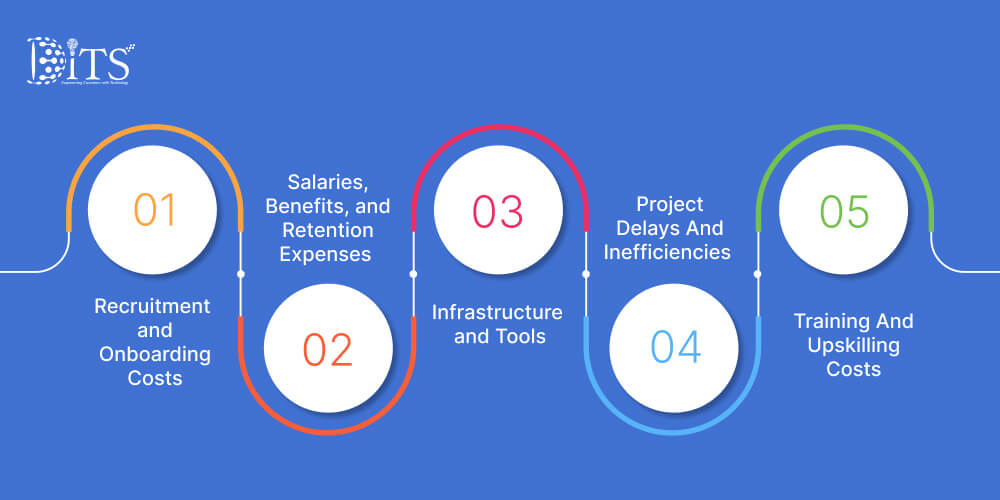
Recruitment and Onboarding Costs
Hiring rarely goes as planned. Roles stay open longer than expected, interviews stretch over weeks, and by the time you finalize a candidate, another offer may already be on the table. For many Canadian companies, filling a single senior position can take 6 to 10 weeks. During this period, projects either slow down or existing teams carry extra load. Then comes onboarding, which takes another few weeks before real productivity kicks in.
Salaries, Benefits, and Retention Expenses
The visible salary is only part of the picture. Add health benefits, bonuses, paid leaves, insurance, and retention perks, and the cost per developer increases significantly. And if attrition happens, which it often does in competitive markets, the business ends up paying that cost all over again.
Infrastructure and Tools
Software development doesn’t run on laptops alone. There are cloud platforms, development environments, testing tools, security systems, and software licenses. These are recurring expenses, and they remain active whether the team is fully utilized or not. Over time, this becomes a steady drain on budgets.
Project Delays and Inefficiencies
Even the best project plans face challenges. Project work suffers from mounting dependencies and changing requirements which necessitate redoing completed tasks. Project delays which remain unrecorded in initial time estimates lead to increased expenses and longer project durations.
Training and Upskilling Costs
The fast-paced nature of technology development requires teams to acquire knowledge about new frameworks and security standards and performance tools. The process of training requires both time and financial investment because it detracts from current development activities.
The total expense of internal project development expands beyond what organizations anticipate when all these elements become operational. Businesses at this stage begin to explore different options which provide them with better budget management and operational adaptability.
How Outsourced Software Product Development Services Reduce Costs
Lower Labor Costs Without Compromising Quality
One of the most immediate advantages is access to global talent at more balanced rates. Canadian companies often find themselves paying a premium locally, while equally skilled developers are available elsewhere at significantly lower costs. The shift doesn’t mean compromising quality. In fact, many outsourcing software development company teams specialize in specific domains, which brings efficiency along with cost savings.
More importantly, businesses only pay for the expertise they actually need. No idle salaries. No long-term commitments that stretch budgets unnecessarily.
No Recruitment or Training Expenses
Hiring can be unpredictable. Sometimes it works fast. Sometimes it drags for months. With software development outsourcing, that entire layer disappears. Teams are already trained, aligned, and ready to contribute from day one.
There’s no onboarding gap either. Projects move forward without the usual ramp-up delays, which means time and money stay under control.
Flexible Engagement Models
This is where things get practical. Businesses are no longer locked into fixed team sizes or long-term payroll commitments. With outsourcing software development, companies can choose:
- Pay-as-you-go models for smaller tasks
- Fixed pricing for clearly defined projects
- Dedicated teams for long-term initiatives
Scaling up or down becomes easier. And that flexibility often prevents unnecessary spending during slower phases.
Reduced Infrastructure and Operational Costs
Building an in-house team means investing in tools, licenses, hardware, and workspace. These costs don’t fluctuate much, even if project activity does.
With software outsourcing services, most of that responsibility shifts to the vendor. The development environment, testing tools, and infrastructure are already in place. Businesses simply plug into an existing system without carrying the overhead.
Faster Time-To-Market
Speed has a direct cost implication. The longer a product takes to launch, the higher the opportunity cost. Competitors move ahead, market windows close, and potential revenue gets delayed.
Experienced outsourcing teams reduce that risk. They’ve handled similar projects before, which helps avoid common pitfalls and shortens development cycles. In many cases, companies see delivery timelines improve by 30 percent or more.
And when products reach the market earlier, the financial impact is immediate. Revenue starts sooner. Feedback comes faster. Adjustments happen in real time.
At DITS, this efficiency is further strengthened by integrating AI into development workflows. From AI software development services to automated testing and code quality checks, the focus stays on building faster without letting quality slip.
Hidden Cost Savings Businesses Often Overlook
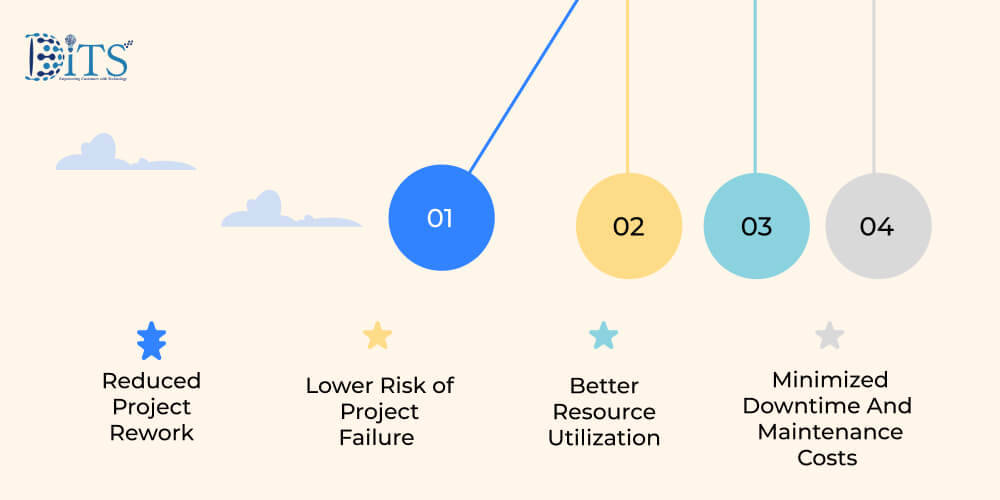
Reduced Project Rework
Rework costs substantial money because it remains hidden until it accumulates. Internal teams, especially when stretched, tend to accelerate their work during initial project stages, which creates the need for subsequent corrections. The expense of required corrections exceeds the cost of performing the task correctly during the initial attempt.
Software development companies that provide outsourcing services demonstrate stronger operational efficiency through their established development teams. The combination of better planning and structured testing and clearer documentation enhances product development efficiency while decreasing the need for extensive product rework.
Lower Risk of Project Failure
Projects don’t always fail loudly. Sometimes they simply become less effective while falling short of expectations and failing to achieve their maximum capabilities. That still costs money
External teams bring prior experience. Their team members have learned through experience which methods produce successful outcomes and which ones lead to failures. The process decreases decision-making mistakes while it enhances project implementation and maintains project timelines. The process requires less risk because it produces fewer unexpected outcomes.
Better Resource Utilization
The in-house teams handle multiple tasks because they need to complete various work assignments. A developer must divide his time between different projects while participating in internal meetings and executing urgent tasks. The result leads to decreased productivity.
Outsourcing software development services, on the other hand, usually operate with dedicated focus. The teams work on particular deliverables which helps them achieve better results while using their time to create actual work advancements.
Minimized Downtime and Maintenance Costs
The budgets experience hidden spending problems after the launch through post-launch issues. Bugs and performance problems and system downtime create difficulties for users. The issues need continuous work because they require both time and resources.
The majority of software outsourcing services provide their clients with built-in support and maintenance services which help to prevent these problems from occurring. The system maintains operational stability while decreasing downtime and maintaining steady maintenance expenses for extended periods.
These types of savings remain hidden until the initial cost estimate is complete. The savings gradually transform project expenses into noticeable financial benefits that show themselves throughout the project duration.
Real-World Use Cases Canadian Business Perspective
Startups Reducing MVP Development Costs
A Toronto-based startup wanted to launch a fintech product within six months. Hiring a full in-house team would have taken half that time just in recruitment. Instead, they partnered with a custom software development company offering outsourcing software development services.
The result? MVP launched in under 20 weeks, with nearly 40 percent lower development cost. More importantly, they validated the product early, avoided overbuilding, and redirected savings into marketing.
SMEs Scaling Products Without Large Teams
Organizations need to expand their product capabilities while improving system efficiency and decreasing time to market but they cannot afford to maintain a full internal team.
A Calgary retail business selected custom software development outsourcing to enhance its existing platform through upgrades. The company used an external team to handle their development needs instead of hiring 8 to 10 developers.
The company maintained cost control while achieving expansion with reduced operational dangers. The main point becomes obvious through this example. The organization achieved cost savings but also managed to avoid making long-term obligations which would have created future difficulties.
Enterprises Optimizing Legacy System Modernization
Large organizations face a different challenge. Legacy systems. They are expensive to maintain and harder to upgrade.
A financial services firm opted for outsourcing software development to modernize its legacy platform. The organization achieved a 35 percent reduction in modernization expenses while improving project delivery speed through their approach of using external expertise and internal project management.
The implementation of legacy application modernization becomes feasible at this point. Enterprise organizations can execute system upgrades through multiple stages which will not interrupt their current business activities. The same pattern exists throughout all these situations. Businesses are not just cutting costs. They are making smarter decisions about where and how to invest.
Planning to scale product development more cost effectively?
Outsource software development to gain flexibility, specialized expertise, and faster execution while maintaining quality and operational efficiency.
Why Choose DITS For Outsourced Software Product Development Services
Choosing the right partner is where most cost-saving strategies either succeed or fall apart. It’s not just about lower rates. It’s about how efficiently the work gets done and how predictable the outcomes are.
At DITS, the approach is built around controlled execution and long-term value. The focus stays on delivering scalable solutions without unnecessary overheads, which is exactly what businesses expect from outsourced software product development services.
A few things stand out in practice:
- Strong experience working with North American clients, including Canadian businesses, which helps align communication, timelines, and compliance expectations
- Structured development processes that reduce rework and keep projects on track
- Flexible engagement models that allow businesses to scale teams based on actual needs
There’s also a technology advantage that often goes unnoticed at first. DITS integrates AI into development workflows, not as an add-on but as a core layer. From AI consulting services to automated testing, code quality checks, and intelligent customization, AI is used to reduce manual effort and improve accuracy.
This has a direct impact on cost. Fewer errors, faster iterations, and better predictability.
For businesses already evaluating the average cost of digital transformation, this kind of efficiency can make a noticeable difference. You’re not just outsourcing work. You’re optimizing how that work gets done.
And over time, that’s where real savings begin to show.
Conclusion
The costs of software development in Canada will continue to rise without any indications of future decline. The combination of hiring difficulties and increasing salary costs together with rising operational expenses will continue to create budget challenges for companies that require rapid business development.
The use of outsourced software product development services becomes useful in this situation. The method provides a systematic approach which helps businesses control their expenses while they maintain their existing standards of work performance. The results of the project deliver immediate advantages to the company together with benefits which will continue throughout its operation.
The key, though, lies in choosing the right approach. Outsourcing without clarity can create confusion. When business objectives guide decisions, they become a strategic advantage to the organization.
Outsourcing also generates financial savings which extend beyond simple cost reductions. The process enables organizations to allocate resources toward critical investment areas.
FAQs
Do outsourced software product development services become a cost-efficient solution for small Canadian businesses?
Most of the time they prove to be cost-effective. Small businesses face difficulty in hiring permanent developers because their financial limitations and the lengthy recruitment process. Through outsourced software product development services, they gain access to skilled development teams without needing to pay fixed employee costs or maintain operational spaces.
What methods do outsourced software product development services use to maintain product quality while driving down expenses?
Most service providers implement recognized development standards together with established testing frameworks and review processes. DITS employs AI technology to its development and QA functions which enables the company to sustain code quality while minimizing errors, resulting in time and cost control that maintains project results.
What percentage of cost reduction businesses achieve through software development outsourcing?
Cost savings typically range between 30 to 50 percent, depending on project complexity and location of the outsourcing partner. Businesses save on hiring, infrastructure, and operational expenses. The actual benefits of the project become evident through improved delivery speeds and decreased need for rework which lead to enhanced return on investment.
How do DITS product development services help reduce overall software development costs?
DITS product development services focus on optimizing every stage of the development lifecycle. By combining experienced teams with AI-driven development, testing, and code quality practices, DITS reduces rework, shortens timelines, and minimizes resource wastage. This leads to lower operational costs while maintaining consistent quality and faster delivery.
Are DITS product development services suitable for long-term product scalability?
Yes, DITS product development services are designed with scalability in mind. The team builds flexible architectures and uses modern development practices that support future expansion. This means businesses can scale their products without major rework or additional costs, making it a cost-efficient option for long-term growth.

Dinesh Thakur
21+ years of IT software development experience in different domains like Business Automation, Healthcare, Retail, Workflow automation, Transportation and logistics, Compliance, Risk Mitigation, POS, etc. Hands-on experience in dealing with overseas clients and providing them with an apt solution to their business needs.
Recent Posts

Explore how prior authorization software uses AI to automate workflows, reduce administrative effort, improve request accuracy, streamline approvals, and minimize treatment delays for healthcare organizations.

Discover how AI to improve patient experience in hospitals streamlines scheduling, communication, triage, queue management, and personalized care while enhancing operational efficiency.

Learn how IoT powers smart factories with connected devices, automation, predictive maintenance, and analytics.