IT Solutions for Manufacturing Industry
Table Of Content
Published Date :
25 May 2026
Key Takeaways
- Manufacturing operations require connected digital systems for better efficiency.
- Integrated platforms improve visibility across production, inventory, and supply chains.
- Real-time data helps plant managers make faster operational decisions.
- Predictive monitoring reduces costly equipment downtime.
- Smart manufacturing systems support better quality control and compliance.
- Data analytics helps manufacturers identify operational bottlenecks early.
- Custom digital platforms allow manufacturing businesses to scale production smoothly.
- Modern IT solutions for manufacturing industry strengthen operational resilience and competitiveness.
Manufacturing leaders across Canada are facing a different reality than they did even five years ago. Production environments are becoming more complex, supply chains are unpredictable, and operational costs continue to rise. In cities such as Toronto, Calgary, and Montreal, manufacturers are under pressure to deliver faster while maintaining quality and compliance.
Many plants still rely on disconnected systems or spreadsheets to manage operations. That approach may have worked when production volumes were smaller, but it quickly becomes inefficient once operations scale.
This is where IT solutions for manufacturing industry start making a measurable difference. Modern digital platforms connect production lines, inventory systems, and operational data into a single ecosystem.
What Are IT Solutions for Manufacturing Industry
Modern manufacturing environments depend on a network of digital systems that connect production operations with business management. IT solutions for the manufacturing industry refer to software platforms, connected systems, and operational technologies that help manufacturers monitor production, manage resources, and make faster decisions.
Think of a mid-sized equipment manufacturer in Vancouver running three production lines. Without integrated technology, supervisors may rely on manual reporting from each shift, while procurement teams manage inventory through separate systems. The result is delayed insights and occasional surprises in the supply chain.
Integrated platforms solve this problem by connecting operations across the plant floor and the management office. These systems typically combine:
- production monitoring software
- enterprise planning tools
- machine data collection systems
- operational analytics dashboards
When operations, inventory, quality control, and procurement are digitally connected, managers gain a clearer picture of the entire production lifecycle.
Is Your Manufacturing System Built For Future Growth?
Assess your current technology landscape and identify gaps that may limit scalability, efficiency, and long-term operational resilience across production environments.
Core Types of IT Solutions Used in Manufacturing
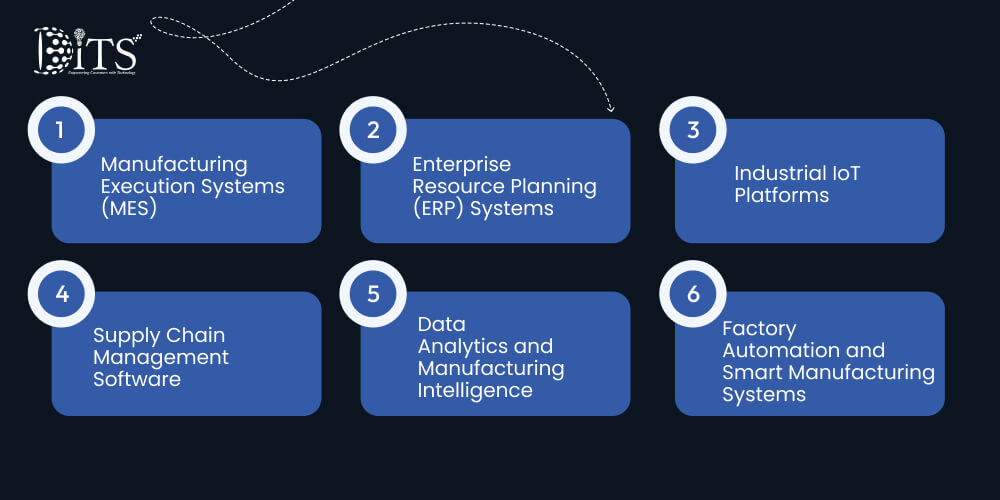
Manufacturing technology has evolved far beyond basic production software. Today, plants across Canada use integrated digital systems that connect machines, operations teams, and management platforms into a unified environment.
A manufacturing facility in Edmonton or Mississauga may run hundreds of processes simultaneously. Without the right technology stack, monitoring performance, managing inventory, and maintaining equipment become extremely difficult.
Below are the core technology systems that modern manufacturers rely on.
Manufacturing Execution Systems (MES)
Manufacturing execution systems track and manage production activities directly on the shop floor. These systems collect data from machines, operators, and production workflows to give supervisors real-time insights into performance.
Key capabilities include:
- real-time production monitoring
- work order tracking
- product traceability and compliance records
- quality control checkpoints
For example, a food processing facility in Montreal can instantly track batch production, ensuring quality standards are maintained while reducing the risk of costly recalls.
Enterprise Resource Planning (ERP) Systems
ERP systems connect business operations with manufacturing activities. Finance teams, procurement managers, and production planners all work from the same data environment.
Core functions often include:
- procurement and supplier management
- financial and accounting systems
- production planning and scheduling
- inventory and warehouse management
With an integrated ERP platform, manufacturers gain better visibility into material requirements and production capacity, allowing them to plan operations more accurately.
Industrial IoT Platforms
Industrial IoT platforms connect machines, sensors, and production equipment to digital monitoring systems. These platforms collect machine data continuously and transform it into operational insights.
Typical capabilities include:
- machine health monitoring
- predictive maintenance alerts
- equipment performance tracking
- operational efficiency metrics
Nobody enjoys unexpected machine failures. In many plants, one unplanned downtime event can cost thousands of dollars per hour. IoT monitoring helps reduce those surprises.
Supply Chain Management Software
Manufacturing success depends heavily on supply chain reliability. When raw materials arrive late or inventory levels are miscalculated, production schedules suffer.
Supply chain management systems help manufacturers:
- monitor supplier performance
- track material availability
- optimize warehouse operations
- forecast demand fluctuations
Manufacturers operating across cities like Toronto, Ottawa, and Winnipeg often rely on these platforms to maintain coordination between suppliers, warehouses, and distribution partners. Modern supply chain management software also helps manufacturers coordinate supplier deliveries, warehouse operations, and logistics across multiple locations.
Data Analytics and Manufacturing Intelligence
Data analytics platforms transform raw operational data into actionable insights. Production managers can evaluate trends, identify inefficiencies, and improve planning decisions.
Common analytics applications include:
- operational performance dashboards
- production efficiency tracking
- quality deviation analysis
- forecasting production output
These insights allow executives to identify operational bottlenecks that may otherwise remain hidden.
Factory Automation and Smart Manufacturing Systems
Automation technologies streamline repetitive production activities while maintaining precision and consistency.
Automation systems help manufacturers:
- reduce manual intervention
- standardize production workflows
- improve production accuracy
- maintain consistent product quality
Modern automation platforms increasingly incorporate AI integration, allowing machines and systems to analyze operational data and adjust processes dynamically.
When these technology systems work together, manufacturing facilities become significantly more efficient.
Benefits of Implementing IT Solutions in Manufacturing
Technology investments in manufacturing are about operational stability, predictable output, and fewer costly surprises on the shop floor. When the right systems are implemented, manufacturers gain visibility and control across the entire production lifecycle.
Many manufacturers in cities like Toronto and Hamilton have experienced this shift firsthand. Plants that once relied on manual tracking now run on integrated digital systems where managers can monitor operations in real time.
Below are some of the most practical business benefits.
Improved Production Efficiency
Production teams perform better when information flows smoothly across departments. Digital systems remove delays caused by manual reporting or disconnected platforms.
Manufacturers typically see improvements such as the following:
- faster production scheduling
- reduced material shortages
- fewer workflow interruptions
- optimized machine utilization
Even a 5 to 10 per cent increase in efficiency can translate into significant annual cost savings for large plants.
Real-Time Operational Visibility
Managers no longer must wait for end-of-day reports. Operational dashboards provide live updates from the production floor.
Executives and plant managers can monitor:
- machine performance
- production output
- workforce productivity
- quality deviations
This real-time visibility helps leadership teams respond quickly when production issues arise.
Reduced Equipment Downtime
Unexpected equipment failures can disrupt entire production cycles. Predictive monitoring systems analyze machine performance and detect early warning signs before breakdowns occur.
As a result, maintenance teams can schedule repairs proactively instead of reacting to emergencies. Preventing even a single major downtime event can save thousands of dollars in lost production.
Better Supply Chain Coordination
Supply chains are complex, especially for manufacturers sourcing materials from multiple suppliers across North America.
Integrated supply chain platforms allow manufacturers to:
- track incoming materials
- monitor supplier delivery timelines
- manage warehouse inventory more accurately
- reduce stock shortages or excess inventory
When procurement teams and production planners share the same data, coordination improves dramatically.
Higher Product Quality and Compliance
Manufacturing quality standards are strict, particularly in sectors like food processing, automotive parts, and medical equipment.
Digital systems help maintain consistent quality through:
- automated inspection checkpoints
- production traceability records
- standardized quality procedures
- regulatory compliance reporting
These capabilities reduce the risk of defects and improve customer trust.
Data-Driven Business Decisions
Operational data becomes far more valuable when it is analyzed properly. Modern analytics platforms convert raw machine data into actionable insights.
Manufacturers can evaluate:
- production trends
- equipment performance patterns
- product quality metrics
- operational bottlenecks
Organisations investing in AI solutions for enterprise are increasingly using these insights to improve forecasting, production planning, and operational strategy.
Ultimately, technology does more than automate tasks. It creates a foundation for smarter decision-making across the entire manufacturing operation.
How Much Downtime Is Costing Your Operations?
Evaluate hidden inefficiencies caused by unplanned equipment failures and explore predictive solutions that ensure consistent production flow and cost optimization.
Real-World Applications of IT Solutions in Manufacturing
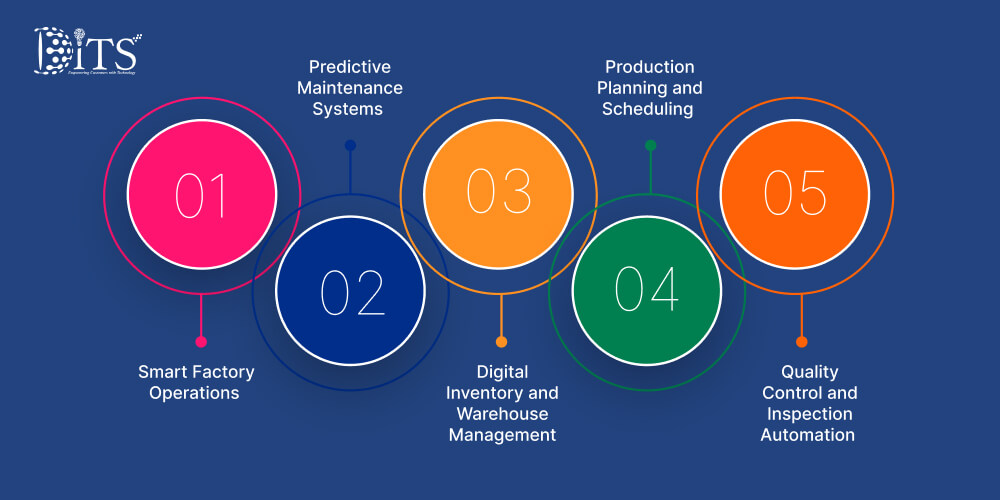
Technology becomes truly valuable when it solves everyday operational problems on the factory floor. Across Canadian manufacturing hubs like Vancouver, Toronto, and Quebec City, companies are adopting digital platforms to improve production control and operational planning.
Below are several practical ways manufacturers apply these systems in real production environments.
Smart Factory Operations
Smart factories connect machines, software systems, and production workflows into one coordinated environment. Plant managers can monitor performance, production speed, and operational status from centralized dashboards.
Instead of waiting for manual reports from each shift, supervisors can instantly identify production delays, quality issues, or machine performance drops.
Predictive Maintenance Systems
Equipment breakdowns rarely happen at convenient times. A stalled production line can delay shipments and disrupt delivery commitments.
Predictive maintenance platforms monitor machine performance through connected sensors and analytics tools. When abnormal patterns appear, maintenance teams receive alerts before a failure occurs.
Manufacturers using AI in manufacturing often combine machine data with predictive models that estimate equipment wear and maintenance timelines. The result is fewer shutdowns and more predictable production schedules.
Digital Inventory and Warehouse Management
Inventory management remains one of the most complex areas of manufacturing operations. Raw materials, work-in-progress items, and finished goods must move through multiple stages before reaching customers.
Digital inventory systems provide accurate, real-time tracking across warehouses and production areas. Teams can quickly check stock levels, material availability, and incoming shipments.
A manufacturer operating multiple warehouses in cities such as Calgary and Winnipeg can coordinate inventory more effectively, reducing delays caused by missing materials.
Production Planning and Scheduling
Production planning becomes significantly easier when operational data is centralized. Modern scheduling platforms analyze production capacity, workforce availability, and material supply before generating optimal production schedules.
But there is a catch. Without reliable data flowing from machines and supply chain systems, even the best planning software cannot deliver accurate results. That is why integrated IT systems are essential.
Quality Control and Inspection Automation
Maintaining consistent product quality requires strict monitoring across every stage of production. Digital quality management systems automate inspection processes and record compliance data.
Manufacturers can track:
- inspection results
- defect rates
- product traceability
- regulatory documentation
If a quality issue occurs, teams can immediately trace the source within the production workflow.
These capabilities not only improve product quality but also strengthen compliance with industry regulations across Canadian manufacturing sectors.
Emerging Technology Trends in Manufacturing IT
Manufacturing technology continues to evolve as companies push for greater efficiency and operational resilience. Across Canada, from industrial corridors in Ontario to growing manufacturing hubs in Alberta, organisations are investing in modern digital systems that improve productivity and decision-making.
Several technology trends are shaping the next phase of manufacturing innovation.
Smart Factories and Connected Production Systems
Smart factories connect machines, operational software, and data platforms into a unified digital environment. Instead of isolated systems running independently, production equipment communicates with centralised monitoring platforms.
Managers can track machine performance, production throughput, and operational efficiency in real time. A manufacturing plant in Toronto producing industrial components, for instance, can monitor multiple production lines from a single dashboard.
The real value lies in visibility. When production data flows continuously, decision-making becomes faster and far more accurate.
AI-Driven Production Analytics and Automation
Manufacturers increasingly rely on advanced analytics to improve production outcomes. These systems analyze machine data, operational patterns, and quality metrics to identify inefficiencies.
Some organizations are implementing predictive models that recommend operational improvements based on historical production data.
Across the Canadian manufacturing sector, executives are closely observing how AI transforming product development in Canada is reshaping design and production workflows. AI-powered systems are now assisting engineering teams in analyzing product performance data, improving design iterations, and accelerating development timelines without increasing operational risk.
Edge Computing In Industrial Environments
Industrial operations generate enormous amounts of data from sensors and machines. Sending every data point to centralised cloud systems can introduce latency and slow response times.
Edge computing addresses this challenge by processing data closer to the machines themselves. Local processing enables faster operational responses, particularly in time-sensitive environments such as automated assembly lines.
For manufacturers running high-speed production environments, even a few seconds of delay in system response can affect output quality and operational safety.
Advanced Supply Chain Intelligence Systems
Supply chain disruptions remain a persistent challenge for manufacturers. Digital supply chain intelligence platforms analyse supplier performance, shipment timelines, and inventory data to improve planning accuracy.
These systems help manufacturers anticipate potential disruptions before they impact production.
But here’s the reality many executives have discovered: Technology alone does not solve supply chain challenges. What matters is how well systems connect procurement data, production planning, and logistics operations.
When those connections are strong, manufacturers gain a far more resilient operational structure.
Why Choose DITS For Manufacturing IT Solutions
Manufacturing technology projects require more than software development expertise. They demand an understanding of operational workflows, machine integrations, compliance requirements, and long-term scalability.
At DITS, our development teams design and implement IT solutions for the manufacturing industry that connect operational systems with enterprise-level decision-making tools. The focus is always practical: improve visibility, reduce operational friction, and support long-term business growth.
At DITS, we use AI during software development, quality assurance, code quality monitoring, and customisation of enterprise platforms. We operate as an experienced AI software development company that builds intelligent enterprise platforms designed specifically for complex operational environments such as manufacturing, logistics, and industrial production.
For manufacturers operating across Canadian cities such as Vancouver, Winnipeg, or Montreal, scalable technology infrastructure becomes essential for maintaining operational consistency across facilities.
Ready To Modernize Your Manufacturing Technology Stack?
Understand how custom-built digital platforms can streamline workflows, enhance productivity, and position your business for long-term competitive advantage.
Conclusion
Manufacturing operations are becoming more complex, and traditional manual processes no longer provide the speed or visibility that modern businesses require. From production monitoring to supply chain coordination, technology now plays a central role in maintaining operational efficiency.
Organizations investing in IT solutions for manufacturing industry gain the ability to monitor operations in real time, improve production planning, and respond quickly to operational challenges.
The manufacturers that succeed over the next decade will not simply produce better products. They will operate smarter facilities powered by connected digital systems. For many companies, that journey begins with the right technology foundation.
FAQs
What are IT solutions in the manufacturing industry?
IT solutions in manufacturing include software systems and digital platforms that help companies manage production, monitor machines, track inventory, and improve operational efficiency. These technologies connect factory operations with business management systems so manufacturers can make faster and more informed decisions.
How can manufacturers benefit from digital technology systems?
Digital systems help manufacturers improve production visibility, reduce equipment downtime, manage inventory more accurately, and streamline supply chain coordination. When operations are connected through integrated platforms, plant managers can respond quickly to production issues and maintain consistent output.
How long does it take to implement manufacturing software systems?
Implementation timelines depend on the complexity of the manufacturing environment and the number of systems involved. A smaller manufacturing facility may deploy core software systems within three to four months, while larger multi-plant operations may require six to nine months for full implementation and integration.
Can manufacturing software integrate with existing machinery and legacy systems?
Yes, modern manufacturing platforms are designed to integrate with existing machinery, sensors, and legacy business systems. Custom integration layers allow manufacturers to collect operational data from equipment while continuing to use essential legacy applications during the transition.
How does DITS software development for manufacturing help businesses modernise their operations?
DITS software development for manufacturing focuses on building scalable digital platforms that connect production systems, operational dashboards, and enterprise applications. These solutions help manufacturers monitor production performance, automate reporting processes, and improve operational decision-making across the organization.
What makes DITS software development for manufacturing suitable for industrial businesses?
DITS software development for manufacturing combines industry-focused engineering practices with modern development frameworks to build reliable manufacturing platforms. Our teams design systems that integrate with production equipment, support operational analytics, and provide long-term scalability for growing manufacturing organizations.

Dinesh Thakur
21+ years of IT software development experience in different domains like Business Automation, Healthcare, Retail, Workflow automation, Transportation and logistics, Compliance, Risk Mitigation, POS, etc. Hands-on experience in dealing with overseas clients and providing them with an apt solution to their business needs.
Recent Posts

Explore how prior authorization software uses AI to automate workflows, reduce administrative effort, improve request accuracy, streamline approvals, and minimize treatment delays for healthcare organizations.

Discover how AI to improve patient experience in hospitals streamlines scheduling, communication, triage, queue management, and personalized care while enhancing operational efficiency.
Learn how IoT powers smart factories with connected devices, automation, predictive maintenance, and analytics.