Why Businesses Are Investing in IoT Consulting Services in Canada
Table Of Content
Published Date :
10 Mar 2026
Canadian businesses are no longer exploring connected technologies as side projects. What started as small pilots inside warehouses and plants has now moved into boardroom conversations. Leaders are under pressure to cut downtime, improve asset visibility, and respond faster to market shifts. Guesswork simply doesn’t scale anymore.
This is where IoT consulting services are gaining momentum across Canada. Organizations want structured roadmaps, and measurable results.
Fom the high-rise boardrooms of Toronto to the sprawling industrial sites in Calgary, the transition from "experimenting with tech" to "scaling for survival" is officially over.
This blog explores the top challenges and reasons for which Canadian businesses are investing in IoT consulting services. We will also explore what organizations can expect from IoT technology and consulting.
Challenges Businesses Face Without IoT Consulting Firm
Many Canadian firms initially try to build connected ecosystems internally. On paper, it sounds practical. Existing IT teams, a few vendors, and some connected sensors. But reality is rarely that clean.
Disconnected Systems
Different plants, warehouses, and field units often operate on separate platforms. A facility in Mississauga may run one monitoring system, while a distribution center in Calgary runs another. Data stays trapped. Leaders see fragmented reports instead of unified insights.
Data Silos
Sensors generate massive volumes of operational information, yet much of it never reaches decision-makers. In several manufacturing clusters across Ontario, companies discovered that machine performance data was collected daily but rarely analyzed in real time. Valuable signals were simply sitting idle.
Poor Device Interoperability
Hardware from multiple vendors rarely integrates smoothly. Devices speak different protocols, gateways require custom configurations, and integration costs quietly rise. Without structured IoT device consulting services, scaling from 50 devices to 5,000 becomes operationally risky.
Security Vulnerabilities
Each connected endpoint creates a new exposure point. Energy firms in Alberta and utilities around Vancouver are increasingly cautious, especially after witnessing global cyber incidents affecting industrial environments. Security cannot be an afterthought.
Budget Overruns
Perhaps the most common issue. Projects start small, then expand without clear ROI tracking. What was budgeted at CAD 250,000 suddenly crosses CAD 600,000 because architecture was not future-ready.
The pattern is clear. Without strategic oversight, connected initiatives drift into complexity. And complexity erodes value.
Is Your Business Ready for Scalable IoT Transformation?
Discover how structured IoT consulting can reduce operational risk, improve asset visibility, and deliver measurable ROI across your connected infrastructure.
Shift to Industrial Intelligence
The era of simple tracking is gone. Today, industrial IoT consulting services are the backbone of Canada’s most critical sectors. In the manufacturing heartland of Southern Ontario, specifically Brampton and Mississauga, factories are moving toward "lights-out" operations where machines communicate autonomously.
- Predictive Maintenance: No more guessing when a turbine in Edmonton might fail.
- Supply Chain Visibility: Real-time tracking of goods moving from the Port of Vancouver to the rest of the continent.
- Worker Safety: Wearables that monitor vitals in the deep mines of Sudbury.
Without specialized industrial IoT consulting services, these complex systems often become "data silos": lots of information, but zero actionable insight.
Key Business Drivers Behind IoT Investments
Executives are not investing in connected ecosystems because it sounds innovative. They are investing because margins are tightening, operational risks are rising, and competition is accelerating.
Operational Efficiency and Cost Reduction
Real-Time Asset Tracking
Manufacturers in Edmonton are using sensor-driven tracking to monitor machine utilization hour by hour. When idle time drops by even 8 to 12 percent, annual savings can reach hundreds of thousands of dollars in large facilities.
Predictive Maintenance
Unplanned downtime is expensive. A single production stoppage in automotive plants can cost CAD 15,000 to CAD 25,000 per hour. Predictive alerts reduce emergency repairs and extend equipment life cycles.
Energy Optimization
Energy-intensive facilities in Alberta and Saskatchewan are tracking consumption patterns to lower peak demand charges. Some businesses report 10 to 18 percent reductions in energy spend within the first year.
Nobody budgets for inefficiency. But it quietly drains profits.
Data-Driven Decision Making
Turning Sensor Data into Dashboards
Connected environments generate granular data, yet leadership teams require clarity, not clutter. Structured dashboards translate technical metrics into production KPIs, cost indicators, and performance forecasts.
Reducing Blind Spots Across Distributed Operations
A logistics operator managing fleets between Toronto and Vancouver cannot rely on manual reporting. Real-time tracking removes uncertainty and improves dispatch accuracy. This is where IoT in transportation & logistics becomes operationally transformative rather than experimental.
Supply Chain Visibility
Cold Chain Monitoring
Food distributors and pharmaceutical suppliers are using continuous temperature monitoring to reduce spoilage and compliance risk. Even a two-degree variance can compromise high-value shipments.
Fleet Tracking and Route Optimization
Connected routing reduces fuel waste and delivery delays. Small improvements, often 5 to 7 percent in route efficiency, compound into meaningful annual cost reductions.
Risk Mitigation and Compliance
Remote Monitoring for Safety
Industrial sites in northern Ontario are deploying environmental sensors to monitor air quality and equipment stress levels. Early warnings prevent incidents and protect workforce safety.
Automated Compliance Reporting
In regulated sectors, manual reporting consumes time and invites errors. Automated data capture simplifies audit preparation and reduces administrative burden.
New Revenue Models
Product-As-A-Service Models
Equipment manufacturers are embedding sensors into products, enabling subscription-based service models. Instead of one-time sales, recurring revenue streams emerge.
Remote Service Offerings
Service providers supporting IoT in Healthcare are enabling remote equipment diagnostics and performance monitoring. Faster response times increase client retention and reduce on-site visit costs.
The common thread across these drivers is measurable impact. The real operational gains tied directly to financial outcomes.
Need a Scalable Roadmap for Industrial IoT Deployment?
Build secure, scalable IoT ecosystems designed for manufacturing, logistics, and energy operations with advisory-led architecture and integration planning.
What IoT Consulting Services Actually Deliver
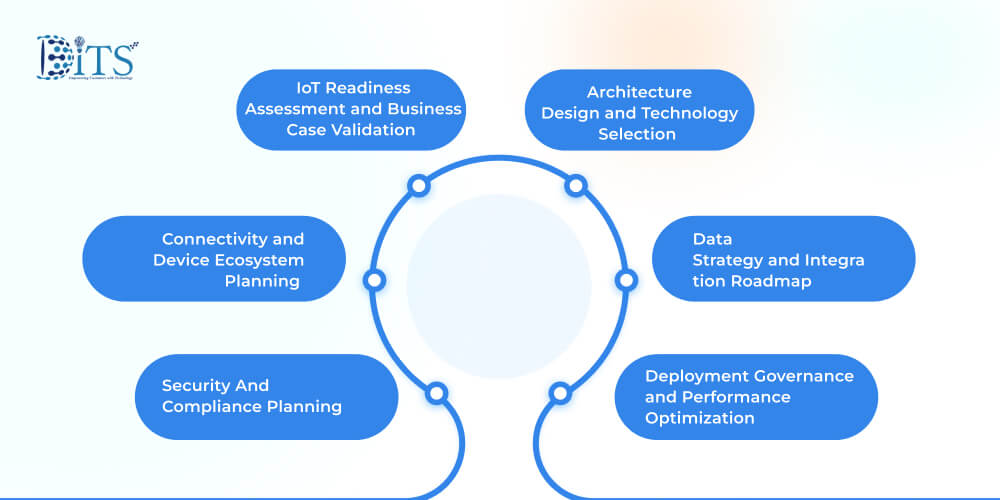
When structured properly, connected transformation begins with clarity, not hardware purchases. Businesses investing in Toronto, Montreal, and Calgary are demanding advisory-led execution.
IoT Readiness Assessment and Business Case Validation
Consultants evaluate infrastructure, legacy systems, operational maturity, and financial goals before a single device is deployed. A mid-sized manufacturer in Hamilton reduced projected rollout risk by 30 percent simply by identifying integration gaps early.
Architecture Design and Technology Selection
Technology decisions made at the beginning shape scalability. The right edge gateways, communication protocols, and cloud environments must align with long-term growth plans. This is where industrial IoT consulting services become critical, especially for asset-heavy industries operating complex production environments.
Connectivity and Device Ecosystem Planning
Not every asset requires constant connectivity. Smart planning defines what to monitor, how frequently, and at what cost. Structured IoT product consulting services help businesses avoid over-instrumentation, which quietly inflates both capital and operational expenses.
Data Strategy and Integration Roadmap
Data without integration is noise. Connected insights must flow into ERP systems, analytics platforms, and existing IoT development services frameworks to enable real operational decisions. Otherwise, dashboards remain isolated and underused.
Security And Compliance Planning
In regulated industries such as utilities and healthcare networks in British Columbia and Quebec, compliance is non-negotiable. Proactive security frameworks protect endpoints, gateways, and cloud layers before scaling begins.
Deployment Governance and Performance Optimization
Execution require disciplined oversight. Milestone tracking, coordination with development team, performance metrics, and optimization cycles ensure rollout remains aligned with financial targets.
At DITS, we integrate AI across our development lifecycle, including software engineering, quality assurance, code integrity monitoring, and solution customization. AI is embedded into every platform we design, ensuring connected ecosystems remain adaptive and resilient long after deployment.
Strategic guidance transforms connected infrastructure from technical ambition into measurable business performance. That distinction defines successful investment.
Industry-Wise Adoption of IoT in Canada
Connected adoption is not limited to one sector. It is expanding across provinces and industries where operational scale demands better visibility.
Manufacturing: Smart Factories and Asset Intelligence
Automotive and heavy equipment manufacturers in Windsor and Oshawa are deploying connected sensors across assembly lines to monitor cycle time, vibration levels, and output variance. Even a 5 percent improvement in line efficiency can translate into millions in annual output gains for large plants.
Energy & Utilities: Grid Monitoring and Predictive Infrastructure Management
Energy operators in Calgary and fort McMurray are integrating predictive monitoring into pipeline systems and grid infrastructure. Early fault detection reduces service disruptions and minimizes regulatory exposure.
Healthcare: Remote Monitoring Systems
Hospital networks in Toronto and Vancouver are adopting IoT in Healthcare to track critical equipment performance and environmental conditions. Real-time alerts reduce equipment downtime and improve patient safety metrics.
Agriculture: Precision Farming
Farm operators in Saskatchewan and Manitoba are using soil sensors and climate monitoring systems to optimize irrigation and fertilizer usage. Yield improvements of 8 to 12 percent are not uncommon when data replaces assumptions.
Transportation & Logistics: Real-Time Fleet Intelligence
Freight corridors between Montreal and Halifax are instrumented with connected tracking systems. Real-time fleet visibility is often supported by custom IoT app development, enabling dispatch teams, drivers, and regional managers to monitor routes, fuel usage, and delivery timelines. Combined with business workflow automation, this reduces manual coordination, improves delivery reliability, and strengthens client confidence.
Across sectors, the pattern remains consistent. Structured advisory support, including industrial IoT consulting services, ensures these deployments scale without compromising integration or financial discipline.
Struggling with Data Silos Across Connected Operations?
Our IoT consulting experts help unify device ecosystems, streamline analytics pipelines, and convert raw sensor data into actionable business intelligence.
ROI Expectations: What Executives Want to See
Investment conversations ultimately lead to numbers. Boards want clarity around payback periods, measurable gains, and risk exposure.
Below is a simplified view of typical performance expectations observed across Canadian deployments:
| Area | Typical Improvement Range | Business Impact |
| Asset Utilization | 8 to 15 percent increase | Higher production capacity without new capital investment |
| Downtime Reduction | 15 to 25 percent decrease | Lower repair costs and improved delivery reliability |
| Energy Efficiency | 10 to 18 percent savings | Reduced operational expenditure |
| Maintenance Planning | 20 percent faster issue detection | Fewer emergency shutdowns |
Most executives expect payback within 12 to 24 months, depending on deployment scale. Here’s the catch. ROI does not come from devices alone. It comes from aligning data strategy with operational priorities.
Organizations that combine advisory guidance, IoT product consulting services, and disciplined execution often outperform internal-only initiatives by a significant margin.
When connected investments are tied to specific KPIs, tracked quarterly, and optimized continuously, results become predictable rather than hopeful.
Why Choose DITS For IoT Consulting Services in Canada
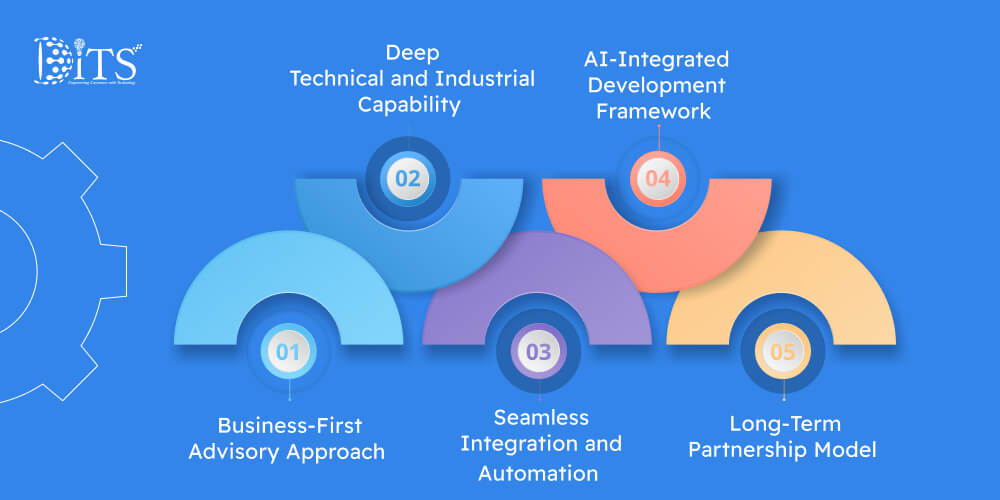
Canadian enterprises need a development partner who understands operational pressure, regulatory complexity, and financial accountability. That is where DITS positions itself differently.
Business-First Advisory Approach
Every engagement starts with operational audit, cost analysis, and ROI modelling. Whether client operates manufacturing unit in Ontario or logistics network across British Columbia, strategy is aligned to revenue protection and margin expansion.
Deep Technical and Industrial Capability
Through structured IoT device consulting services, we ensure endpoint ecosystems scale securely and efficiently. For asset-heavy sectors, our industrial IoT consulting services focus on predictive intelligence, equipment optimization, and compliance resilience.
AI-Integrated Development Framework
At DITS, we use AI for software development acceleration, quality assurance, code quality monitoring, and intelligent customization. Every connected platform we deliver is designed to adapt and improve over time, not remain static after deployment.
Seamless Integration and Automation
We align connected ecosystems with enterprise platforms and business workflow automation systems, ensuring data flows into decision layers without friction. Integration is engineered, not improvised.
Long-Term Partnership Model
At DITS, we consider IoT software development and deployment as the first phase. Continuous optimization, performance benchmarking, and cybersecurity hardening remain ongoing priorities. Our advisory model ensures that connected investments continue delivering value well beyond initial rollout.
Looking to Reduce Downtime with Predictive Intelligence?
Implement predictive maintenance and real-time monitoring frameworks designed to protect asset performance, reduce disruptions, and improve operational resilience.
Conclusion
Investment in IoT consulting services in Canada is no longer optional for growth-oriented enterprises. It is competitive necessity.
From manufacturing floors in Ontario to logistics corridors in British Columbia, structured advisory-led deployment is transforming operational visibility and financial predictability.
Organizations that move beyond experimentation and commit to scalable, revenue-aligned ecosystems position themselves for stronger margins, improved resilience, and sustainable expansion.
Strategic planning before deployment defines success. Connected intelligence without roadmap creates complexity. With right guidance, it creates advantage.
FAQs
How long does typical IoT implementation take for mid-sized Canadian business?
Timeline depends on scope, infrastructure maturity, and integration complexity. For focused deployment such as predictive maintenance across single facility, projects may take 3 to 6 months. Enterprise-wide rollouts across multiple provinces can extend to 9 to 18 months, especially when legacy systems require restructuring.
What kind of ROI can executives realistically expect?
Most organizations aim for measurable returns within 12 to 24 months. Gains typically come from downtime reduction, improved asset utilization, energy savings, and better maintenance planning. Financial impact varies by industry, but structured implementation significantly improves predictability of returns.
How does DITS IoT Software Development and Consulting services differ from traditional vendors?
DITS IoT Software Development and Consulting services focus on end-to-end execution, from business case validation to architecture design and long-term optimization. We combine advisory strategy with hands-on engineering, AI-enabled quality assurance, and scalable integration models that align directly with executive KPIs.
Is cybersecurity a major concern in connected environments?
Yes, and it must be addressed from design stage. Every connected device introduces potential vulnerability. Strong endpoint protection, encrypted communication protocols, and compliance alignment are critical for protecting operational continuity and data integrity.
Can IoT solutions integrate with existing ERP and enterprise systems?
Integration is not only possible, but also essential. DITS IoT Software Development and Consulting services are structured to align connected ecosystems with ERP platforms, analytics environments, and operational dashboards, ensuring data flows seamlessly into core business processes without disruption.
Do businesses need full-scale deployment from day one?
Not necessarily. Many successful programs begin with focused pilot aligned to high-impact use case. However, architecture must be designed for scalability from start. Otherwise, expansion becomes costly and complex.

Dinesh Thakur
21+ years of IT software development experience in different domains like Business Automation, Healthcare, Retail, Workflow automation, Transportation and logistics, Compliance, Risk Mitigation, POS, etc. Hands-on experience in dealing with overseas clients and providing them with an apt solution to their business needs.
Recent Posts
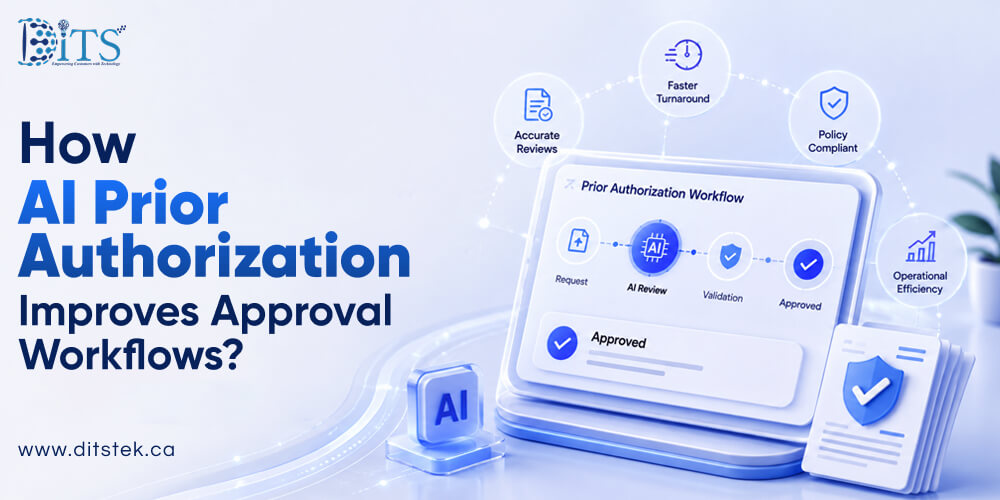
Explore how prior authorization software uses AI to automate workflows, reduce administrative effort, improve request accuracy, streamline approvals, and minimize treatment delays for healthcare organizations.
Discover how AI to improve patient experience in hospitals streamlines scheduling, communication, triage, queue management, and personalized care while enhancing operational efficiency.
Learn how IoT powers smart factories with connected devices, automation, predictive maintenance, and analytics.