Why Canadian Businesses Need Digital Transformation in Supply Chain Management
Table Of Content
Published Date :
24 Jun 2026
Key Takeaways
- Digital transformation in the supply chain management industry allows Canadian enterprises to transform from the manual and disintegrated practices to a data-driven and integrated model.
- Technologies like AI, IoT, cloud platforms, warehouse automation, WMS, TMS, ERP integrations, and other innovations form the backbone of the smarter and more resilient supply chain infrastructure.
- In Canada, it is crucial that supply chains be digitalized due to the long routes, interprovincial connections, weather-related shipping, cross-border trade, port delays, and increasing logistics expenses.
- IoT can provide the ability to view the status of assets in real-time and allows items to be tracked in transit within warehouses and along transportation networks.
The supply chain environment across Canada is evolving rapidly. Businesses face increasing challenges with issues such as port delays, labor disruptions, complexity in cross-border trade, rising customer expectations, and pressure to become sustainable. As such, many companies can no longer rely on separate systems or manually run processes to move goods through their supply chain.
Digital transformation within the supply chain supports manufacturers, retailers, logistics providers/distributors, and other businesses to establish smarter, faster, and more resilient operations. Companies can connect their supply chain systems by integrating the various components (data, people, processes, and partners) to create seamless operations.
26.5% of Canadian businesses expect transportation costs to pose an obstacle, underscoring the importance of digital transformation in Canadian supply chains. Moreover, the top AI apps used by Canadian businesses today include text analytics, NLP, LLMs, chatbots, and virtual agents, indicating that digital transformation is the need of the hour in Canada.
What is Digital Transformation in Supply Chain
Digital transformation in supply chain operations refers to a shift to using digital technology for greater connectivity, transparency and efficiency in supply chain operations. Businesses can now manage the movement of goods, information and decisions based on real-time information via modern software and data-driven tools instead of via spreadsheets, manual updates, phone calls, etc., which have historically been relied upon for this purpose.
Essentially, digital transformation will help businesses understand what is happening within their supply chain, where it is occurring, and what they should do next.
For example, a Canadian manufacturer could take advantage of real-time tracking of raw materials and shipments, use AI-based demand forecasting tools to improve production planning, and implement inventory management software to manage stock levels, including both shortages and excess stock.
Similarly, a logistics provider could use IoT-enabled asset-tracking systems to monitor truck and trailer locations, enhance delivery performance by reducing delays through route optimization, and implement cloud-based delivery management systems to maximize opportunities for successful, timely deliveries.
Why Digital Transformation Matters for Canadian Supply Chains
Supply chains in Canada traverse extensive geography, many provinces, weather-sensitive routes, and multiple transportation methods: large ports, railways, highway trucking networks, and international shipping routes between Canada and United States. Because of these characteristics, visibility, coordination of activities, and the ability of a supply chain member to make instant decisions are critical to the operation of a supply chain in Canada.
For Canadian businesses, many points in a company's supply chain can cause problems. For instance, if a cargo ship is delayed at a port, it can disrupt a warehouse's receiving plans; if a truck breaks down and cannot deliver goods on time, it will delay delivery to its destination, and so on. For these reasons, businesses require interconnected systems to maintain control and visibility into all processes within their supply chains.
Digital transformation in supply chain management enables Canadian businesses to replace manual processes, disconnected tools, and outdated reporting with real-time data, automation, artificial intelligence, and integrated systems to enhance the supply chain's delivery schedule, minimize delays, and react quickly to unforeseen events.
Looking To Modernize Your Supply Chain Operations Today?
Improve visibility, efficiency, and decision-making across your supply chain with scalable digital transformation solutions.
Core Technologies Driving Digital Transformation in Supply Chains
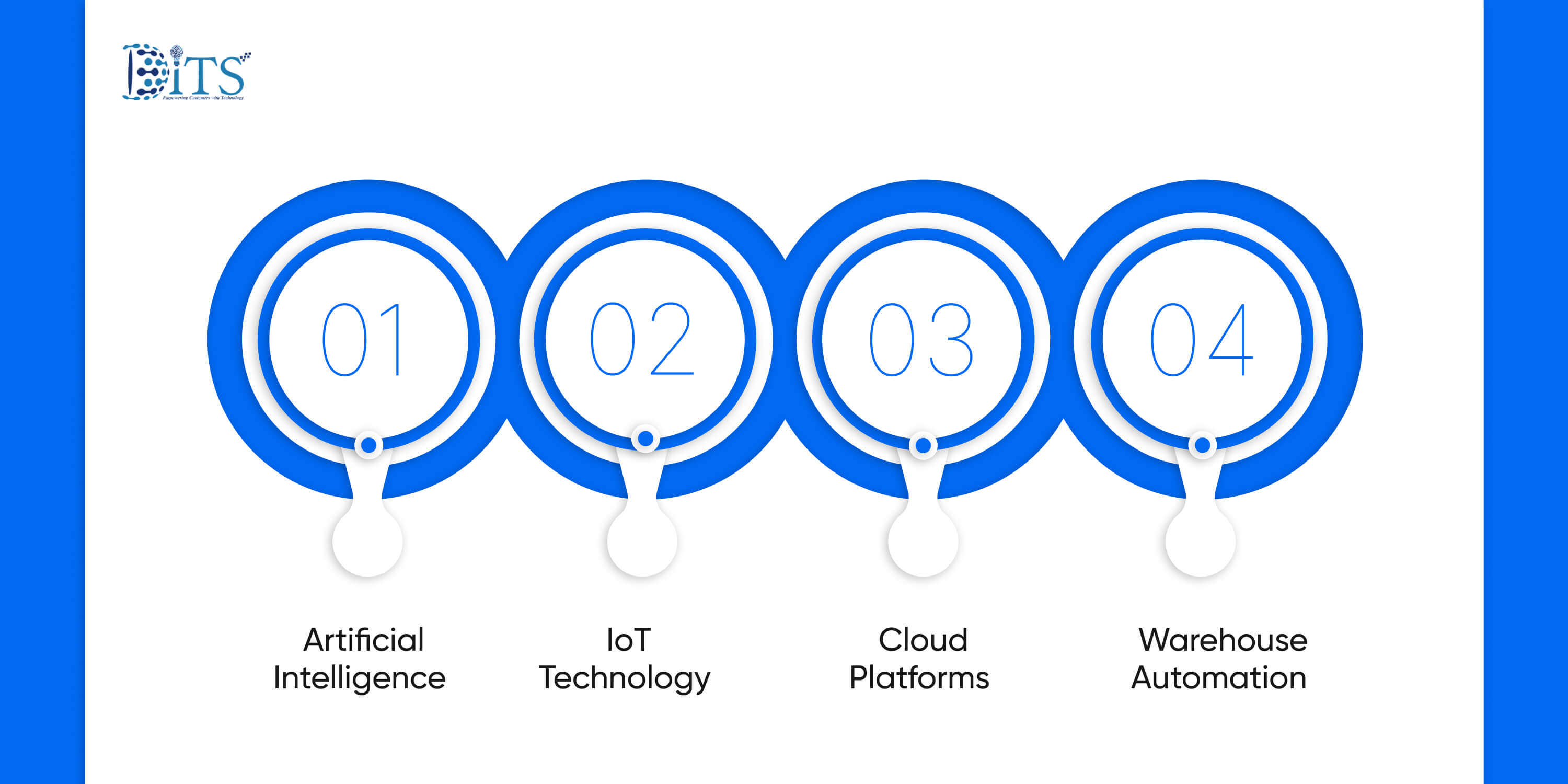
Dive deep into the key technologies that make the entire supply chain process seamless and automated. IoT, AI, Cloud, and warehouse automation allow businesses to create an error-free structure with predictive analytics, real-time updates, and stock
Artificial Intelligence
AI allows businesses to predict demand, optimize inventory, detect potential delivery delays, optimize routes, and identify supply chain risks in advance, thereby preventing costly issues.
- Route optimization
- Predictive maintenance
- Supplier risk evaluation
- Decision-making
- Inventory optimization
Read more: AI software development services
IoT Technology
IoT technology assists in tracking inventory items, vehicles, cargo, and other assets in real time. In particular, for such sectors as the food industry, pharmaceutical business, retail trade, and cold chain logistics, real-time tracking can be beneficial.
- Temperature control
- Vehicle tracking
- Real-time asset tracking
- Cold chain management
- Monitoring of cargo conditions
Read more: IoT Software development
Cloud Platforms
Cloud platforms enable everyone involved, including people across various locations and suppliers, to access information about a business's supply chain operations at once. It is especially important for those who operate in many provinces in Canada.
- Centralized supply chain dashboards
- Real-time inventory visibility
- Multi-location warehouse management
- Supplier and vendor collaboration
- ERP, WMS, TMS, and CRM integration
Warehouse Automation
Allows the businesses to eliminate the manual work, effectively handle massive shipment volumes, and speed up the fulfillment process. It utilizes tools like RFID, conveyor systems, and automated inventory updates, which eventually help with faster delivery expectations.
- Picking and packing operations automation
- Stock management automation
- Optimization of warehouse space usage
- Sorting & dispatching automation
- Monitoring of warehouse performance
Benefits of Digital Transformation in Supply Chain
Digital transformation gives Canadian Companies a greater level of control over their Supply Chains by connecting data, processes, people, suppliers and logistics partners. As a result, businesses will have a much easier time operating their supply chains than if they were delayed, using manual processes and disconnected tools to accomplish their goals; in fact, supply chain operations will become easier to see, operate and be resilient.
Increased Visibility
A connected supply chain system provides businesses with an effective way to have visibility to orders, inventory, suppliers, warehouses, shipments, and logistics movement, allowing supply chain managers to have visibility across a variety of different locations, across multiple provinces, and manage multiple partners.
Improved Decision Making
In real time, the businesses will have the opportunity to make fast and precise decisions. Additionally, the managers will get to observe the real-time trends in demand, suppliers’ performance, and inventory status, resulting in fewer manual reports.
Operational Efficiency
The use of automation, optimization of routes, and efficient management of inventories will lead to savings of resources that may not be necessary. Digital transformation will assist Canadian firms in cutting down their costs in areas like transportation, labor, and warehouses amid rising costs.
Increased Resilience Against Disturbances
There can be a lot of disturbances in the supply chain ranging from climatic factors, disruptions at ports, labor shortage, issues with suppliers, to crossing borders among other causes. The digital transformation enables firms to know early enough any disruption and manage the risk.
Superior Customer Experiences
Digital transformation enhances the ability of businesses to offer quality services to their clients. For instance, through digital technology, one can keep track of inventories, deliveries, shipments, and customers' orders.
How Can Canadian Businesses Start a Supply Chain Digital Transformation?
A digital transformation should not necessarily be undertaken in one swoop, but rather through a process that first identifies gaps in the supply chain to be addressed and then digitizes processes and workflows.
Identify Current Supply Chain Gaps
The first step should involve identifying any delays, inefficient manual processes, inventory management errors, gaps in data, unreliable suppliers, and lack of visibility within the various stages of the supply chain cycle.
Set Business Objectives
It is essential to establish the business goals before investing in digital technology. This encompasses reduced costs, shipment tracking, increased delivery efficiency, accurate inventory management, etc.
Legacy modernization
With this, the businesses can reduce silos of data, enhance their ability to report, enhance their ability to automate, and facilitate future integrations.
Integrate Core Platforms
With supply chain management software, platforms like ERP, WMS, TMS, CRM, ecommerce, supplier systems, and analytics dashboards are connected into one single platform providing all data within a single system.
Monitor, Measure and Enhance
Monitor the key performance indicators (KPIs) of your supply chain, including the performance metrics related to your delivery time, inventory accuracy, on-time shipping, transportation costs, supplier efficiency, etc., and measure the true impact of their digital transformation efforts.
Searching For Reliable Supply Chain Technology Partner?
Work with experienced development experts to build secure and scalable digital solutions tailored for Canadian businesses.
Future of Digital Transformation for Supply Chain in Canada
The future of supply chain in Canada is expected to be more interconnected, automated, and reliant on data. Organizations in Canada are expected to adopt artificial intelligence-based planning and decision making, predictive analytics, Internet of Things, and cloud computing .
By adopting such innovative solutions, organizations will find themselves better placed when it comes to demand forecasting, route optimization, shipment tracking, inventory management, and risk identification. Additionally, the sustainability aspect of supply chains will play a crucial role by enabling emissions tracking, intelligent load planning, and effective transportation management.
Organizations that make digital supply chain investments in Canada stand a good chance to thrive in the coming years.
Ready To Transform Your Supply Chain For Growth?
Build future-ready supply chain ecosystems with automation, AI, IoT, and data-driven operational intelligence capabilities.
Conclusion
A digital transformation in the supply chain is not a choice but a necessity for businesses operating in Canada. There is an urgent need to achieve increased visibility, cost-effectiveness, disruption avoidance, and competitiveness in the fast-paced environment.
The true benefit for manufacturers, retailers, logistics companies, distributors, and enterprises comes from creating connected systems that leverage the power of supply chain intelligence through proper automation, AI, cloud computing, and advanced monitoring capabilities.
Organizations that undergo the necessary change in the supply chain now are better equipped to operate efficiently in the future and meet customer needs promptly.
FAQs
How is digital transformation helping in the supply chain?
The non-stop supplier updates, inventory data, shipment tracking, and warehouse activity elevate the supply chain visibility, too, in real time.
How does digital transportation mitigate supply chain costs?
Enhanced route optimization, monitoring overstocking, automated processes, reduced transport delays, and accelerated warehouse efficiency reduce the supply chain costs.
What are the challenges associated with supply chain digital transformation?
The most prevalent challenges a business may experience while trying to digitize supply chains include: poor data quality, fragmented teams, lack of real-time visibility, and cybersecurity/compliance risk.

Dinesh Thakur
21+ years of IT software development experience in different domains like Business Automation, Healthcare, Retail, Workflow automation, Transportation and logistics, Compliance, Risk Mitigation, POS, etc. Hands-on experience in dealing with overseas clients and providing them with an apt solution to their business needs.
Recent Posts
Explore how prior authorization software uses AI to automate workflows, reduce administrative effort, improve request accuracy, streamline approvals, and minimize treatment delays for healthcare organizations.

Discover how AI to improve patient experience in hospitals streamlines scheduling, communication, triage, queue management, and personalized care while enhancing operational efficiency.

Learn how IoT powers smart factories with connected devices, automation, predictive maintenance, and analytics.