How Cloud Migration Consulting Services Help Reduce Infrastructure Costs in Canada
Table Of Content
Published Date :
27 May 2026
Key Takeaways
- Cloud migration helps Canadian businesses reduce infrastructure costs by minimizing dependency on physical servers, hardware upgrades, maintenance contracts, and server room operations.
- Cloud migration consulting services help organizations identify underused resources, optimize workloads, modernize applications, and avoid carrying existing infrastructure inefficiencies into the cloud.
- A well-planned cloud strategy improves scalability, operational flexibility, disaster recovery readiness, and long-term IT cost visibility for growing businesses.
- Infrastructure audits, workload right-sizing, phased migration planning, and continuous cloud cost monitoring are critical strategies for achieving measurable cost savings.
- Cloud migration also reduces downtime risks, improves resource utilization, and allows internal IT teams to focus more on business innovation instead of infrastructure maintenance.
- Partnering with an experienced cloud migration consulting company helps businesses create secure, scalable, and cost-efficient cloud environments aligned with long-term operational growth.
Canadian business’s are running into a rough, almost everyday reality: the classic on-premise setup has turned into one of the biggest and least adaptable costs. Between climbing energy costs, costly hardware renewal cycles, and lack of skilled IT people, many organizations are seeing their infrastructure spending grow quicker than their income.
Cloud migration has showed up as a real change agent. For Canadian companies it can cut down infrastructure expenses a lot, while also bringing better scalability, more adaptability, and steadier performance.
According to a study by IDC Canada, businesses that moved to public cloud improved their business processes by 72%, user experience by 69%, products/services by 68%, sustainability and operating model by 67%.
But the road to cloud adoption is not smooth. That’s why cloud migration consulting services matter a lot. Skilled consultants add specialized knowhow for cloud platforms, they also account for Canadian regulatory expectations, and they lean on industry best practices to steer the organization through each step of the cloud journey.
In this blog we’ll dig into how cloud migration consultants help Canadian businesses lower infrastructure costs, uncover the less obvious overhead of on-premises systems, and highlight the strategic gains that come from working with experienced cloud specialists, so the shift to cloud stays both successful and cost-effective.
Why Infrastructure Costs are Challenge For Canadian Businesses
Infrastructure costs rarely rise in one clean jump. They tend to rise pretty quietly. A company might begin with a setup that feels manageable, but after a few years the same environment turns out to be more expensive and less reliable.
For Canadian businesses this pressure shows up pretty clearly when the teams are growing, customers want faster digital access, and internal workflows still depend on older on-premise infrastructure.
Rising Cost of Maintaining On-Premise Servers
On-premise servers can seem budget friendly when they’re already installed, yet they keep draining funds in a bunch of smaller, different ways. The hardware gets older, warranties run out and replacement components become more awkward to source.
Even if everything is “fine”, the business still ends up paying for power, cooling, physical real estate, backup gear, and security guardrails.
Common cost pressure points include:
- Server replacement every few years
- Power and cooling for server rooms
- Backup hardware and storage expansion
- Emergency repairs when older systems fail
- Physical space used for IT equipment
- Security tools needed to protect aging infrastructure
This is one reason many companies start reviewing cloud migration strategy before a major hardware refresh.
Expensive IT Support and Maintenance
Internal IT teams often know where the time is going. They spend most of their time in patching, monitoring, troubleshooting and vendor calls. Weekend maintenance windows is necessary, but it doesn’t always create visible business value.
A finance team may see “IT support cost” as a line item, but the operational cost is bigger than that. In some cases, companies also become dependent on specialized legacy support. One outdated database, one old business application, or one unsupported server can require niche expertise. If the expert is unavailable, everything slows down.
This is where experienced cloud migration consulting services makes a real difference. They help identify which systems are consuming too much support time and which ones should be moved, modernized, replaced, or left alone for now.
Limited Scalability During Business Growth
Growth should feel exciting, not painful. Yet many businesses reach a point where infrastructure starts holding them back. More users need access and more data needs storage. More customers expect reliable service. Remote teams need secure connectivity from different locations.
With traditional infrastructure, scaling often means buying more capacity before it is actually needed. That creates waste.
A planned cloud migration assessment helps businesses understand actual usage patterns before making major decisions. It gives leaders a clearer view of where they are overpaying, where systems are underperforming, and where cloud adoption could reduce unnecessary spending.
That’s usually the moment the conversation changes. Cloud is no longer just an IT upgrade. It becomes a business cost decision.
Want Better Performance Through Cloud Infrastructure Modernization Today?
Migrate legacy systems to secure cloud environments with optimized architecture, improved flexibility, and reduced infrastructure management complexity efficiently.
How Cloud Migration Consulting Services Reduce Infrastructure Costs
Reducing costs from cloud migration is not automatic, like you think it will just happen. A company can move to the cloud and still end up spending more, especially if workloads are oversized, applications aren’t reviewed in a clean way, or usage isn’t watched after the move.
For Canadian businesses this is where consulting really matters. A solid migration partner first looks at what the company already has, what it actually uses, and what can be retired, reshaped, or modernized.
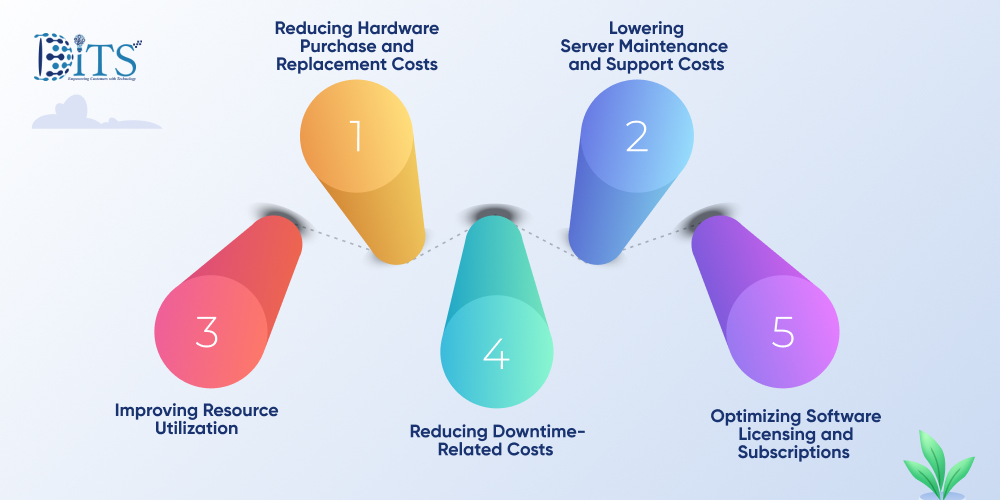
Reducing Hardware Purchase and Replacement Costs
Physical infrastructure is expensive because it asks for a kind of commitment up front, before the business really knows what it will end up needing. Servers, storage systems, backup devices, network gear, and security appliances usually come with upfront spending.
Cloud migration changes the whole pattern. Rather than buying hardware for the next three to five years, companies can rely on cloud resources, mostly as the present workload calls for. That way Canadian SMBs can skip some of the big capital spending, and shift toward more predictable ongoing costs.
Lowering Server Maintenance and Support Costs
Server maintenance takes more time than many executives think. Backups need checking, patches must be applied. Storage alerts need attention; security updates cannot be ignored. When hardware gets older, even “simple” maintenance starts taking longer, because teams have to work around limitations, and that slows everything down.
Cloud platforms cut a big chunk of this manual work. They do not remove IT accountability completely, but they reduce the need to wrangle physical machines, failed drives, worn backup setups, and server-room surprises. This gives internal IT teams room to concentrate on business improvements instead of only keeping systems alive, you know, day after day.
This is especially valuable for companies already investing in cloud computing services to raise performance, tighten security, and improve availability.
Improving Resource Utilization
Lots of companies end up paying for capacity they don’t really use. It happens quietly, and over time it just becomes normal. A server might be sized for peak demand, yet it runs at low usage most of the year. Storage can keep expanding because nobody has cleaned up old data. Backup environments may still be protecting applications that are no longer truly critical for the business.
Cloud migration consultants look at these patterns before recommending a move. They review:
- CPU and memory usage
- Storage growth
- Application dependency
- Backup frequency
- User access patterns
- Seasonal demand changes
- Underused or outdated workloads
This matters because right-sizing is where many cost savings begin. A system that looks “critical” on paper may only need modest resources in practice. Another workload may need better performance during specific hours, not all day. Without this review, businesses often carry their old inefficiencies into the cloud.
Reducing Downtime-Related Costs
Downtime usually isn’t written down cleanly inside infrastructure budgets, but it still costs. Older infrastructure tends to make this worse because failure points grow with time.
Cloud setups can help with availability, backup, and recovery strategy when they are designed with care. Consultants assist organizations in mapping the most critical systems, setting recovery priorities, and arranging migration so it doesn’t cause extra disruption.
Optimizing Software Licensing and Subscriptions
Licensing is one of those cost areas that often hides in plain sight. Companies renew software because they have always renewed it. Teams keep subscriptions because removing them feels risky. Different departments may use similar tools without knowing it.
A structured migration review often exposes these gaps. Consultants can identify unused licenses, duplicate tools, outdated contracts, and applications that no longer match business needs. This is also where a cloud migration company Canada can help businesses compare different licensing models and choose options that better fit actual usage.
Cost Areas Canadian Businesses Should Assess Before Moving To Cloud
Before any migration decision, leadership needs a clear cost picture. A proper view of current infrastructure spending helps businesses understand where money is going today and where cloud adoption can realistically reduce waste.
This step is often missed because companies look at cloud migration as a technical project first. It isn’t. For business owners and executives, it should begin as a cost visibility exercise.
Current Hardware and Server Costs
Hardware cost is usually the most visible part of infrastructure spending, but it is rarely limited to servers alone. A company may start by reviewing server purchases, then quickly realize that storage systems, network devices, backup equipment, firewalls, racks, power protection, and warranty renewals are all part of the same cost chain.
A practical review should include:
- Physical servers and replacement timelines
- Storage systems and capacity growth
- Network equipment and firewall renewals
- Backup hardware and disaster recovery tools
- Warranty extensions and maintenance agreements
- Server room space, power, and cooling
This helps businesses decide whether another hardware refresh makes financial sense or whether cloud migration services Canada may offer a better long-term path.
Operational Costs
Operational costs are harder to track because they are spread across people, tools, and time. A business may not pay a separate invoice every time IT staff patch a server, resolve a storage issue, or monitor backups, but that time still has value.
Key operational costs usually include:
- IT staff hours spent on monitoring and maintenance
- Vendor support contracts
- Backup management
- Security updates and patching
- Infrastructure monitoring tools
- After-hours troubleshooting
- Time spent supporting outdated applications
This is where cloud migration planning becomes useful. It helps businesses separate systems that should move first from systems that need redesign, replacement, or temporary support.
Hidden Costs
Hidden costs are the ones that hurt because they don’t always appear in a monthly IT report. A slow system may not look expensive on paper, yet it can reduce team productivity every day. Poor disaster recovery planning may not cost anything today, but it can become painfully expensive after one serious outage.
Security gaps, manual workarounds, delayed reporting, and outdated integrations also create hidden expenses. They slow people down. They frustrate customers. They make scaling harder than it needs to be.
Here’s a simple way to look at common infrastructure cost areas:
| Cost Area | What Businesses Often Miss | Business Impact |
| Hardware | Backup devices, warranty renewals, storage expansion | Large replacement costs and budget pressure |
| Operations | Staff time, patching, monitoring, vendor support | Less time for business-focused IT work |
| Downtime | Lost productivity, delayed orders, customer frustration | Revenue loss and service disruption |
| Security | Outdated systems, weak backup controls, manual checks | Higher risk and compliance concerns |
| Scalability | Overbuilt capacity or slow upgrades | Waste during quiet periods and delays during growth |
A cloud migration assessment gives executives a clearer view of these costs before they commit to any move.
Searching For Reliable Cloud Migration Consulting Partner Canada?
Work with experienced cloud consultants to develop secure, scalable, and cost-efficient cloud transformation solutions tailored for enterprise business operations.
Cost-Saving Strategies Cloud Migration Consultants Use
For Canadian businesses, this matters because cloud migration is not just an IT relocation project. It affects finance, operations, customer service, security, and growth planning. When done carefully, it gives leadership more control over what they spend and why they spend it.
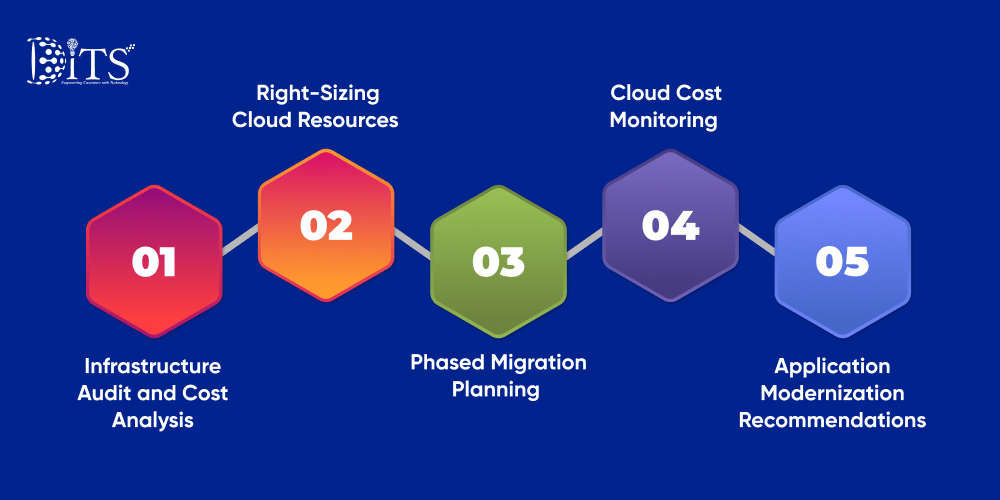
Infrastructure Audit and Cost Analysis
The first step is a detailed audit of the current IT environment. Consultants review servers, storage, applications, backup tools, licenses, support contracts, and network dependencies. This gives the business a practical baseline.
A proper review usually covers:
- Current infrastructure inventory
- Monthly and annual maintenance costs
- Server performance and usage patterns
- Application dependencies
- Security and backup gaps
- Vendor contracts and renewal dates
- Support-heavy systems that drain IT time
This is where many executives see the bigger picture for the first time. The problem may not be “cloud versus servers.” It may be years of small infrastructure decisions that were never reviewed together.
Right-Sizing Cloud Resources
Right-sizing is one of the most practical ways to reduce cloud spending. It means matching cloud resources to actual business usage instead of copying old server capacity into a new environment.
For example, a company may have an on-premise server built for peak traffic, but regular usage may sit far below that level most days. If that same setup is moved to the cloud without review, the business may keep paying for capacity it rarely uses.
Consultants help prevent this by studying:
- CPU and memory usage
- Storage demand
- User activity levels
- Peak business periods
- Application performance needs
- Backup and recovery requirements
This step is especially useful during on premise to AWS migration because workload sizing, storage classes, and usage patterns can strongly affect long-term costs.
Phased Migration Planning
Many Canadian businesses, moving everything together can create more disruption than savings. A phased approach is often safer, cleaner, and easier to manage.
Consultants usually group workloads by priority, complexity, and business impact. Simple applications may move first. High-risk systems may need more preparation. Older applications may require modernization before migration.
A phased plan helps businesses:
- Reduce downtime during migration
- Control project spending
- Test cloud performance in stages
- Avoid overwhelming internal teams
- Learn from early migrations before moving critical systems
- Maintain business continuity during transition
Cloud migration should not feel like pulling the floor out from under the business. It should feel like replacing weak parts of the foundation while operations continue.
Cloud Cost Monitoring
Cloud cost control does not stop after migration. Usage changes. Teams create new environments. Storage grows. Test resources may remain active after projects end. If nobody watches these details, cloud bills can rise quietly.
Consultants help set up cost monitoring, alerts, reporting dashboards, and governance rules. These controls help leadership see which departments, applications, or workloads are driving cloud spend.
Good cloud cost monitoring can include:
- Monthly usage reports
- Budget alerts
- Idle resource tracking
- Storage clean-up policies
- Department-wise cost visibility
- Reserved capacity recommendations
- Regular optimization reviews
This gives businesses more financial discipline after migration. Not perfect control, of course, because business needs change. But much better visibility than waiting for a surprising invoice.
Application Modernization Recommendations
Some applications should not be moved exactly as they are. Older systems may be too slow, too rigid, or too expensive to operate in a cloud environment without changes. Consultants can identify where modernization makes sense and where it does not.
This is where cloud migration planning connects with broader business improvement. The company is not just reducing infrastructure cost. It is preparing systems to support growth, automation, better reporting, and faster service delivery.
Why Choose DITS For Cloud Migration Consulting Services
Cloud migration is not only about moving servers to a cloud platform. For most Canadian businesses, the bigger concern is whether the move will actually reduce cost, improve performance, and make systems easier to manage. It needs proper assessment, business-focused planning, and post-migration optimization.
As a custom software development company, DITS brings a software development mindset to cloud migration, which is useful when businesses need application modernization, system integration, or cloud-ready software improvements alongside infrastructure migration.
The team reviews current infrastructure, application dependencies, security requirements, operational pain points, and future growth plans before recommending a migration path.
DITS can support Canadian businesses with:
- Cloud readiness review and infrastructure assessment
- Workload prioritization and migration roadmap
- Cloud cost optimization and resource right-sizing
- Application modernization planning
- Security, access, and compliance-focused setup
- Integration with existing business systems
- Post-migration support and performance improvement
DITS also brings a software development mindset to cloud migration. At DITS, we use AI for software development, quality assurance, maintaining code quality, and customization.
We also integrate AI into every software we develop, which helps businesses build smarter, more adaptable systems around their cloud environment. This is especially valuable when migration connects with application modernization or AI software development needs.
A good cloud partner should not just hand over a new platform and leave the business with the very same old issues, like nothing really changed. The target should be something like cleaner systems, clearer cost visibility, better dependability, and just enough adaptability to carry the next growth phase. This is exactly where DITS puts its cloud migration effort: practical, cost-aware, and shaped around actual business results, not abstract promises.
Planning To Modernize Enterprise Infrastructure Using Cloud Solutions?
Implement cloud-based systems that improve operational visibility, business continuity, and infrastructure scalability while lowering long-term operational expenses successfully.
Conclusion
Reducing infrastructure costs is one of the strongest reasons Canadian businesses look at cloud migration, but savings do not come from simply moving systems online. They come from knowing what to move, what to resize, what to retire, and what to modernize. That is where planning makes all the difference.
Start with a clear assessment, get a grip on current infrastructure spending, then map the business-critical workloads, and build a migration plan that trims waste without messing up ongoing operations.
With the proper support, cloud migration can lower hardware dependency, reduce maintenance pressure, improve recovery planning, and give teams more room to scale, or at least move quicker.
For Canadian companies that want sharper cost visibility, and fewer infrastructure surprises, cloud migration is really a business decision. And if it’s handled with the right strategy, it can shift IT infrastructure from a repeating cost burden into a more flexible base for growth.
FAQs
What are cloud migration services?
Cloud migration services are kinda like the practical support team that helps companies move their applications , data , servers and other workloads away from on- premise setups into a cloud environment. In practice, it tends to involve a set of steps like assessment and planning , then actual migration , plus security setup , and then testing. After that there’s post migration optimization too, so the company can loosen the infrastructure grip without messing up day to day operations.
How do cloud migration services reduce infrastructure costs?
With cloud migration, a business can cut costs because it spends less on physical servers, backup hardware , server-room space, maintenance contracts and those last minute emergency repairs. It also means companies can match computing resources to real demand instead of keeping everything overbuilt “just in case”. That can cut down waste from infrastructure that’s either too much or not enough for what’s actually used.
How can DITS cloud migration services help reduce IT spending?
DITS cloud migration services help businesses look at their current setup, spot costs that are avoidable, and put together a migration roadmap that actually reflects real usage, plus day to day business priorities . The team also handles cloud readiness checks, cloud migration planning, application modernization, integration work, security configuration, and post migration optimization , so companies can cut down on waste and get much better cost visibility.
Is cloud migration suitable for small and mid sized Canadian businesses?
Yes, cloud migration can be a good fit for small and mid sized Canadian businesses especially if they are stuck with aging servers, facing more maintenance costs , dealing with limited scalability, or struggling with remote access . The important part is to begin with a proper assessment , because the business should not shift unnecessary workloads, or end up paying for more cloud capacity than what they truly require.
What makes DITS cloud migration services useful for growing companies?
DITS cloud migration services are helpful for growing companies because they consider both technical reality and business results. Instead of just transferring systems into the cloud, DITS supports workload migration, reduces infrastructure stress, improves elastic scaling, strengthens backup planning , and prepares the environment for upcoming growth .

Dinesh Thakur
21+ years of IT software development experience in different domains like Business Automation, Healthcare, Retail, Workflow automation, Transportation and logistics, Compliance, Risk Mitigation, POS, etc. Hands-on experience in dealing with overseas clients and providing them with an apt solution to their business needs.
Recent Posts

Explore how prior authorization software uses AI to automate workflows, reduce administrative effort, improve request accuracy, streamline approvals, and minimize treatment delays for healthcare organizations.

Discover how AI to improve patient experience in hospitals streamlines scheduling, communication, triage, queue management, and personalized care while enhancing operational efficiency.

Learn how IoT powers smart factories with connected devices, automation, predictive maintenance, and analytics.