How Legal Practice Management Software Helps Small Firms
Table Of Content
Published Date :
02 Dec 2025
Smaller law firms often lack a large support team to handle the day-to-day administrative work. Yet they’re still handling the same responsibilities, deadlines, and client demands as much larger firms. Running the legal practice with a small team and without legal practice management software can create a circumstance of disorganization and chaos.
Most Canadian firms don’t struggle because of poor legal work; they struggle with everyday clutter: misplaced documents, slow billing cycles, and delayed follow-ups that slip through the cracks. All this may not seem alarming at first, but suddenly, everything feels urgent at once.
The right legal practice management software can change that. Centralizing your cases, documents, billing, and communications in one place helps businesses regain control of their workload, streamline dates, and spend more time practicing law instead of managing chaos.
What Is Legal Practice Management Software?
Legal groups continually face a multitude of responsibilities: keeping clients informed, tracking research notes, maintaining communication with clients, processing billing, and meeting deadlines. Legal practice management software digitally consolidates all these activities into a well-defined structure. It creates a space for retaining everything in its proper order, in one central location.
Law offices using legal practice management software Canada typically utilize a central server/database that includes a Digital Case File storage system, and a fully integrated Calendar System linked directly to the Case Files. Law practices that utilize legal practice management software Canada, appreciate that they comply with local privacy laws and the established methods of day-to-day operation of Canadian law firms.
The ultimate outcome of using legal practice management software is reduced administrative stress, as the need to track down missing files is reduced, enabling greater productivity and predictability within a practice.
Ready to Modernize Your Legal Workflow?
Empower your small firm with a scalable, automated practice management ecosystem tailored for Canadian operations. Drive efficiency and eliminate admin bottlenecks.
Why Small Canadian Law Firms Need Practice Management Software?
Small firms in Canada often run on tight schedules and even small teams. A single person might handle calls in the morning, update case files after lunch, and chase missing documents by the end of the day. It works until the volume grows, but soon, little gaps start appearing. A missed deadline, a delayed invoice, or a misplaced file can lead to loss of productivity and efficiency.
Canadian practices also carry extra responsibilities around data privacy and document handling. Courts expect accurate filings, and clients expect timely communication. And regulators expect firms to manage information securely. When data is scattered across systems or in half-digital, half-paper processes, it becomes challenging for small firms to handle multiple tasks and responsibilities.
That’s where legal practice management software becomes more than a convenience. It gives small teams structure. It keeps calendars aligned, documents secured, and communication organized. Instead of reacting to problems at the last minute, firms start preventing them almost without noticing the shift.
Key Ways Legal Practice Management Software Helps Small Firms
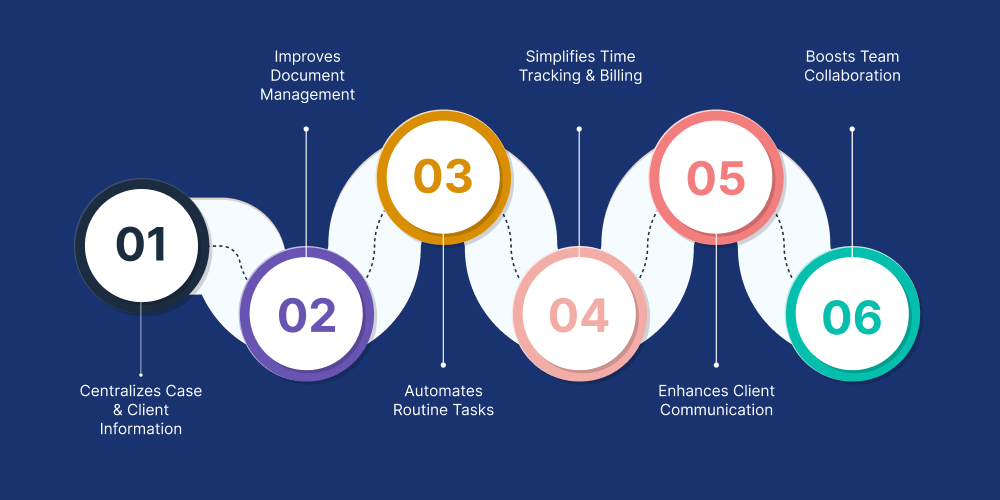
Legal practice management software helps small companies in multiple ways, like centralizing client information, automating routine tasks, simplifying tracking, billing, enhancing client communication and improving collaboration between teams.
Centralizes Case & Client Information
One of the biggest challenges for small firms is keeping everything in one reliable place. A case might start in an email, move to a shared folder, and then end up partly on someone’s laptop. By the time another team member steps in, half the picture is missing. That constant back-and-forth eats time and creates avoidable mistakes.
A central system changes the rhythm completely. Case notes, client records, timelines, and documents are organized in a single dashboard. Even simple things like checking the latest communication or pulling up a file during a call happen faster because everything is already there.
For many firms, this shift brings a quiet sense of relief. When information lives in a single, structured place, work stops feeling scattered. It also lays the groundwork for smoother business workflow automation, since the foundation is finally stable.
Improves Document Management
Legal practice management software makes storing, organizing, and retrieving legal documents faster and convenient.
Small firms often spend more time just locating documents. A contract saved in one folder, a scanned form on someone’s desktop, and an old version tucked inside an email chain, it adds up.
A streamlined document system fixes that. Files stay organized in one structured library, and the search function makes them easy to search. Even last-minute requests, the ones that usually cause panic, become manageable because the firm knows where everything lives.
For Canadian practices, this brings another advantage: better control over sensitive data. With proper access settings and secure storage, teams don’t have to worry about files ending up in the wrong hands or stored on unsafe devices.
Automates Routine Tasks
Small firms often lose time in small pockets: booking meetings, sending reminders, preparing intake forms, updating task lists, or checking who is handling what.
With automation, systems sends reminders on their own, updates timelines, and handles follow-ups the moment they are due. Even simple tasks like generating templates or organizing new client information become automatic. It saves energy and reduces errors because fewer things rely on memory.
Automation also creates consistency. Instead of each staff member doing things differently, the software keeps the workflow steady. And when the process stays consistent, the team gets more predictable results.
This is also one area where DITS stands out. Since we rely on AI for software development, code quality, and customization, our systems often deliver even more innovative automation features built on the same principles used in AI software development.
Simplifies Time Tracking & Billing
Legal practice management software enables firms to save time and reduce billing mistakes when tracking hours and generating invoices within one organized system.
Timekeeping becomes easier when it is built into everyday workflows. Instead of writing hours on sticky notes or updating spreadsheets at the end of the week, entries get logged as work happens. The system then turns those records into clean invoices without extra calculation or backtracking.
For small teams, this prevents missed billables and smooths out cash flow. Clients also appreciate accurate, transparent billing. Overall, it reduces end-of-month stress and keeps revenue predictable.
Enhances Client Communication
Using legal practice software makes communication clearer and more organized when conversations and updates move into a structured system instead of scattered channels.
Client messages, shared files, and updates stay in one place. This eliminates the need for searching through emails or trying to recall who said what on which day. A client portal makes it easier to share documents securely and provide quick updates without long back-and-forth threads.
Firms often notice fewer delays and fewer misunderstandings once communication becomes centralized. It creates a smoother experience for both clients and the team, especially during busy periods.
To enhance the communication and provide better client services, we at DITS also offer AI chatbot development services in Canada. AI chatbot services enables Canadian law firms to respond client queries even in odd hours which lead to improved client satisfaction.
Boosts Team Collaboration
Teamwork improves when everyone works inside one connected system. Small firms often rely on quick chats or long email chains to stay aligned. It works for a while, but as cases grow, information gets scattered. A structured system pulls everything together: tasks, deadlines, notes, and updates.
Team members can see progress in real time and pick up where someone else left off without confusion. It reduces duplicate work and cuts back on constant check-ins. Even hybrid or part-time staff stay in sync because the workflow stays visible. Collaboration becomes smoother and a lot more predictable.
Want to Streamline Case Operations Effortlessly?
Unlock centralized case handling, automated tasks, and seamless billing through a purpose-built platform engineered for small Canadian law practices.
Specific Benefits For Small Law Firms In Canada
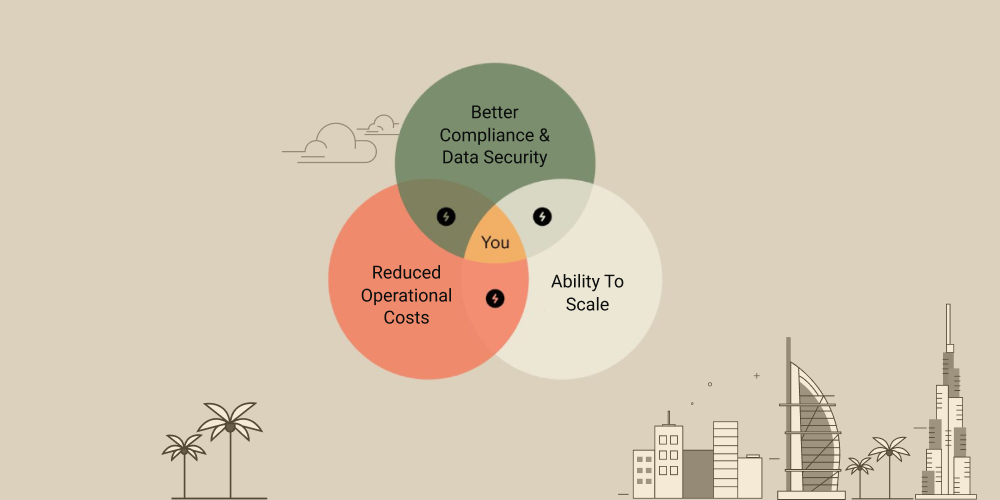
Legal practice management software offers some advantages that matter specifically to Canadian practices, especially around compliance, cost control, and long-term stability.
Better Compliance & Data Security
A structured digital system helps firms handle sensitive documents more safely. Access controls, secure storage, and clear file trails reduce the risk of misplaced information. Since Canadian clients expect strong privacy standards, having a reliable setup builds trust and minimizes compliance issues.
Reduced Operational Costs
Once documents, schedules, and billing move into one system, administrative work drops noticeably. Teams waste less time searching for files or correcting mistakes. Even small time savings each week add up, reducing overhead without hiring extra staff. It also supports more consistent billing, which helps stabilize cash flow.
Ability To Scale
As caseloads grow, legal practice management software for small legal firms keeps operations steady. Workflows remain consistent, new staff learn processes faster, and the team doesn’t feel stretched during busy periods. It gives firms the freedom to expand without redesigning the entire system each time work increases.
Why Choose DITS For Legal Practice Management Software
DITS understands how small law firms function: intake, case tracking, scheduling, billing, document handling, and communication. We tailor software around a firm’s actual workflow instead of forcing teams to adjust to rigid templates. This creates smoother adoption and better long-term efficiency.
DITS integrates AI into development, testing, code quality checks, and system optimization. This results in faster delivery, smarter automation features, and cleaner performance. The outcome is software that evolves with the firm’s changing needs.
Canadian firms deal with sensitive records daily. DITS ensures that every solution follows strict security practices, including encrypted storage and controlled access. This reduces the risk of information leaks and maintains client trust.
DITS connects the software with calendars, email tools, accounting systems, and task managers. Integrations reduce manual work and improve accuracy across daily operations. The result is a unified, stable ecosystem that supports growth.
With almost a decade of experience in building custom software, and 97 percent client retention, DITS is a name law firms in Canada can trust for streamlining their legal practice management.
Want a Custom Solution for Your Firm’s Workflow?
Experience a tailored legal practice management system built around your processes, not generic templates powered by AI-led development.
Conclusion
Legal practice management software gives small Canadian firms the structure they often need but rarely have time to build on their own. Once routines are organized and documents are kept in predictable places, the entire workflow shifts. Cases move smoothly, billing becomes clearer, and teams feel less overwhelmed by daily tasks.
The right system doesn’t just streamline operations; it also makes systems and processes scalable to grow with the business. And with a technology partner like DITS, companies also get the advantage of AI-enhanced development and tailored features that match how their practice works, not how generic tools expect them to work.
FAQs
What Is Legal Practice Management Software Used For?
It helps firms manage cases, documents, schedules, billing, and communication in one organized system. Everything stays in one place, which reduces confusion and saves time.
Do Small Law Firms Really Need Software Like This?
Yes. Smaller teams handle multiple responsibilities at once, and manual processes slow them down. Software keeps tasks structured and prevents common mistakes during busy periods.
Is Legal Practice Management Software Canada-Compliant?
Most modern platforms include secure storage, access controls, and privacy features that align with Canadian expectations for handling client information.
How Long Does It Take To Set Up?
Many small firms can start with essential features within a few days. Additional modules or data migration can be added gradually without disrupting ongoing work.
Can DITS Build Custom Solutions For My Firm?
Yes. DITS designs tailored systems based on a firm’s workflow. Our AI-enhanced development and QA process ensures faster delivery and better code quality.
Does It Integrate With Other Tools?
Yes. It can connect with calendars, accounting systems, email tools, and document platforms to simplify operations and reduce manual entry.
How Much Does Legal Practice Software Cost For Small Firms?
Pricing depends on features and complexity. Most firms begin with a basic setup and expand as their needs grow, avoiding unnecessary costs upfront.

Dinesh Thakur
21+ years of IT software development experience in different domains like Business Automation, Healthcare, Retail, Workflow automation, Transportation and logistics, Compliance, Risk Mitigation, POS, etc. Hands-on experience in dealing with overseas clients and providing them with an apt solution to their business needs.
Recent Posts
Explore how prior authorization software uses AI to automate workflows, reduce administrative effort, improve request accuracy, streamline approvals, and minimize treatment delays for healthcare organizations.

Discover how AI to improve patient experience in hospitals streamlines scheduling, communication, triage, queue management, and personalized care while enhancing operational efficiency.

Learn how IoT powers smart factories with connected devices, automation, predictive maintenance, and analytics.