How Digital Transformation in Healthcare Helps Reduce Costs
Table Of Content
Published Date :
24 Feb 2026
Key Takeaways
- Digital transformation reduces hidden operational waste.
- Workflow automation lowers administrative overhead.
- Integrated systems improve revenue cycle performance.
- Real-time data enables proactive cost control.
- Legacy modernization prevents long-term IT drain.
- Structured implementation delivers measurable ROI.
Healthcare leaders are under constant pressure to do more with less. Rising operating costs, staff shortages, and increasing patient expectations leave little room for inefficiency. Many organizations still rely on fragmented systems and manual processes that quietly drain budgets and affect care quality. That’s where digital transformation in healthcare brings consistency, helps reduce costs, improves operational efficiency, and patient care.
Digital transformation removes friction from daily operations and improves clinical consistency without compromising patient outcomes. When done with a clear business lens, technology becomes a lever for measurable savings and better care delivery. The organizations seeing results are those treating transformation as a strategic shift.
What is Digital Transformation in Healthcare
For many healthcare organizations, transformation is often mistaken for buying new software or upgrading infrastructure. In reality, digital transformation in healthcare is a shift in how care, operations, and decisions are designed to work together. It focuses on replacing disconnected workflows with systems that share data, reduce delays, and support faster action.
Consider a mid-sized hospital still relying on manual approvals and siloed reporting. Finance teams chase numbers, clinicians wait on updates, and leadership reacts late. Transformation fixes this by aligning clinical systems, operational tools, and analytics around common goals like cost control and care consistency.
This is where well-planned digital transformation services play their role. When systems talk to each other, and teams work from the same data, efficiency improves quietly but decisively. And that’s when real value starts to show.
Are rising healthcare costs slowing growth?
Discover how structured digital transformation reduces operational waste, strengthens revenue cycles, and delivers measurable cost control outcomes.
Key Cost Challenges in Healthcare Organizations
Healthcare costs rarely rise because of one big failure. They increase slowly, hidden inside everyday operations that no one questions anymore. Over time, these small inefficiencies turn into major financial pressure.
Some of the most common cost drivers include:
- High administrative overhead caused by manual scheduling, billing, and documentation
- Poor care coordination leading to duplicated tests and delayed treatments
- Limited visibility into real-time data, forcing leaders to make decisions too late
- Aging systems that are expensive to maintain but difficult to replace
Most teams know these issues exist yet fixing them feels risky. Replacing core systems sounds disruptive, and no one wants downtime in a live care environment. As a result, costs keep creeping up while quality metrics struggle to move.
This is often the point where legacy application modernization becomes unavoidable. Outdated platforms slow everything down, from clinical workflows to financial reporting. Modernizing them helps stop avoidable cost leaks before they become structural problems.
How Digital Transformation Reduces Healthcare Operational Cost
Cost reduction comes from removing friction that quietly eats into budgets every day. When hospitals digitize with intent, savings show up in places leadership teams often overlook.
One of the fastest wins comes from business workflow automation. Manual approvals, repetitive data entry, and paper-heavy processes slow teams down and inflate staffing costs. Automating these workflows shortens billing cycles, reduces claim rejections, and frees clinical staff from non-clinical work. The impact is immediate and measurable.
There is also a growing role for AI software development when applied with discipline. At DITS, AI is embedded into software development, quality assurance, code maintenance, and customization. This reduces rework, improves system reliability, and lowers long-term support costs. Fewer defects mean fewer operational disruptions. And fewer disruptions mean predictable spending.
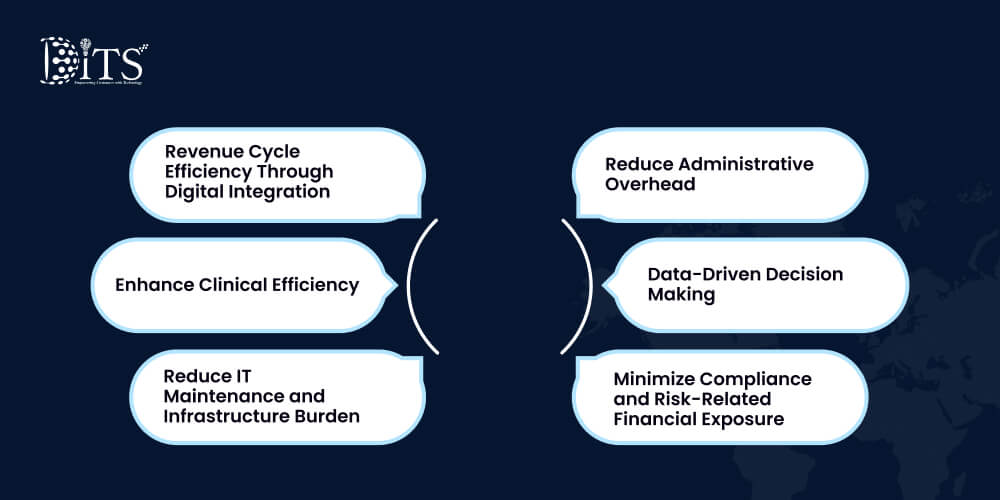
Revenue Cycle Efficiency Through Digital Integration
For most healthcare organizations in the U.S., revenue loss happens through delayed claims, eligibility errors, and denied reimbursements. These gaps strain cash flow and increase administrative workload.
Digital transformation strengthens revenue cycle management by connecting patient intake, coding, billing, and claims tracking into a unified system. When finance teams have access to real-time dashboards instead of monthly summaries, decisions shift from reactive to proactive.
Faster reimbursements reduce borrowing pressure. Improved claim accuracy lowers rework. Over time, even a small percentage improvement in claim acceptance can translate into substantial annual savings for mid-sized clinics and hospitals.
Reduce Administrative Overhead
Healthcare administrators often assume that rising patient volumes require additional staff. In many cases, inefficiencies are the real issue. Manual documentation, repetitive scheduling adjustments, and fragmented communication channels absorb valuable time.
Digital platforms centralize scheduling, automate appointment reminders, and simplify documentation workflows. This improves productivity without expanding payroll.
In large multi-location practices, even minor improvements in scheduling efficiency can reduce overtime expenses significantly. Over a year, this becomes a meaningful cost-control lever.
When teams operate within streamlined digital workflows, variability decreases. Fewer errors mean fewer corrections. Fewer corrections mean lower administrative cost.
Enhance Clinical Efficiency
Clinical inefficiency has a direct financial impact. Duplicate testing, delayed diagnoses, and extended lengths of stay increase costs without improving outcomes.
When Electronic Health Records are optimized and supported by integrated clinical decision tools, physicians gain quicker access to complete patient histories. Better visibility reduces redundant diagnostics and supports faster treatment decisions.
Care coordination platforms also play a critical role. When providers share information, discharge planning improves and readmission rates drop. Avoiding preventable readmissions protects reimbursement rates and reduces penalty risks under U.S. value-based care models.
Data-Driven Decision Making
Many healthcare leaders still rely on retrospective reporting. By the time financial patterns are visible, the opportunity to intervene has passed.
Digital transformation introduces real-time analytics into operational and clinical workflows. Leaders can identify high-cost service lines, underutilized assets, and patterns in supply usage before they escalate.
Predictive analytics helps forecast patient volume, staffing needs, and equipment demand. This reduces emergency spending and prevents reactive hiring.
When decisions are based on live data instead of assumptions, cost management becomes structured.
Reduce IT Maintenance and Infrastructure Burden
Legacy systems are expensive to maintain. Licensing costs rise, integrations fail, and security patches demand constant attention. Many organizations spend heavily just to keep outdated platforms running.
Modernized, interoperable systems reduce duplication in IT infrastructure. Centralized platforms lower maintenance contracts and simplify vendor management. Standardized architecture reduces long-term customization expenses.
Over time, the total cost of ownership decreases. Instead of allocating budgets toward maintaining old systems, organizations can reinvest in patient-centered innovation.
Minimize Compliance and Risk-Related Financial Exposure
Regulatory penalties, audit failures, and data breaches are among the most expensive events healthcare organizations face.
Digitally integrated compliance tracking, automated reporting, and secure data management systems reduce the likelihood of non-compliance. Real-time audit logs simplify regulatory preparation and minimize manual documentation stress.
Proactive cybersecurity integration protects against breach-related losses, legal expenses, and reputational damage. Prevention is far less expensive than recovery.
Risk mitigation is not always visible in monthly reports, but it directly protects long-term financial stability.
Ready to improve financial performance in healthcare?
Explore tailored digital strategies that streamline workflows, modernize legacy systems, and strengthen long-term operational sustainability.
Why Choose DITS For Digital Transformation in Healthcare Services
Healthcare transformation fails when technology is delivered without context. At DITS, the focus stays firmly on business outcomes, not just system upgrades. Every initiative begins with a clear understanding of how care is delivered, where costs are leaking, and which processes slow teams down when pressure is highest.
What sets DITS apart is the way technology is engineered behind the scenes. AI is embedded across software development, quality assurance, code quality management, and customization. This approach reduces defects, improves system stability, and shortens release cycles. The result is software that performs reliably in live healthcare environments, not just in testing.
DITS also brings practical experience in building scalable platforms, patient-facing solutions, and operational systems through healthcare app development that fits real-world workflows. Solutions are designed to integrate smoothly, support compliance, and evolve as organizational needs change.
For healthcare leaders, this means fewer surprises, controlled costs, and systems that quietly support growth instead of limiting it. That reliability makes the difference.
Conclusion
Healthcare organizations are reaching a point where incremental fixes no longer deliver meaningful results. Cost pressures continue to rise, quality expectations keep getting higher, and legacy ways of working simply cannot keep pace. The organizations making progress are not doing more. They are working smarter, with systems designed to support people instead of slowing them down.
When transformation is approached with clear objectives, phased execution, and accountability, the results are tangible. Operational waste reduces. Decision-making improves. Care delivery becomes more consistent. Most importantly, leaders regain visibility and control over performance.
This is not about technology for technology’s sake. It is about building a healthcare environment that is financially sustainable and clinically reliable, even under pressure. And once that foundation is in place, improvement becomes continuous rather than reactive.
FAQs
What is digital transformation in healthcare focused on most?
It focuses on improving how care is delivered and managed by removing operational friction, connecting systems, and enabling faster, data-backed decisions. The primary goals are cost control, consistency in care delivery, and better visibility for leadership without disrupting clinical workflows.
How long does a healthcare digital transformation typically take?
Timelines vary based on scope, but most organizations see early operational improvements within 6 to 9 months. Full-scale transformation usually unfolds in phases over 18 to 24 months, allowing teams to manage risk while delivering measurable value along the way.
Which areas deliver the fastest cost savings?
Administrative workflows, billing cycles, and reporting systems often deliver the quickest returns. Automating these areas reduces manual effort, shortens revenue cycles, and lowers error-related costs without impacting patient-facing operations.
How can healthcare organizations start with limited budgets?
The most effective approach is to begin with high-impact use cases rather than large-scale rollouts. Targeting bottlenecks, modernizing critical systems, and improving data flow first helps fund later stages through realized savings.

Nidhi Thakur
With more than 19 years of experience - I represent a team of professionals that specializes in the healthcare and business and workflow automation domains. The team consists of experienced full-stack developers supported by senior system analysts who have developed multiple bespoke applications for Healthcare, Business Automation, Retail, IOT, Ed-tech domains for startups and Enterprise Level clients.
Recent Posts
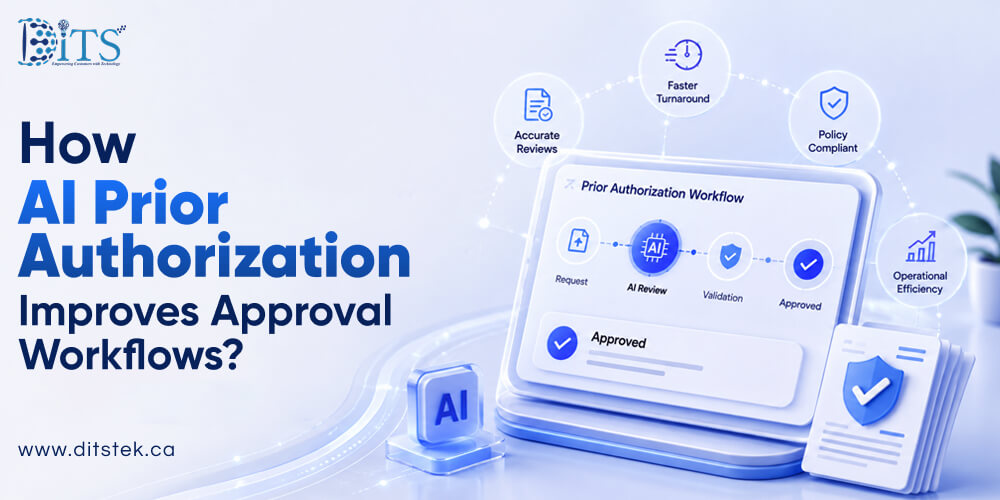
Explore how prior authorization software uses AI to automate workflows, reduce administrative effort, improve request accuracy, streamline approvals, and minimize treatment delays for healthcare organizations.
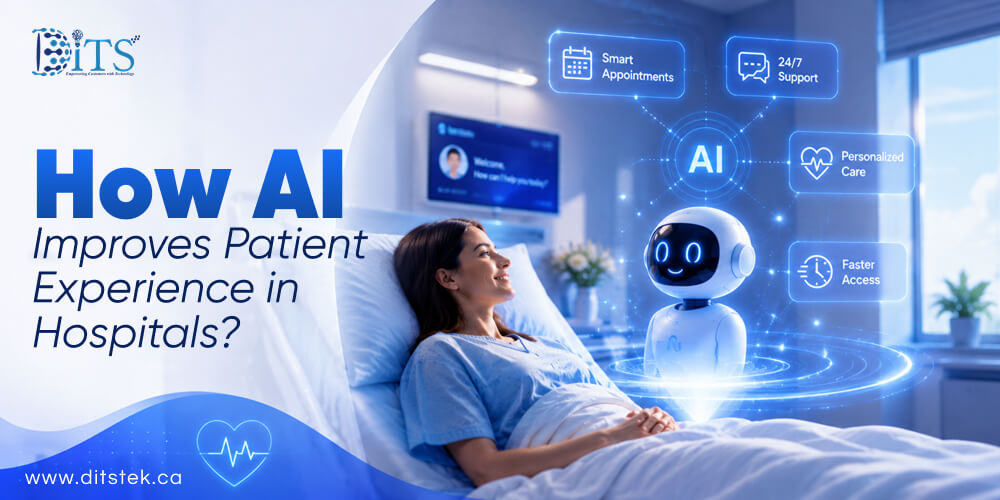
Discover how AI to improve patient experience in hospitals streamlines scheduling, communication, triage, queue management, and personalized care while enhancing operational efficiency.

Learn how IoT powers smart factories with connected devices, automation, predictive maintenance, and analytics.