Published Date :
13 Mar 2026
Key Takeaways
Across Canada, businesses today rely heavily on digital systems to manage sales, operations, customer interactions, and internal workflows. From logistics companies coordinating deliveries to healthcare providers handling patient records, applications sit at the center of everyday operations. When those systems slow down or fail, the disruption travels quickly across departments and sometimes across the entire organization.
This is exactly where application support and maintenance services become essential. The right partner ensures that business-critical applications remain stable, secure, and optimized as demand grows. For Canadian companies operating in competitive markets such as Vancouver or Montreal, selecting the right support provider becomes a strategic move that protects revenue, safeguards reputation, and keeps digital operations running smoothly.
When business applications run smoothly, most executives barely notice them. Systems process transactions, generate reports, and keep workflows moving quietly in the background. But when proper upkeep is missing, cracks start appearing in ways that affect the entire organisation.
Many companies across Canada discover these problems only after the damage is already done.
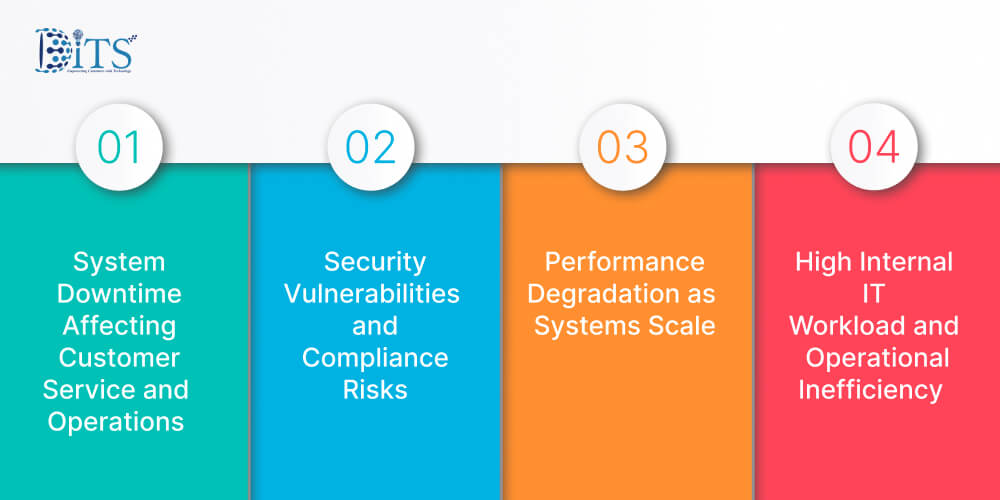
Downtime rarely arrives with a warning. One minute the platform works, the next minute employees cannot access critical dashboards or customers cannot complete purchases. A logistics company in Vancouver once experienced a scheduling system failure during peak delivery hours. Drivers were left waiting, orders piled up, and support teams spent hours manually correcting the mess.
Without structured software application support and maintenance services, small technical glitches can quickly turn into operational crises.
Applications that are not updated regularly often carry hidden vulnerabilities. Security patches remain unapplied, outdated libraries stay active, and integrations with external systems become weak entry points.
For industries operating under strict compliance standards in cities like Montreal, such gaps create serious exposure. One missed update can trigger data protection concerns, regulatory scrutiny, and expensive remediation work.
Applications that perform well during early deployment may struggle once business volume grows. More users, larger databases, and complex integrations begin stressing the system architecture.
A manufacturing company expanding operations in Toronto once faced slow reporting dashboards that delayed decision -making by several hours every day.
Proper software maintenance services ensure that applications evolve alongside business growth rather than becoming operational bottlenecks.
Internal IT teams often juggle multiple responsibilities. Infrastructure management, cybersecurity, user support, and new development projects compete for attention. Maintenance tasks for existing applications slowly move down the priority list.
Over time, unresolved bugs accumulate, performance declines, and minor issues multiply into major disruptions. Partnering with experts providing web application maintenance and support services allows internal teams to focus on innovation instead of constantly fighting technical fires.
When these challenges combine, they create something no business leader wants unpredictable systems and costly operational interruptions. Which is exactly why selecting the right support partner becomes a critical leadership decision.
Connect with specialists who analyze your application ecosystem and recommend structured support frameworks designed for performance stability, security, and growth.
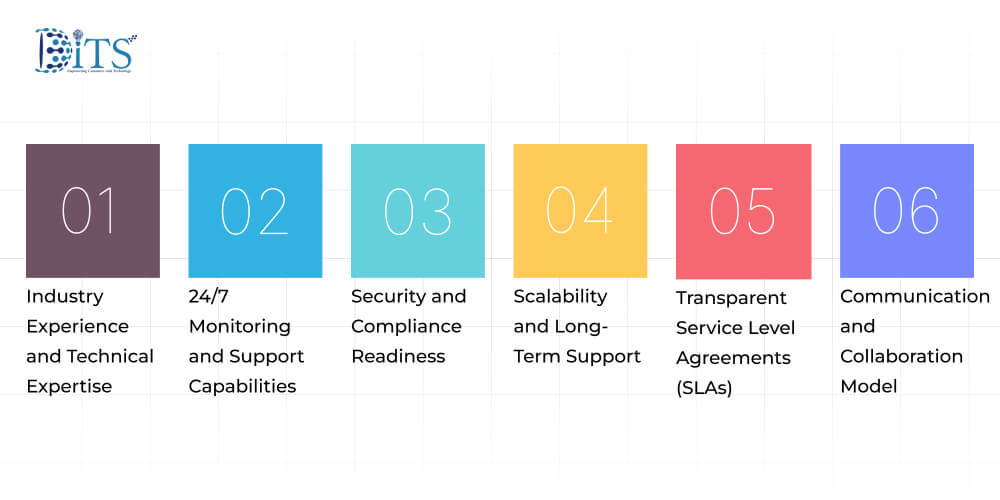
Selecting a reliable partner is not only about technical capability. It is about ensuring that the provider understands how applications influence business continuity, customer experience, and operational efficiency. Companies evaluating application support and maintenance services should focus on a few essential capabilities that directly affect long-term reliability.
Enterprise systems behave differently across industries. A support provider should demonstrate experience managing complex software environments and modern architectures.
Organizations that also operate as a custom software development company often bring deeper engineering insight because they understand how applications are designed, deployed, and maintained over time. That technical depth helps resolve issues faster and prevents recurring system problems.
Business applications rarely stop running, especially for companies serving customers across different time zones.
Reliable providers maintain continuous monitoring, automated alerts, and structured incident response processes. Early detection allows technical teams to resolve issues before they affect users or disrupt operations.
Security management has become a critical responsibility for support partners. Regular vulnerability checks, patch updates, and secure configuration management should be part of routine operations.
Many organizations are also strengthening monitoring capabilities through AI integration, which helps detect unusual system activity or performance irregularities faster than traditional tools.
As companies grow, application workloads increase. Databases expand, integrations multiply, and performance demands rise.
Support partners must anticipate these changes and recommend improvements before performance declines. In many cases, long-term support strategies also align with legacy application modernization, helping businesses gradually upgrade older systems without disrupting ongoing operations.
Clear Service Level Agreements define how support will be delivered. Response times, resolution windows, and system availability commitments should be documented and measurable.
Well-defined SLAs ensure accountability and provide businesses with predictable operational support.
Successful partnerships depend on clear communication. Effective providers maintain structured reporting, shared issue tracking, and regular review meetings.
When collaboration works smoothly, the support team functions almost like an extension of the internal IT department, ensuring problems are resolved quickly and systems continue operating reliably.

Most successful companies follow a structured evaluation process that helps them understand their internal needs first and then match those needs with the right provider. Skipping this process often leads to rushed decisions and partnerships that fail to deliver long-term value.
A practical selection process usually follows several key stages.
Before engaging any vendor, organisations must clearly understand their own systems. Many companies operate dozens of applications supporting finance, customer service, logistics, and analytics.
Create an inventory of critical systems and identify which ones directly impact business operations. This exercise often reveals hidden dependencies, outdated integrations, or performance gaps that need immediate attention.
For example, organisations operating digital patient portals or telemedicine platforms must evaluate the reliability of these systems for healthcare app development initiatives that support patient engagement, clinical workflows, or remote consultations.
Not every application requires the same level of support. Some systems may only require periodic updates, while others demand constant monitoring and rapid incident response.
Define what type of software application support and maintenance services your organization truly needs. These requirements may include performance monitoring, patch management, security updates, integration support, or database optimization.
Clear requirements make vendor comparison far easier.
Once internal needs are documented, the next step is identifying vendors with relevant expertise.
Look beyond marketing claims. Evaluate providers based on their technical capabilities, industry experience, and long-term support model. Companies that also develop enterprise software often bring stronger engineering insight because they understand how applications behave across their entire lifecycle.
Shortlisting two or three qualified providers allows leadership teams to perform deeper evaluations.
This stage focuses on operational readiness. Ask vendors about monitoring tools, incident management frameworks, testing processes, and performance optimisation methods.
Carefully review Service Level Agreements as well. Response times, escalation procedures, and reporting structures must be clearly defined before entering a long-term engagement.
Strong technical foundations often separate reliable support providers from basic helpdesk-style services.
Before committing to a full contract, many organisations conduct a limited pilot engagement. This allows both sides to test collaboration, communication workflows, and technical response capabilities.
A short pilot project can reveal how the vendor handles real-world problems rather than theoretical scenarios.
Once the right partner is identified, the final step involves formalising the long-term engagement. This includes defining SLA commitments, governance frameworks, and review mechanisms.
Forward-thinking partners also integrate automation and intelligent monitoring within their support environments. At DITS, for example, engineering teams incorporate AI-driven tools into software development, quality assurance, and code maintenance processes to maintain consistent performance and code quality across supported systems.
A well-structured partnership ultimately transforms software maintenance from a reactive task into a proactive operational strategy.
Evaluate your current application environment with experienced engineers and identify proactive maintenance strategies that prevent disruptions and strengthen system reliability.
Many Canadian organisations are gradually shifting application maintenance responsibilities to specialized service providers. Managing complex enterprise systems internally often requires large teams, continuous monitoring, and deep technical expertise. For many companies, maintaining such resources full-time is neither efficient nor sustainable.
Rising technology talent costs in cities like Toronto and Vancouver have also contributed to this shift. Recruiting experienced engineers for ongoing system monitoring, patch management, and troubleshooting can significantly increase operational expenses.
At the same time, modern applications have become far more interconnected. APIs, integrations, and growing data volumes introduce performance and stability challenges that require structured software maintenance services to manage effectively.
Outsourcing allows businesses to access experienced specialists without expanding internal teams. Providers offering web application maintenance and support services handle monitoring, updates, and optimisation while internal teams focus on strategic initiatives.
Selecting a technology partner is rarely just about technical capability. Business leaders want reliability, transparency, and a team that understands how software systems support revenue and operational continuity. That is where DITS focuses its approach.
DITS delivers structured application support and maintenance services designed to keep enterprise systems stable, secure, and scalable as businesses grow. Instead of reacting to issues after they occur, the focus remains on proactive monitoring, early detection of performance bottlenecks, and continuous system optimization.
Several capabilities differentiate the DITS support model.
Another important aspect is engineering discipline. DITS integrates intelligent automation into software development, testing, and maintenance processes. AI-driven tools assist development teams in code analysis, quality assurance, and customization efforts, helping maintain consistent code quality and system stability across supported platforms.
As an experienced AI software development company, DITS also incorporates intelligent monitoring models and predictive analytics within application support environments. These capabilities help engineering teams detect anomalies, forecast system failures, and resolve issues before they impact end users.
Organizations seeking reliable software application support and maintenance services often look for partners capable of supporting both existing systems and future improvements. DITS addresses this need by combining strong engineering practices with structured long-term support frameworks.
The result is a partnership that keeps applications reliable while allowing internal teams to focus on innovation and business growth.
Explore how proactive monitoring, structured maintenance, and expert engineering support can help keep your enterprise applications secure and optimized.
Modern businesses run on software. Sales platforms, internal dashboards, customer portals, logistics systems, and reporting tools all depend on reliable applications working consistently behind the scenes. When these systems slow down or fail, the consequences are immediate. Productivity drops, customer experience suffers, and operational risks increase.
This is why selecting the right application support and maintenance services partner has become an important strategic decision for Canadian companies. Reliable support ensures that systems remain secure, updated, and capable of handling growing business demands.
Organizations that invest in structured support frameworks benefit from stable applications, faster issue resolution, and improved operational efficiency. Instead of reacting to technical problems, leadership teams can focus on expanding services, improving customer experiences, and driving innovation.
In the long run, dependable application support does more than maintain software. It protects business continuity and strengthens the digital foundation that modern enterprises depend on every day.
Application support and maintenance services include ongoing monitoring, troubleshooting, updates, and optimisation of business applications. These services ensure that software systems remain stable, secure, and capable of supporting daily operations without unexpected disruptions.
Many companies outsource support to access specialized expertise and reduce operational costs. External providers manage monitoring, bug fixes, and updates while internal teams focus on strategic projects and digital innovation.
Support teams continuously monitor application performance, apply security patches, resolve technical issues, and optimize system resources. This proactive approach prevents downtime and ensures smoother operations across critical business systems.
DITS provides structured application support and maintenance services designed to maintain system stability, improve performance, and ensure long-term reliability. The team focuses on proactive monitoring, security management, and continuous optimization to help businesses operate without unexpected system disruptions.

21+ years of IT software development experience in different domains like Business Automation, Healthcare, Retail, Workflow automation, Transportation and logistics, Compliance, Risk Mitigation, POS, etc. Hands-on experience in dealing with overseas clients and providing them with an apt solution to their business needs.

IoT consulting services in Canada help manufacturers, utilities, and logistics firms connect devices, reduce downtime, optimize assets, and transform sensor data into operational intelligence today.

Digital transformation in healthcare streamlines operations, reduces administrative waste, strengthens revenue cycles, and enables data-driven decisions that support sustainable cost control and improved care delivery.
Reduce operational risks and errors by replacing manual, spreadsheet-based processes with dispatch management software.