Home Health Care Software Solutions for Canadian Businesses
Table Of Content
Published Date :
06 Dec 2025
Home-based care is expanding across Canada faster than many agencies can keep up with. Aging populations, staff shortages, and the shift toward community-based support have pushed service providers to rethink how they operate. What once worked with small teams and paper files no longer scales when caseloads rise, and expectations grow. That is exactly where home health care software begins to play a central role.
Many Canadian organizations still work with spreadsheets and documentation in scattered folders. It works, but only until the workload increases. One scheduling error can cause a chain reaction. One missing care note becomes a compliance issue.
As demand for home-based services grows, so does the need for stronger systems behind the scenes. Agencies are looking for tools that help them stay compliant, track care more accurately, and manage teams.
That’s why Canadian healthcare providers are now exploring digital solutions as long-term operational investments. With the right platform, they get a smoother rhythm of work that supports both staff and clients.
What is Home Health Care Software?
When agencies across Canada talk about improving their workflow, they think about making big changes and introducing new routines and systems. But the truth is that home health organizations usually need one thing: a clean and connected way to manage daily operations. That is exactly what home health care software is built for.
Instead of scattering client details, schedules, and staff updates across multiple tools, it pulls everything into one central hub. Coordinators see who is available, what care plan needs attention, and which visit is pending documentation.
Here’s the part many business owners appreciate. The software actively reduces administrative load. When a nurse submits a visit report, the system updates records instantly. When a care plan changes, everyone sees it at the exact moment.
Clinics, community care networks, and private home care agencies in Canada should focus on creating a smooth workflow that elevates care quality without overwhelming the team. And once that foundation is in place, growth becomes easier because the system scales with the organization.
Looking to Modernize Your Home Care Operations?
Canadian agencies are accelerating digital transformation. Discover how customized home health care software can streamline workflows and elevate care delivery.
Key Challenges Home Health Care Providers Face In Canada
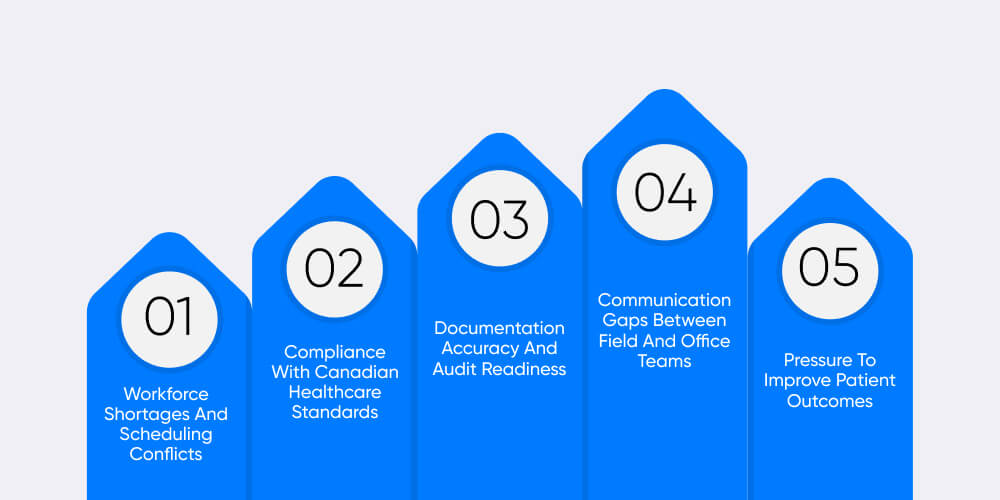
Home healthcare service providers in Canada face multiple challenges that can be solved by the home healthcare software. Let's take a look at the major challenges faced by Canadian home care providers.
Workforce Shortages And Scheduling Conflicts
Many Canadian agencies feel the strain of limited staff. Matching caregiver availability with client needs becomes essential, especially when a shift changes at the last minute. One unexpected absence can ripple through the entire schedule, leaving coordinators scrambling to fill gaps before it affects patient care.
Compliance With Canadian Healthcare Standards
Staying aligned with provincial regulations isn’t simple. Ontario, Alberta, British Columbia, and other regions all have different expectations for documentation and reporting. When notes are incomplete or stored in different places, preparing for an audit becomes stressful. Most of the time, the issue isn’t the effort, but the lack of a consistent, organized system.
Documentation Accuracy And Audit Readiness
Care teams spend their day traveling between clients, updating care plans, and supporting families. By the time they get to documentation, they’re already exhausted. That leads to late submissions or missing details. And when an auditor asks for records, agencies often find themselves digging through folders or trying to piece together information that should have been captured earlier.
Communication Gaps Between Field And Office Teams
Field teams rely on quick instructions, but office teams often wait for updates. Messages come in late, details get overlooked, and small misunderstandings can lead to missed tasks or repeated work. It’s not intentional. It’s just the reality of working across different locations without a unified communication flow.
Pressure To Improve Patient Outcomes
Canadian home care providers face rising expectations from families, partners, and health authorities. Clients want seamless coordination. Regulators want accuracy. Agencies must deliver all of this while managing tight timelines and increasing case complexity.
When these challenges pile up, daily operations feel heavier than they should. But once agencies address the root issues, everything from care quality to team satisfaction begins to improve.
Essential Features Canadian Home Health Care Businesses Need
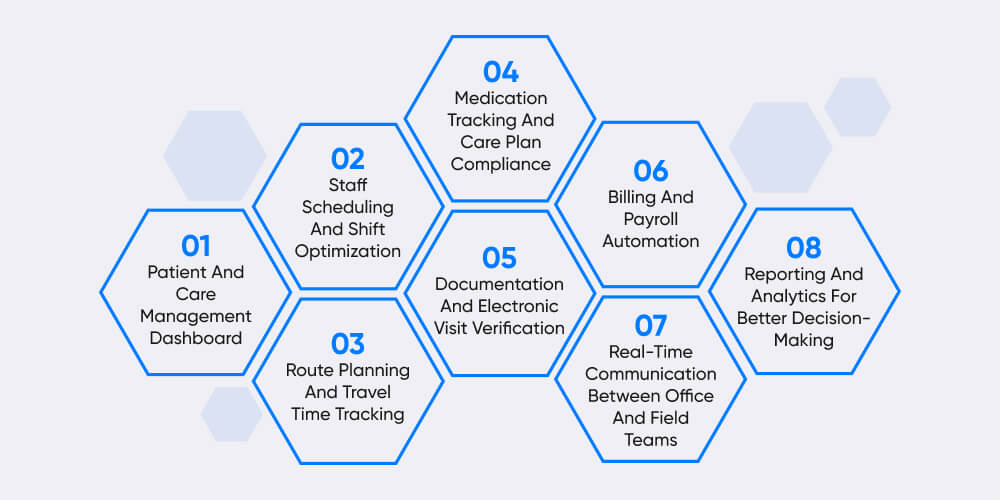
Patient And Care Management Dashboard
Canadian agencies handle dozens of tasks each day, and a central dashboard keeps everything in view. Coordinators can review client histories, update care plans, and track ongoing tasks easily. A dashboard creates a clearer picture of what’s happening across the organization, which helps teams respond faster when a client’s needs shift unexpectedly.
Staff Scheduling And Shift Optimization
Scheduling is where most agencies feel the most pressure, especially during peak demand. An intelligent system matches the staff availability with client requirements. This is also where home health care scheduling software becomes incredibly valuable. It helps avoid double-bookings, missed visits, or long travel times and when someone cancels, the system quickly suggests the best replacement.
Route Planning And Travel Time Tracking
Travel eats up a big part of a caregiver’s day. With built-in routing tools, agencies can assign visits in an order that makes sense geographically. It cuts down fuel consumption and gives staff more time for actual care. This small improvement often has a big effect on productivity.
Medication Tracking And Care Plan Compliance
Client safety depends a lot on accuracy. The software reminds caregivers of medication schedules, care instructions, and any alerts added by supervisors. It reduces mistakes and ensures everyone follows the latest care plan.
Documentation And Electronic Visit Verification
Documentation is easier when caregivers can record notes on the go. Electronic visit verification confirms visit times and locations, which improves accountability and supports audit requirements. These records also help agencies demonstrate consistent quality of care when working with partners or health authorities.
Billing And Payroll Automation
Manual billing leaves room for errors that impact revenue. Automated billing ties each service to accurate time logs, visit details, and rate structures. Payroll also becomes more reliable because hours are tracked automatically rather than collected via messages or paper forms.
Real-Time Communication Between Office And Field Teams
Clear communication keeps everything moving. Instant updates, alerts, and instructions help field employees adjust quickly when schedules change or urgent visits come in. It reduces confusion and keeps everyone aligned, even on busy days.
Reporting And Analytics For Better Decision-Making
Data reveals opportunities that are easy to miss in daily tasks. Reporting tools show patterns in staff performance, visit trends, and client needs. Agencies use these insights to improve staffing decisions, strengthen compliance, and identify areas where efficiency can increase.
This feature set is also one of the reasons many agencies explore solutions connected to Healthcare apps, as it opens the door for flexible, mobile-friendly tools that support teams anywhere they work. DITS offers custom healthcare app development services to home health care businesses in Canada to fulfill their client care and work requirements.
Need Better Scheduling and Care Coordination?
Transform staff allocation, routing, and communication with an integrated system designed to reduce friction and maximize operational throughput.
Benefits of Home Health Care Software
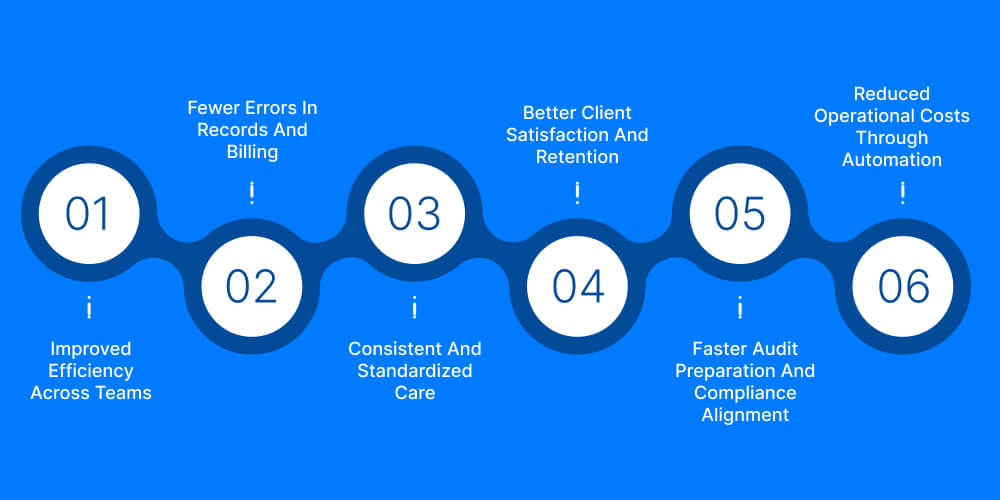
Improving day-to-day operations helps create an environment where teams feel supported, clients receive consistent care, and managers get the visibility. That’s why many Canadian agencies begin noticing changes within weeks of adopting home health care software.
Improved Efficiency Across Teams
Home Health care software makes the tasks move faster because information sits in one place, not scattered across chats or paper notes. Field staff also feel the difference. They start their day with clear instructions instead of trying to piece together details on their own.
Fewer Errors In Records And Billing
When data flows automatically from visits to documentation and into billing, mistakes drop quickly. Accuracy becomes part of the process and it keeps all the processes streamlined, which in turn improves efficiency and client satisfaction.
Consistent And Standardized Care
With structured workflows and real-time access to updated care plans, caregivers deliver support the same way every time. Even when a new staff member steps in, they see the same instructions as the regular caregiver. That consistency improves quality and strengthens client trust.
Better Client Satisfaction And Retention
Families appreciate when updates arrive on time and visits stay consistent. A smoother operation often leads to better outcomes, which helps agencies build stronger relationships and retain long-term clients. Word-of-mouth referrals also grow when reliability becomes part of the organization’s reputation.
Faster Audit Preparation And Compliance Alignment
Audits lose their usual stress when documentation is organized from day one. Everything sits in digital logs, making it easy to show proof of care, visit times, medication support, or provider notes. This also ties in closely with agencies offering modern remote patient monitoring tools for, as it enhances accuracy and readiness for inspections.
DITS provides remote patient monitoring software development services to businesses in Canada, helping them diagnose patients remotely, which saves time and resources.
Reduced Operational Costs Through Automation
Automation cuts down repetitive tasks that consume hours each week. Less time spent on manual admin work means more time for client care or strategic planning. And when travel routes improve or billing errors disappear, agencies start to see a measurable financial impact.
These benefits often become the foundation for long-term growth. Agencies move from constantly catching up to finally planning ahead.
How Home Health Care Software Enhances Compliance In Canada
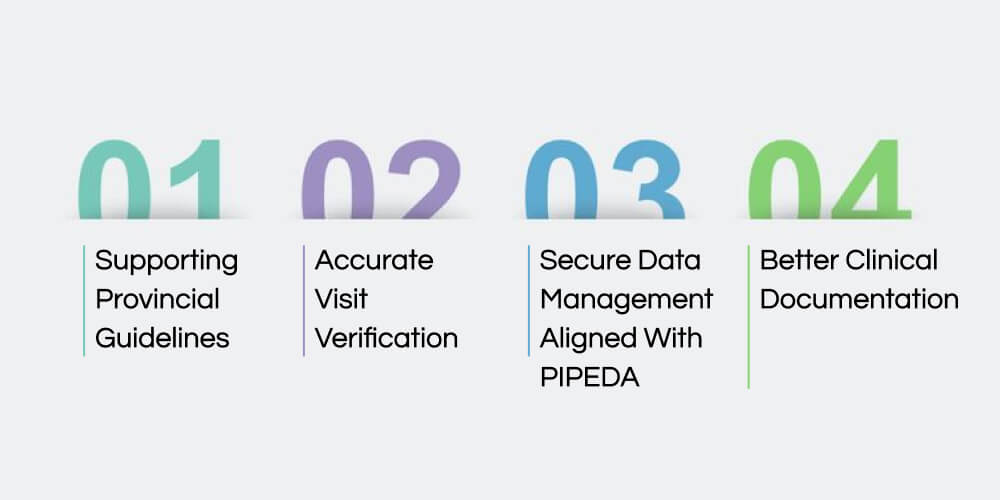
Staying compliant in Canada can feel overwhelming when every province has its own rules. A digital system helps agencies keep everything organized and reduces the risk of errors that usually stem from manual processes.
Supporting Provincial Guidelines
Ontario, Alberta, BC, and other regions follow different reporting standards. The software guides teams through structured workflows, so documentation stays consistent, even when multiple caregivers support the same client.
Accurate Visit Verification
Electronic verification captures real visit times and locations. It offers reliable proof of service, which is essential for funding, accountability, and audit readiness.
Secure Data Management Aligned With PIPEDA
Digital storage keeps sensitive client information protected. Access controls ensure only authorized staff can view or update records, helping agencies meet privacy expectations with confidence.
Better Clinical Documentation
Care notes follow clear templates, reducing guesswork. This improves accuracy, supports continuity of care, and makes audits easier because everything is neatly recorded and easy to retrieve.
Some agencies also enhance compliance further by integrating tools powered by IoT app development, creating a more connected and transparent care environment.
Looking to Replace Fragmented Tools?
Move toward a unified digital ecosystem that simplifies documentation, improves visibility, and ensures standardized care across your organization.
Custom Vs Off-The-Shelf Home Health Care Software: What Canadian Businesses Should Know
Off-the-shelf tools offer quick setup, but they rarely match the exact way an agency works. Growing providers often need features that reflect their unique scheduling flow, documentation structure, or compliance process. Custom systems adapt to these needs instead of forcing teams to adjust their routines around the software.
This is where DITS becomes a strong partner. We build custom healthcare platforms that match each organization’s daily reality. Every workflow, role, and data requirement is shaped around how your team actually operates.
Scalability Considerations
As agencies expand into new regions or add more services, their software must grow with them. Custom solutions scale naturally because they’re designed with flexibility in mind. New modules, features, or integrations can be added without disrupting ongoing operations.
Cost Vs Long-Term ROI
Off-the-shelf systems seem cheaper upfront, but many agencies end up paying for extra modules, add-ons, or long-term limitations. Custom platforms often deliver better ROI because they eliminate workarounds, reduce admin time, and prevent costly errors tied to mismatched workflows.
Tailoring Workflows To Agency Needs
Every home care team has its own rhythm. Custom software captures that rhythm. It mirrors real processes, supports compliance goals, and fits perfectly into the organization’s long-term strategy.
DITS has helped multiple Canadian providers transition from fragmented tools to fully integrated systems that support care quality, staff efficiency, and audit readiness. The result feels less like “new software” and more like an upgraded version of how the organization already works.
Why Choose DITS For Home Health Care Software
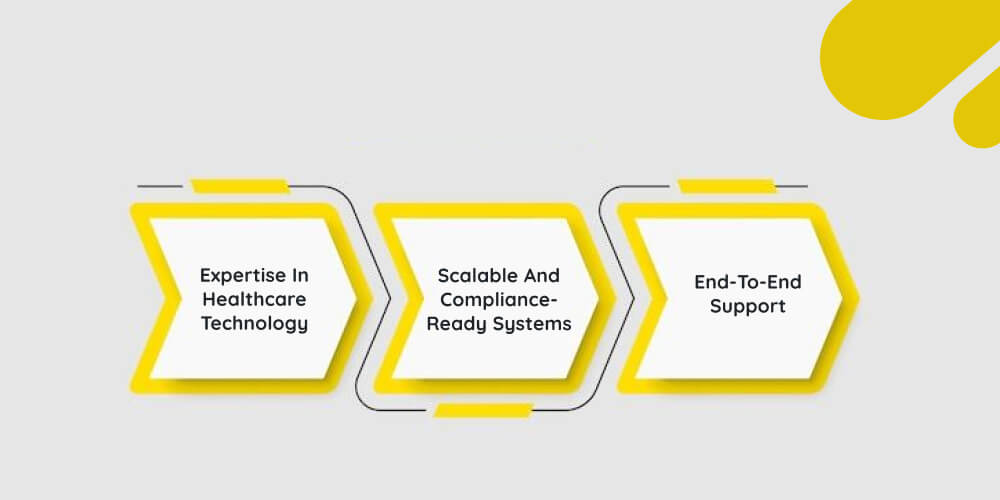
Canadian home care organizations need more than a standard platform. They need a technology partner who understands healthcare, respects compliance requirements, and builds tools that fit real-world workflows. That’s the role DITS takes on with every project.
Expertise In Healthcare Technology
Our team works closely with clinics, home care agencies, and community care providers across different regions. We understand the daily challenges: documentation delays, scheduling pressure, audit preparation, and the need for reliable reporting. This experience helps us design systems that solve actual operational problems instead of adding more steps.
Scalable And Compliance-Ready Systems
Canadian regulations shift often, and agencies must keep up. We build platforms that align with provincial guidelines and can adapt as rules evolve. Whether you’re operating in one city or expanding across multiple provinces, the system grows with you.
End-To-End Support
From early planning to deployment and continuous enhancement, our team stays involved. Agencies get training, technical support, and ongoing upgrades so the system remains reliable as their operations expand.
For Canadian businesses aiming to modernize their home care operations, we provide the technical foundation needed to support long-term growth.
Ready to Scale Your Home Care Services?
Empower teams with flexible, scalable home health care software engineered to support expansion without operational bottlenecks.
Conclusion
Canadian home care providers are experiencing a noticeable shift in how they operate. Growing demand, tighter regulations, and rising expectations from families have pushed agencies to refine the way they manage daily tasks. Tools like home health care software help reduce the pressure by organizing information, improving communication, and simplifying work.
When agencies move away from manual processes, everything starts to feel more manageable. It’s a change that strengthens both the organization and the people it serves.
Investing in the right technology is less about keeping up with trends and more about building a stable foundation for long-term growth. With smarter systems in place, home care agencies can focus on delivering quality care instead of fighting operational challenges.
FAQs
What Type Of Canadian Businesses Benefit From Home Health Care Software?
Home health agencies, community care providers, private nursing organizations, and multidisciplinary clinics use these systems to streamline scheduling, documentation, billing, and compliance. Any organization managing field-based teams or client visits can improve operational efficiency through digital tools.
How Much Does Custom Home Health Care Software Cost In Canada?
A basic solution with core features like scheduling, documentation, and client management usually falls in the $40,000 to $80,000 range. Mid-level platforms with automation, reporting, mobile apps, and integrations typically cost $90,000 to $150,000. Large or multi-branch organizations that require complex workflows, advanced analytics, or AI-driven capabilities cost around $180,000 to $250,000+.
Can Software Help Agencies Maintain Compliance With Provincial Regulations?
Yes. Digital systems organize documentation, support visit verification, and maintain secure records aligned with PIPEDA. Agencies also gain clear audit trails that simplify reporting requirements across provinces like Ontario, Alberta, and British Columbia.
How Long Does It Take To Develop Custom Home Health Care Solutions?
Timelines depend on scope. A straightforward platform may take a few months, while complex systems with integrations require additional time. Clear requirements and early planning help accelerate the process.
Does DITS Build Custom Home Health Care Platforms For Canadian Providers?
Yes. DITS develops tailored solutions built around each organization’s workflows, compliance needs, and communication structure. We focus on creating platforms that support both field staff and office teams without disrupting existing care processes.
What Makes DITS Different From Other Software Partners?
DITS integrates AI into development, testing, and long-term optimization, resulting in high-quality, scalable systems. Our experience in healthcare technology also ensures every solution aligns with Canadian regulations and the daily realities of home care operations.

Nidhi Thakur
With more than 19 years of experience - I represent a team of professionals that specializes in the healthcare and business and workflow automation domains. The team consists of experienced full-stack developers supported by senior system analysts who have developed multiple bespoke applications for Healthcare, Business Automation, Retail, IOT, Ed-tech domains for startups and Enterprise Level clients.
Recent Posts
Explore how prior authorization software uses AI to automate workflows, reduce administrative effort, improve request accuracy, streamline approvals, and minimize treatment delays for healthcare organizations.
Discover how AI to improve patient experience in hospitals streamlines scheduling, communication, triage, queue management, and personalized care while enhancing operational efficiency.

Learn how IoT powers smart factories with connected devices, automation, predictive maintenance, and analytics.