How Dispatch Management Software Reduces Operational Risk and Errors
Table Of Content
Published Date :
19 Feb 2026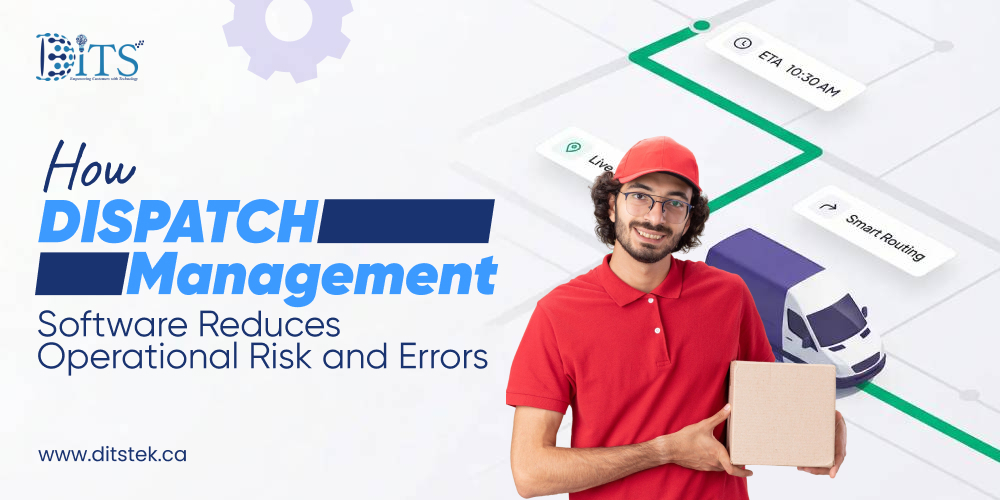
Operational risk doesn’t usually show up as a single failure. It builds quietly through missed updates, rushed decisions, and systems that don’t speak to each other. For Canadian businesses managing deliveries, field teams, or service fleets, those small cracks often turn into costly disruptions.
This is where dispatch management software becomes worth considering at an executive level. It acts as a control layer that reduces uncertainty across daily operations. When dispatch decisions are tracked, standardized, and visible, risk becomes measurable and manageable. That shift changes how operations leaders think about scale, accountability, and customer trust.
Why Operational Risk and Errors Are Costly for Canadian Businesses
Canadian operations teams are under pressure from all sides. Customer expectations keep rising, delivery windows are shrinking, and regulatory oversight is getting tighter. In that environment, even a minor dispatch mistake can ripple outward fast.
A missed assignment delays service. That delay triggers rescheduling. Rescheduling leads to overtime, customer credits, or worse, lost contracts.
The financial impact is only part of the story. Compliance gaps, incomplete records, and inconsistent job data expose businesses to audits and disputes.
Manual coordination and disconnected tools quietly amplify these risks. What looks manageable at small scale becomes fragile as operations grow. And nobody likes costly surprises, especially when margins are already tight.
Ready to reduce operational risk across your dispatch operations?
Talk to the experts at DITS and discover how a custom-built dispatch management solution can bring structure, visibility, and control.
Understanding Operational Risk in Dispatch-Driven Operations
Operational risk in dispatch-led businesses usually builds through everyday decisions made with incomplete information. A dispatcher assigns jobs manually based on memory. A driver updates status late. A manager reviews reports that are already outdated. Each action seems harmless until patterns emerge.
The most common risk sources tend to surface in familiar places:
- Manual scheduling that depends heavily on individual experience
- Limited visibility into where vehicles, technicians, or assets are located
- Inconsistent communication across teams, branches, or regions
These issues don’t stay isolated. A scheduling error causes a delay. The delay triggers a customer complaint, which quickly turns into a billing dispute or a service credit. Over time, leadership sees higher costs, strained teams, and declining trust, all rooted in avoidable process gaps rather than market conditions.
How Dispatch Management Software Controls Dispatch Processes
When dispatch operations run on personal judgment and scattered tools, consistency becomes optional. That’s where problems creep in. Standardization changes that dynamic by turning informal habits into repeatable processes that hold up under pressure.
With Dispatch management software, job creation, assignment, and tracking move into a single, controlled environment. Automated workflows reduce manual steps that often cause errors, while predefined rules guide decisions.
Over time, this creates operational discipline. Teams stop improvising and start executing. Knowledge stays in the system, not in someone’s head. For leadership, this means fewer surprises and clearer accountability. It also aligns naturally with broader business workflow automation efforts, where consistency and traceability are non-negotiable.
Reducing Scheduling Errors and Resource Conflicts
Scheduling errors are usually persistent. A technician double-booked. A vehicle sent across town while another sits idle. These small missteps add up, especially during peak demand or weather disruptions that Canadian operations know all too well.
Modern dispatch systems reduce this friction by assigning work based on real constraints. Availability, skill sets, location, and service priority are factored in before a job is confirmed. Real-time updates prevent overlapping assignments and missed commitments, even when plans change mid-day.
Dynamic rescheduling becomes less chaotic, too. Delays, cancellations, and urgent requests are absorbed without throwing the entire operation off balance. The result is steadier service delivery and fewer last-minute decisions made under pressure. For leadership, that translates into lower risk exposure when operations are stretched at their most.
Improving Real-Time Visibility to Minimize Operational Blind Spots
The most expensive operational risk exists because dispatch-heavy operations lack visibility. The absence of real-time information causes decision-making problems because leaders must base their choices on existing conditions. The traffic jam prevents the vehicle from moving while the technician requires more time.
Live vehicle and technician tracking creates new operational methods for businesses to monitor their workers. The system alerts dispatchers about issues before they become serious problems. Dispatchers gain the ability to modify routes while they can transfer duties and notify customers beforehand. The team operates more effectively because they all share the same information.
Dashboards provide executives more than status reports according to their business needs. The system delivers contextual information about the actual situation. Dispatch information connects with supply chain Software systems to demonstrate patterns themselves which show operational issues while bringing to light existing performance deficiencies.
DITS provide robust supply chain software development services in Canada to help businesses track and route their vehicles in real time to make timely deliveries.
Minimizing Compliance and Documentation Errors
Compliance issues usually begin with missing timestamps, incomplete job notes, or inconsistent proof of service. Over time, those gaps become liabilities, especially when audits, disputes, or regulatory reviews come into play.
Digital job records bring structure where paperwork often falls apart. Every task is logged with time, location, and completion details, creating a reliable trail without adding administrative burden. Dispatch teams no longer chase forms or rely on memory to fill gaps at the end of the day. The data is captured as work happens.
For Canadian businesses operating across regions, this consistency matters. It supports audit readiness, reduces disputes, and limits documentation errors. Leadership gains confidence knowing operational records are accurate, and accessible.
Reducing Communication Gaps Across Teams and Locations
Communication failures don’t usually come from silence. They come from mixed messages, delayed updates, or information living in too many places at once. A dispatcher calls a driver. The driver texts a supervisor. The update never reaches billing or customer service. And suddenly, everyone is working off a different version of the truth.
Centralized communication fixes that disconnect. Status updates, and alerts flow through one channel, visible to dispatch, field teams, and managers at the same time. Automated notifications reduce the need for follow-up calls, while clear task ownership removes confusion around handoffs.
Some organizations also extend this setup with customer-facing updates or internal assistants built through AI chatbot development, allowing routine queries and confirmations to move faster without adding pressure on dispatch teams. The outcome is simple but powerful. Fewer misunderstandings, faster response times and a noticeable drop in service failures.
Strengthening Decision-Making with Accurate Operational Data
When operational data is incomplete or delayed, decisions become reactive. Leaders spend time resolving issues instead of preventing them. Accurate dispatch data changes that rhythm. It highlights where delays repeat, which routes underperform, and how resources are actually being used across regions and time windows.
Reliable data allows teams to move beyond guesswork. Patterns emerge quickly. A specific service zone consistently overruns schedules. Certain job types create billing friction. Peak hours expose staffing gaps. With this clarity, corrective action becomes precise.
Trend analysis also reduces future risk. Forecasting demand, planning capacity, and tightening cost controls stop being theoretical exercises. Operations, finance, and leadership start working from the same numbers, not assumptions. That alignment brings confidence into decision-making and removes unnecessary tension at the top.
Stop letting small dispatch errors turn into costly disruptions.
Partner with DITS to build a dispatch management solution designed for Canadian businesses ready to grow with confidence.
Why Choose DITS For Dispatch Management Software Development
Choosing the right development partner matters as much as choosing the software itself. At DITS, the focus stays firmly on operational realities, not generic features. Every dispatch solution is designed around how teams work on the ground, where delays happen, and where risk tends to hide.
Our approach combines domain understanding with AI software development services that strengthen the software at every layer. AI is used thoughtfully across development, quality assurance, code consistency, and customization, helping reduce defects, improve reliability, and adapt systems to evolving business needs. The goal isn’t complexity, but offering stability and long-term control.
For Canadian businesses scaling operations or tightening compliance, this translates into software that supports growth without adding fragility. Clean architecture, predictable performance, and systems that evolve alongside your operations.
Conclusion
Operational resilience comes from systems that reduce uncertainty before issues surface. Across scheduling, visibility, compliance, and communication, the impact is clear. When dispatch processes are structured and data flows cleanly, errors lose their momentum and risks become easier to contain.
For Canadian businesses navigating growth, regulatory pressure, and rising service expectations, Dispatch management software becomes a stabilizing force. It replaces fragmented decision-making with consistency, replaces assumptions with insight, and gives leadership the control needed to scale with confidence.
The competitive advantage lies in predictability. Customer trust and operations that support strategy instead of distracting from it. That’s how dispatch moves from a daily challenge to a long-term strength.
FAQs
What types of businesses benefit most from dispatch management software?
Organizations managing fleets, field service teams, deliveries, or multi-location operations see the strongest impact. This includes logistics providers, utilities, maintenance companies, manufacturing support teams, and service-based enterprises where timing, coordination, and accountability directly affect cost and customer satisfaction.
How does dispatch management software help reduce operational risk?
It reduces dependency on manual decisions by standardizing scheduling, tracking, and communication. Real-time visibility, consistent documentation, and automated workflows help prevent common errors that lead to service delays, compliance gaps, and billing disputes. Over time, this creates a more predictable and controllable operating environment.
Can DITS customize dispatch solutions for complex or growing operations?
Yes. DITS offers dispatch management software development services tailored to business-specific workflows, regional requirements, and scalability needs. Solutions are designed to adapt as operations grow, ensuring that process control and visibility are maintained even as complexity increases.
How does dispatch software support compliance and audit readiness in Canada?
The system captures digital records for job completion, timestamps, and proof of service in real time. This creates a reliable audit trail, reduces missing documentation, and supports consistent reporting aligned with Canadian regulatory and operational standards.
Why choose DITS for dispatch management software development services?
DITS focuses on building stable, business-aligned systems rather than generic tools. By integrating AI into development, testing, code quality, and customization, DITS delivers dispatch solutions that are reliable, adaptable, and designed to reduce long-term operational risk while supporting strategic growth.

Dinesh Thakur
21+ years of IT software development experience in different domains like Business Automation, Healthcare, Retail, Workflow automation, Transportation and logistics, Compliance, Risk Mitigation, POS, etc. Hands-on experience in dealing with overseas clients and providing them with an apt solution to their business needs.
Recent Posts
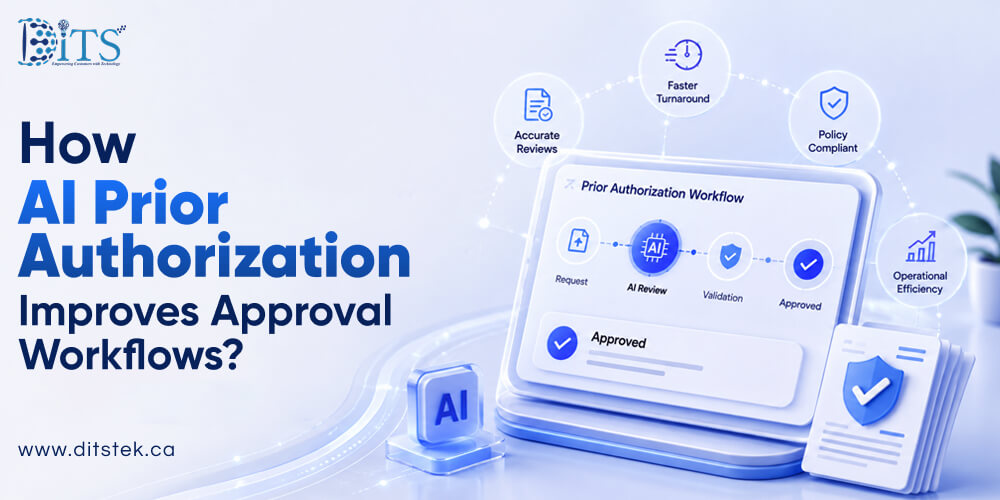
Explore how prior authorization software uses AI to automate workflows, reduce administrative effort, improve request accuracy, streamline approvals, and minimize treatment delays for healthcare organizations.

Discover how AI to improve patient experience in hospitals streamlines scheduling, communication, triage, queue management, and personalized care while enhancing operational efficiency.

Learn how IoT powers smart factories with connected devices, automation, predictive maintenance, and analytics.