Complete Guide to Build Renewable Energy Software Solution in Canada
Table Of Content
Published Date :
30 Mar 2026
Key Takeaways
- Renewable energy software is essential for managing distributed and complex energy operations.
- Canada offers strong growth potential driven by policy support and clean energy demand.
- Custom-built platforms provide better scalability and operational alignment.
- Compliance and system integration are critical for long-term success.
- A structured development approach reduces risk and improves ROI.
Canada's energy sector undergoes a major transformation which remains unnoticed. The provinces have established more aggressive clean energy goals. Utility companies continue to grow their renewable energy resources and private companies enter the market faster than expected. The task of operating distributed assets across multiple solar farms and wind sites and hybrid grids has become more difficult to handle.
The need for real-time decision-making during critical situations makes spreadsheets and legacy tools insufficient for handling operational demands. The delay of one insight results in three negative outcomes which include energy loss, compliance risk and missed revenue opportunities.
Businesses are pursuing a renewable energy software solution to create one system which provides them with visibility and control and intelligence capabilities. Companies using such solutions are already seeing the difference in performance, cost control, and scalability.
Renewable Energy Software Solutions
At its core, renewable energy software is built to simplify the complex energy production and distribution. Energy generation is not centralized in most Canadian locations. Assets are spread across locations, data flows in from multiple systems, and decisions need to be made in near real time. That’s where software starts to play a critical role.
A well-designed renewable energy software solution brings everything into one place. It connects data from solar panels, wind turbines, grid systems, and sensors, then translates that data into insights teams can actually use.
Here’s what typically sits at the center of such platforms:
- Real-time monitoring of energy production and system health
- Forecasting models to predict output and demand
- Analytics that highlight inefficiencies or performance gaps
- Compliance tracking aligned with regional regulations
- Reporting tools for stakeholders and regulatory bodies
What makes custom renewable energy software stand out is its ability to align with specific business workflows. A utility company managing 200+ distributed assets has very different needs compared to a startup operating a single solar plant. Off-the-shelf tools rarely capture that nuance.
Market for Renewable Energy Solutions in Canada
Canada presents a unique environment for renewable energy growth. It’s not a single market, but a mix of provincial ecosystems, each with its own policies, incentives, and operational realities.
Ontario, for example, has a mature renewable infrastructure with strong regulatory oversight. Alberta is more market-driven, with increasing private investments in wind and solar. British Columbia leans heavily on hydro, yet is gradually opening doors for diversified clean energy projects.
At the same time, there’s a clear opportunity. Canada’s push toward net-zero targets is accelerating investments in digital infrastructure. Utilities, independent power producers, and EPC firms are actively looking for systems that can unify data, automate reporting, and improve forecasting accuracy.
But here’s the catch. Many organizations are still operating on fragmented systems. Different tools for monitoring, separate platforms for reporting, and manual processes in between. It slows everything down.
This gap is exactly where renewable energy software development is gaining traction. Companies are now investing in integrated platforms that don’t just collect data, but turn it into intelligence across operations.
Planning Renewable Energy Software for Canadian Operations?
Discover a tailored roadmap for your energy platform, compliance needs, integrations, and scalability goals with guidance built for growth.
Core Features of Renewable Energy Software Solution
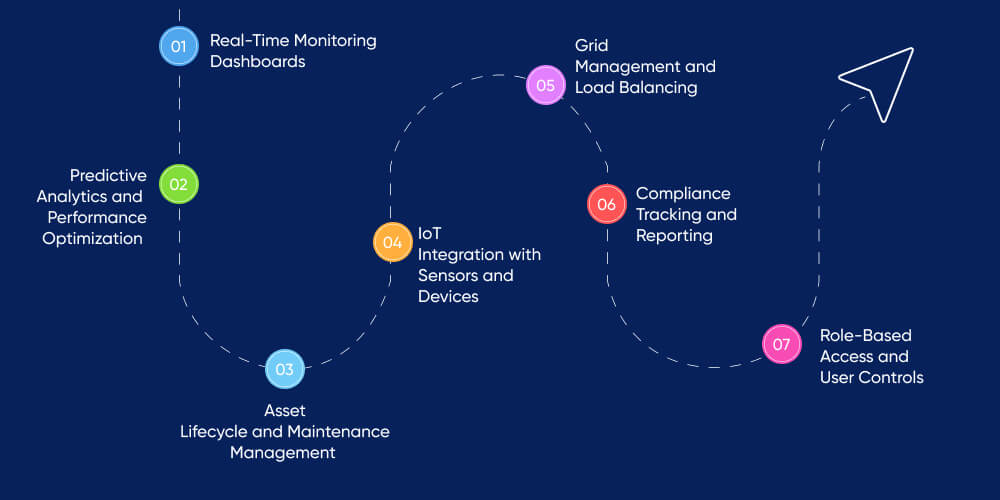
When businesses evaluate a renewable energy software solution, they’re not just looking for functionality, but control and visibility. And most importantly, predictability in operations that are otherwise volatile.
Here are the core capabilities that define a high-performing system:
Real-Time Monitoring Dashboards
Live tracking of energy generation, equipment status, and environmental conditions ensures teams are not dependent on delayed reports. Issues are identified as they occur, allowing faster response and better control over operations.
Predictive Analytics and Performance Optimization
Historical data combined with intelligent models helps forecast energy output and detect underperforming assets early. This enables proactive decision-making and prevents revenue loss.
Asset Lifecycle and Maintenance Management
From installation to ongoing maintenance cycles, every asset is tracked in a structured manner. This reduces unexpected failures and extends equipment lifespan through planned interventions.
IoT Integration with Sensors and Devices
Seamless connectivity with field devices ensures continuous and accurate data flow. Without this integration, even advanced systems risk becoming outdated and ineffective.
Grid Management and Load Balancing
For large-scale operations, maintaining grid stability is critical. These capabilities help optimize energy distribution while managing fluctuations in supply and demand.
Compliance Tracking and Reporting
Automated reporting aligned with Canadian regulatory standards eliminates manual effort and reduces the risk of compliance gaps during audits.
Role-Based Access and User Controls
Different stakeholders receive access to relevant data based on their roles. This ensures clarity, security, and better usability across operational and leadership teams.
Now, here’s something often overlooked. These features only deliver value when they are properly integrated into a business workflow. That’s where enterprise software development plays a key role, ensuring systems are not just functional, but aligned with operational realities.
Technology Stack and Architecture Considerations
Building a scalable platform in this space isn’t just about features. The underlying architecture determines how well the system performs under pressure, adapts to growth, and handles real-time data without delays.
Here are the key components that shape a reliable system:
Cloud Vs On-Premise Deployment
Cloud infrastructure offers flexibility, remote accessibility, and easier scalability, especially for distributed energy assets. On-premise setups may still work for highly regulated environments, but they limit agility.
Data Pipelines and Real-Time Processing
Energy systems generate massive volumes of data every second. A strong backend ensures that this data is processed instantly, not hours later. This is where software development services play a critical role in designing efficient pipelines.
API Integrations with Third-Party Systems
Renewable platforms rarely operate in isolation. They need to connect with grid operators, weather services, IoT devices, and enterprise tools. Smooth API architecture ensures uninterrupted data exchange.
Cybersecurity and Data Privacy
Energy infrastructure is sensitive. Any vulnerability can lead to operational disruptions or compliance risks. Strong encryption, access control, and monitoring systems are essential, not optional.
Scalability and Modular Design
Systems should grow with the business. A modular approach allows new features, assets, or integrations to be added without rebuilding the entire platform.
Another important aspect is modernization. Many companies are still running outdated systems that weren’t built for today’s data demands. This is where legacy application modernization becomes necessary, helping transition from rigid architectures to flexible, scalable environments.
Need a Smarter Renewable Energy Management Platform?
Explore how a custom solution can improve visibility, forecasting, reporting, and operational efficiency across distributed renewable energy assets.
Step-By-Step Process to Build Renewable Energy Software Solution
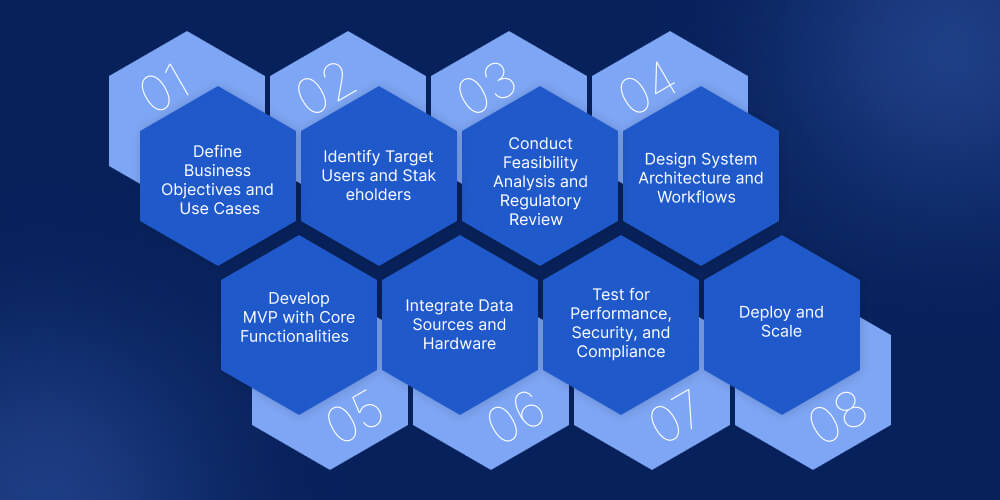
Building a successful platform in this domain requires more than technical execution. It demands alignment between business goals, field operations, compliance requirements, and future scalability.
Here’s a practical roadmap, businesses can follow:
Define Business Objectives and Use Cases
Start with the operational problem, not the feature wishlist. A solar operator may want better generation visibility across 15 sites, while a utility may need faster grid response and automated compliance reporting. The difference matters.
This stage should answer questions like:
- What business outcome are we targeting?
- Which workflows are currently inefficient?
- What decisions need better data support?
- Which KPIs will define success in first 6 to 12 months?
Without this clarity, even strong product engineering services can end up building the wrong thing.
Identify Target Users and Stakeholders
A platform used by field engineers should not look or behave like one designed for CFOs or compliance officers. Each group needs different views, permissions, and reports.
Typical stakeholder groups include:
- Plant operators
- Maintenance teams
- Compliance managers
- Energy traders
- Executive leadership
This is where a lot of renewable energy software projects either gain traction or lose momentum. If the user context is off, adoption suffers.
Conduct Feasibility Analysis and Regulatory Review
Before development begins, teams need to assess technical feasibility, integration dependencies, and regulatory obligations. In Canada, this step is especially important because provincial requirements vary and reporting expectations can differ by market structure.
This review usually covers:
- Existing hardware and IoT readiness
- Data availability and quality
- Cybersecurity obligations
- Reporting and audit needs
- Provincial compliance requirements
It may feel like a slow step, but it prevents expensive rework later.
Design System Architecture and Workflows
Once objectives are clear, the architecture needs to support them. This includes deciding how data enters the system, how it is processed, where it is stored, and who can access it. User journeys also need to be mapped in detail so the system reflects how teams actually work, not how developers assume they work.
For businesses moving away from siloed operations, this phase often overlaps with broader digital transformation services initiatives, especially when multiple departments are involved.
Develop MVP with Core Functionalities
A minimum viable product should focus on the highest-value functions first. Not everything needs to be built in phase one. In fact, trying to do that usually slows the project down.
A smart MVP in this space may include:
- Live asset monitoring
- Alerts for equipment anomalies
- Basic reporting dashboards
- User access controls
- Initial compliance workflows
This approach reduces risk and helps validate whether the platform is delivering value in real conditions.
Integrate Data Sources and Hardware
This is where theory meets reality. Sensors, SCADA systems, weather feeds, ERP platforms, and grid interfaces all need to connect smoothly. And there’s usually a catch. Data formats differ, latency issues appear, and older systems resist clean integration.
That is exactly why renewable energy software development must be handled with strong backend planning and field-aware engineering, not just interface design.
Test for Performance, Security, and Compliance
Testing in this sector goes far beyond bug fixing. The platform needs to perform well under high data loads, maintain uptime, protect sensitive operational information, and generate reliable reports for audits and decision-making.
Testing priorities should include:
- Data accuracy under real-time load
- System response time
- Security vulnerabilities
- Role-based access validation
- Compliance reporting accuracy
Nobody likes discovering these issues after deployment. By then, the cost is always higher.
Deploy and Scale
Once the MVP proves stable, the system can be rolled out across additional sites, assets, and business units. This phase should include user training, support workflows, performance monitoring, and a roadmap for feature expansion.
This is also where businesses start seeing the true value of a well-planned renewable energy software solution. Not just in operational efficiency, but in how quickly the system can adapt as the business grows.
A good build process doesn’t feel flashy. It feels controlled. And in a market where reliability, compliance, and uptime matter every day, that control becomes a major competitive advantage.
Cost of Developing Renewable Energy Software in Canada
One of the most important questions leadership teams ask is what will it cost? The answer, however, depends on how the solution is designed, how complex the operations are, and how future-ready the platform needs to be.
A basic system may appear affordable at first. But once integrations, compliance, and scalability come into play, the investment starts to shift.
Here’s a realistic breakdown of cost drivers:
| Component | Estimated Impact on Cost | What It Means For Business |
| Feature Complexity | High | Advanced analytics, forecasting, and automation increase development effort |
| Integrations | High | Connecting IoT devices, SCADA, and external systems adds complexity |
| Data Processing | Medium to High | Real-time data handling requires strong backend infrastructure |
| Compliance Requirements | Medium | Regulatory reporting and audit features add structured development layers |
| Scalability Needs | High | Systems designed for multi-site expansion cost more upfront but save later |
Estimated Cost Range Based on Complexity
- Basic Platform (Single Asset Monitoring): $40,000 – $80,000
- Mid-Level System (Multi-Site + Analytics): $80,000 – $180,000
- Advanced Enterprise Solution (Grid + Forecasting + Automation): $180,000 – $400,000+
Now, here’s something businesses often overlook. The initial build cost is only part of the equation. Ongoing expenses like maintenance, updates, cloud infrastructure, and compliance adjustments can add 15 to 25 percent annually.
This is where experienced renewable energy software companies stand out. They design systems with long-term efficiency in mind, reducing rework and unexpected costs.
Compliance And Regulatory Considerations In Canada
Operating in Canada’s renewable energy sector means dealing with layered regulations. And those rules are not always consistent. What works in Ontario may require adjustments in Alberta or British Columbia.
Key compliance areas include:
Federal And Provincial Energy Regulations
Each province has its own reporting frameworks, grid requirements, and operational standards. Missing even a minor update can trigger penalties or delays in approvals.
Environmental Reporting Requirements
Organizations must track emissions, energy output, and sustainability metrics with precision. Manual reporting often leads to errors, especially when data is scattered across systems.
Data Protection and Cybersecurity Standards
Energy infrastructure is considered critical. Systems must follow strict security protocols, including encryption, access control, and audit trails.
Audit Readiness and Documentation
Regulators expect structured, verifiable data. If reports cannot be generated quickly and accurately, it raises compliance risks.
This is where renewable energy monitoring software becomes essential. It automates data capture, standardizes reporting formats, and ensures that compliance is not dependent on manual processes.
But there’s another layer to consider. As regulations evolve, systems need to adapt without requiring complete redevelopment. This is why businesses are moving toward custom renewable energy software that can be configured as policies change.
Here’s the practical insight. Compliance is not just a legal requirement. It directly impacts operational continuity and business credibility. A single compliance gap can delay projects, affect investor confidence, and create unnecessary financial exposure.
Organizations that treat compliance as a built-in capability, not an afterthought, tend to operate with far fewer disruptions. And in a sector where margins and timelines are tightly managed, that consistency matters more than most realize.
Benefits of Building Custom Renewable Energy Software Solution
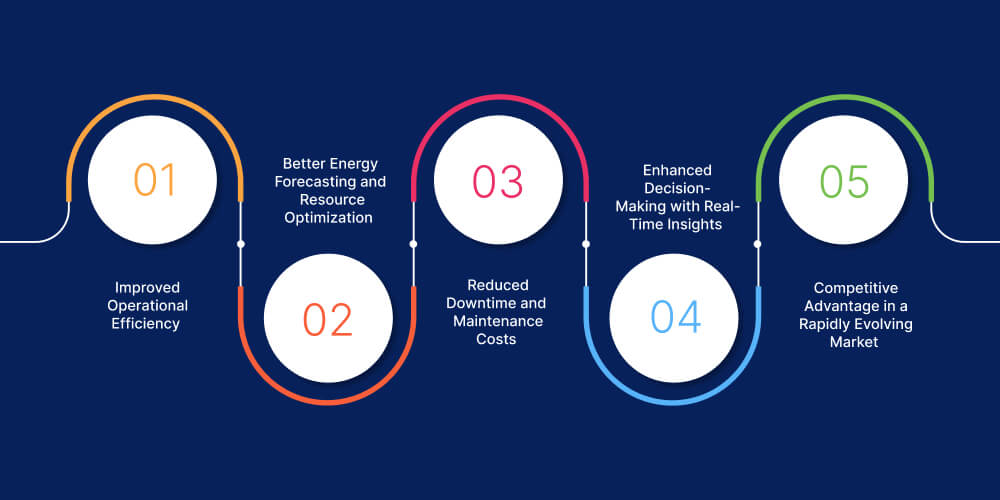
When businesses move toward a tailored platform, the shift is noticeable. Operations become clearer, decisions faster, and teams more aligned. It’s not just about having better tools. It’s about having the right system built around how the business actually runs.
Here’s what organizations typically gain:
Improved Operational Efficiency
Manual tracking, scattered reports, and delayed insights start to disappear. Teams work with real-time data, which reduces guesswork and speeds up execution across sites.
Better Energy Forecasting and Resource Optimization
With structured data and predictive models, businesses can plan production more accurately. This directly impacts revenue, especially in markets where timing matters.
Reduced Downtime and Maintenance Costs
Early detection of issues helps prevent major failures. Maintenance becomes planned rather than reactive, which lowers operational risk and cost.
Enhanced Decision-Making with Real-Time Insights
Leadership doesn’t have to wait for weekly reports. They get visibility into performance as it happens, allowing quicker and more confident decisions.
Competitive Advantage in a Rapidly Evolving Market
Companies that invest in renewable energy software early tend to scale faster. They respond better to market changes and adapt more efficiently to regulatory shifts.
Now here’s the part many executives appreciate later. A well-built renewable energy software solution doesn’t just solve current problems. It creates a foundation for future growth. New assets, new markets, and new business models can be added without rebuilding everything from scratch.
And that’s where enterprise software development becomes critical. It ensures that the platform is not only functional today but also ready for expansion tomorrow.
In a sector where operational margins are tight and expectations are rising, having a system that supports both efficiency and scalability is not optional anymore. It’s a strategic investment.
Ready to Simplify Renewable Energy Compliance and Reporting?
See how the right software approach can reduce manual effort, improve audit readiness, and strengthen long-term regulatory alignment.
Future Trends in Renewable Energy Software
The renewable energy space isn’t standing still. What worked even two years ago is already being rethought. Systems are becoming more intelligent, more connected, and far more responsive to real-world conditions.
Here are the trends shaping what comes next:
AI-Driven Energy Forecasting
Forecasting models are becoming sharper. By combining weather data, historical output, and grid behavior, businesses can predict production with much higher confidence. It reduces uncertainty and improves planning accuracy.
Smart Grid and Decentralized Energy Systems
Energy is no longer flowing in one direction. Distributed generation, microgrids, and prosumer models are changing how power is managed. Software needs to support this shift with real-time coordination and decision-making.
Increased Adoption of Predictive Maintenance
Waiting for equipment to fail is no longer acceptable. Systems are now designed to detect early warning signs and recommend actions before issues escalate.
Integration With Energy Trading Platforms
More businesses are participating in energy markets. Software is evolving to provide pricing insights, demand forecasting, and automated recommendations for better trading decisions.
Data-Driven Sustainability Reporting
Investors and regulators expect transparency. Systems are now expected to generate accurate sustainability reports without manual effort.
This evolution is also influencing how platforms are built. With renewable energy software development, there’s a stronger focus on flexibility, faster deployment cycles, and continuous improvement.
At DITS, we integrate AI across development, testing, and customization workflows. It helps improve code quality, accelerate releases, and ensure that systems adapt to changing business needs without constant rework.
Here’s the broader perspective. The future isn’t about having more features. It’s about having smarter systems that evolve with the business.
Companies that invest in forward-looking platforms today are not just solving current challenges. They’re positioning themselves to lead in a market that is becoming more competitive, data-driven, and performance-focused every year.
Why Choose DITS For Renewable Energy Software Solution Development
Choosing a technology partner in this space isn’t just about technical capability. It’s about finding a team that understands both the engineering side and the operational realities of renewable energy businesses.
At DITS, the focus stays on building systems that work in real conditions, not just in controlled environments.
Here’s what sets the approach apart:
Deep Expertise in Scalable Solutions
As a custom software development company with years of experience in software development, we build platforms that handle high-volume data, multiple integrations, and growing asset networks without performance issues.
Strong Enterprise-Grade Architecture
Through enterprise software development, we ensure systems are built for long-term scalability, whether you’re managing a few sites today or expanding across provinces tomorrow.
Product-Led Development Approach
With product engineering services, we don’t just build features. We design solutions that evolve with your business, adapting to new requirements without major rework.
Focus On Modernization and Integration
Many organizations operate on outdated systems that slow down decision-making. We help transition those systems using legacy application modernization, ensuring seamless upgrades without disrupting operations.
AI-Driven Development and Quality Assurance
Considering the speed with which AI is transforming product development, we integrate AI into development, testing, and customization processes. This improves code quality, reduces errors, and accelerates delivery timelines, ensuring each system is both reliable and adaptable.
Business-Aligned Execution
Our work is closely tied to business outcomes. Whether it’s improving energy forecasting, reducing downtime, or simplifying compliance, every solution is built with measurable impact in mind.
In a market where reliability and precision are critical, the difference often comes down to execution. And that’s where a structured, experience-driven approach makes all the difference.
Want to Talk to Renewable Software Experts?
Connect with specialists to discuss your project scope, technical requirements, integration challenges, and the best path to execution.
Conclusion
Renewable energy is expanding across Canada, but managing it efficiently requires more than infrastructure. It requires intelligent systems that can handle complexity, adapt to regulations, and support real-time decision-making.
Businesses that invest in the right software early are already seeing measurable improvements in efficiency, forecasting accuracy, and operational control. Those that delay often find themselves dealing with fragmented systems and missed opportunities.
The path forward is clear. Build solutions that are scalable, compliant, and aligned with business goals from the start. Because in this space, the difference between average performance and market leadership often comes down to how well your systems are built and how effectively they evolve over time.
FAQs
What is a renewable energy software solution and how does it work?
A renewable energy software solution is a platform that connects data from energy assets such as solar panels, wind turbines, and grid systems, then converts that data into actionable insights. It helps businesses monitor performance, forecast energy output, manage compliance, and optimize operations in real time.
How much does it cost to build a renewable energy software solution in Canada?
The cost typically ranges from $40,000 for basic systems to over $300,000 for enterprise-grade platforms. The final investment depends on features, integrations, scalability, and compliance requirements. Businesses should also account for ongoing maintenance and infrastructure costs.
How long does it take to develop such a solution?
A standard platform can take anywhere from 3 to 9 months depending on complexity. MVP versions may be ready within 8 to 12 weeks, while advanced systems with integrations and analytics take longer due to testing and compliance validation.
Can DITS help with renewable energy software solution development?
Yes, DITS offers end-to-end renewable energy software development services, from strategy and architecture design to deployment and scaling. The focus remains on building systems aligned with real-world energy operations and long-term business goals.
What industries benefit the most from renewable energy software?
Industries such as utilities, independent power producers, EPC companies, and large-scale industrial facilities benefit the most. Any organization managing distributed energy assets or aiming to optimize energy efficiency can gain value from renewable energy software.

Dinesh Thakur
21+ years of IT software development experience in different domains like Business Automation, Healthcare, Retail, Workflow automation, Transportation and logistics, Compliance, Risk Mitigation, POS, etc. Hands-on experience in dealing with overseas clients and providing them with an apt solution to their business needs.
Recent Posts
Explore how prior authorization software uses AI to automate workflows, reduce administrative effort, improve request accuracy, streamline approvals, and minimize treatment delays for healthcare organizations.

Discover how AI to improve patient experience in hospitals streamlines scheduling, communication, triage, queue management, and personalized care while enhancing operational efficiency.

Learn how IoT powers smart factories with connected devices, automation, predictive maintenance, and analytics.