IoT Fleet Management Software – Know its Key Features, Benefits and Technologies Behind it
Table Of Content
Published Date :
13 May 2026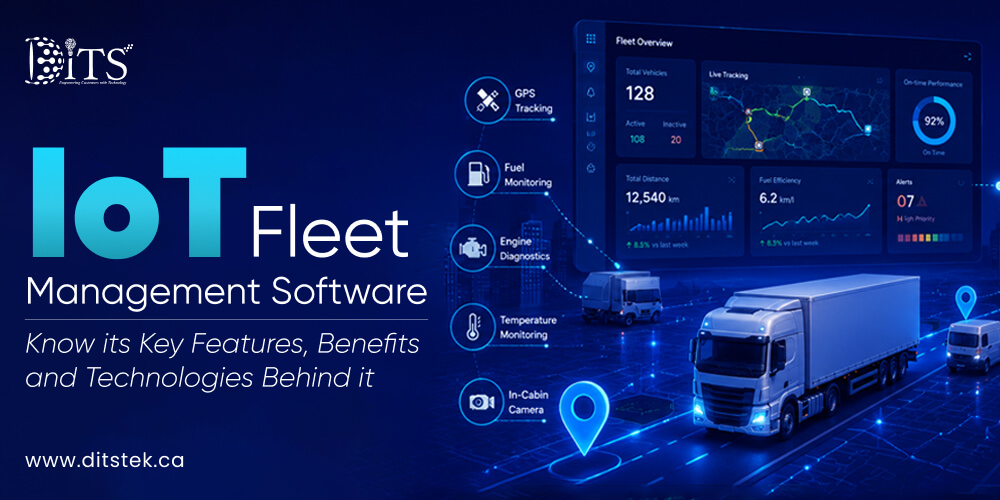
Key Takeaways
- IoT fleet management helps businesses monitor vehicles in real time.
- Connected sensors provide continuous data about vehicle performance.
- Fleet platforms improve fuel efficiency and route optimization.
- Driver behavior monitoring helps increase road safety.
- Predictive maintenance reduces unexpected vehicle breakdowns.
- Real-time dashboards improve operational visibility for managers.
- IoT fleet systems support regulatory compliance and reporting.
- Connected fleet data helps businesses make smarter operational decisions.
- Custom platforms developed by DITS enable scalable and intelligent fleet operations.
Fleet operations have changed dramatically over the past decade. Rising fuel prices, stricter compliance regulations, and growing delivery expectations have forced companies to rethink how they manage vehicles, drivers, and logistics operations. Traditional tracking tools once provided basic visibility, but modern business environments demand far more than knowing where a truck is located.
This shift has pushed organizations toward connected technologies that generate real-time operational intelligence. Sensors embedded in vehicles, cloud-based monitoring platforms, and advanced analytics now allow businesses to observe fleet activity minute by minute and respond quickly when something goes wrong.
That is where IoT fleet management enters the picture. By connecting vehicles, drivers, and operational systems through intelligent monitoring platforms, companies gain deeper insights into fleet performance, safety risks, and operational costs. The result is not just improved tracking, but smarter, data-driven fleet operations that help businesses stay competitive.
What Is IoT Fleet Management Software?
Before companies invest in connected fleet technologies, one question often comes up during boardroom discussions: what is IoT fleet management and why does it matter for modern transportation operations?
In simple terms, IoT fleet management refers to a technology framework that connects vehicles, sensors, and operational software through the internet. These connected systems continuously collect vehicle data and transmit it to centralized platforms where managers can monitor performance, safety, and efficiency in real time.
Instead of relying on occasional driver updates or manual logs, businesses receive a constant stream of operational insights. Location data, fuel usage, engine diagnostics, driver behavior, and route performance are captured automatically. Fleet managers no longer guess what is happening on the road. They know.
Connected platforms combine three essential elements:
- Vehicle sensors and telematics hardware installed inside trucks or service vehicles
- GPS tracking systems that monitor location and movement
- Cloud-based dashboards that analyze incoming vehicle data
Traditional tracking tools only showed vehicle location. Modern IoT fleet management solutions go much further. They evaluate driver patterns, detect maintenance risks early, and optimize routes based on real-world traffic conditions.
For businesses operating large vehicle networks, the value becomes obvious. Decisions shift from reactive problem solving to proactive operational management. That small difference often translates into lower fuel expenses, improved safety records, and far fewer unpleasant surprises.
Planning To Modernize Your Fleet Management Infrastructure Today?
Integrate GPS tracking, telematics, and AI-powered analytics into one centralized platform for improved fleet productivity and operational control successfully.
How IoT Fleet Management Systems Work
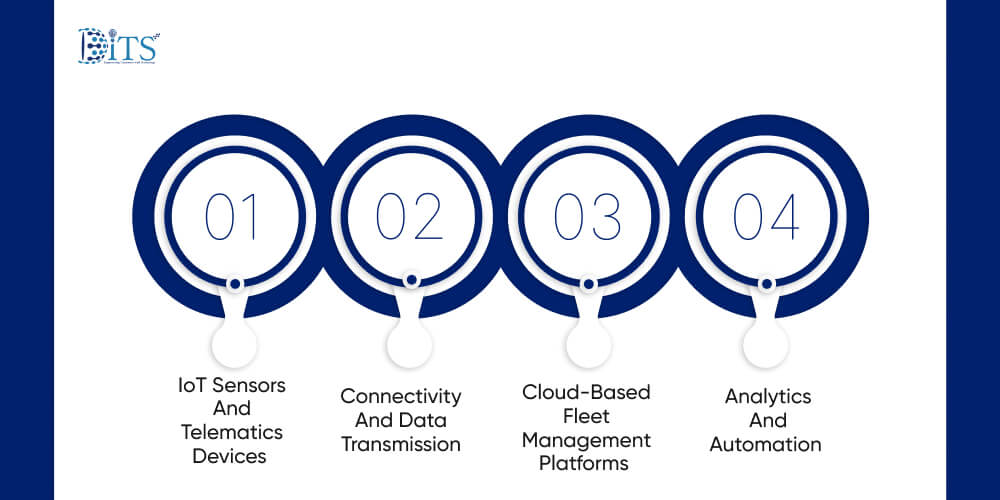
At first glance, connected fleet platforms may look complex. In reality, the system operates through a fairly structured chain of technologies working together. Data starts inside the vehicle, travels through communication networks, and finally lands in cloud dashboards where managers can monitor fleet activity in real time.
When implemented correctly, IoT fleet management solutions create a continuous flow of operational intelligence. Vehicles report their condition, drivers generate behavioral data, and software platforms transform those signals into actionable insights.
Let’s break down how the system functions.
IoT Sensors And Telematics Devices
Every connected fleet begins with hardware installed inside vehicles. These devices collect operational data directly from the vehicle and surrounding environment.
Common components include:
- GPS modules that capture real-time location and route movement
- Engine diagnostic sensors connected to the vehicle’s onboard system
- Accelerometers that detect harsh braking, rapid acceleration, or sharp turns
- Fuel monitoring sensors that measure consumption patterns
This hardware continuously gathers operational data while vehicles remain in service. Instead of waiting for drivers to report issues, the system observes performance automatically. And sometimes it spots problems days before anyone notices them.
Connectivity And Data Transmission
Once vehicle data is captured, it needs to reach a centralized platform. This is where communication networks step in.
Most fleets rely on:
- Cellular networks such as 4G or 5G
- Secure IoT communication protocols
- Encrypted data transfer channels
These technologies allow vehicle sensors to transmit information to cloud systems every few seconds. For a fleet manager monitoring dozens or hundreds of vehicles, this constant stream of updates creates a near real-time operational picture.
On top of that, secure communication layers ensure that sensitive fleet information stays protected while traveling across networks.
Cloud-Based Fleet Management Platforms
After data reaches the cloud platform, the real value begins to appear.
Fleet management dashboards organize incoming information into clear visual insights. Instead of looking at raw data streams, managers can view:
- Live vehicle maps
- Fuel consumption patterns
- Driver behavior scores
- Maintenance alerts
- Fleet utilization reports
Many organizations integrate these platforms with transportation and logistics software so fleet data becomes part of broader operational planning. Dispatch teams, logistics planners, and operations leaders all access the same real-time intelligence.
Analytics And Automation
Raw data alone doesn’t solve business problems. Insight does.
Modern platforms apply analytics engines to interpret fleet activity and detect patterns that humans might miss. For example:
- Predictive alerts when engine components show early signs of failure
- Notifications when drivers exceed safe speed thresholds
- Route optimization suggestions based on traffic patterns
Automation also plays a role here. Maintenance reminders, safety alerts, and performance reports can be triggered automatically based on predefined conditions.
The result is a system that quietly monitors operations in the background while giving managers the ability to intervene exactly when it matters.
And that is the real strength of connected fleet technology. Not just visibility. Operational intelligence that keeps fleets running smoothly.
Key Features of IoT Fleet Management Software
Once businesses deploy a connected fleet platform, the real operational advantages begin to surface. Modern IoT fleet management solution platforms are not just tracking tools. They function as operational command centers that give managers a clear, real-time understanding of how every vehicle in the fleet is performing.
Instead of reacting to problems after they occur, companies gain the ability to monitor, analyze, and optimize fleet performance continuously.
Below are some of the most valuable capabilities businesses rely on.
Real-Time Vehicle Tracking
Fleet managers can monitor vehicle location in real time through GPS-enabled dashboards. Dispatch teams quickly identify delays, reroute drivers when traffic conditions change, and ensure vehicles follow assigned routes.
For businesses managing dozens or even hundreds of vehicles, this level of visibility significantly improves delivery reliability and operational control.
Driver Behavior Monitoring
Driver performance directly impacts safety, fuel efficiency, and maintenance costs.
Connected platforms track behaviors such as:
- Harsh braking
- Rapid acceleration
- Speed violations
- Excessive idling
Managers receive behavioral reports that highlight risky driving patterns. Over time, companies use these insights to train drivers, improve safety standards, and reduce accident risks.
Fuel Consumption Analysis
Fuel often represents one of the largest operating expenses for transportation businesses. Even small inefficiencies can quietly drain budgets.
IoT platforms monitor fuel usage patterns across the entire fleet and help businesses identify issues such as:
- Unnecessary idling
- Inefficient driving patterns
- Route inefficiencies
When companies start adjusting driver habits and routing strategies, the savings can become noticeable within a few months.
Route Optimization and Navigation
Traffic congestion, road closures, and inefficient routing can slow deliveries and increase operational costs.
Connected fleet platforms analyze historical and real-time traffic data to recommend optimized routes. Drivers spend less time stuck in traffic and more time completing deliveries on schedule.
Here’s the kicker. Even a 10 percent improvement in route efficiency can significantly reduce annual fuel consumption across a large fleet.
Preventive And Predictive Maintenance Alerts
Nobody likes unexpected breakdowns, especially when it means stalled deliveries and frustrated clients.
Vehicle sensors continuously monitor engine health, battery status, and mechanical components. When unusual patterns appear, the system generates early maintenance alerts so repairs can be scheduled before a failure occurs.
Asset Utilization Monitoring
Many companies operate vehicles that remain idle for long periods without realizing it. Fleet platforms track vehicle usage and help managers determine whether assets are being fully utilized.
Some vehicles may be overworked. Others barely move.
Balancing asset usage improves operational efficiency and extends vehicle lifespan.
Fleet Performance Analytics and Reporting
Executives and operations teams rely on performance data to make better strategic decisions.
Connected fleet dashboards provide detailed reports covering:
| Fleet Metric | Operational Insight |
| Vehicle utilization | Identifies underused assets |
| Driver safety score | Measures driving behavior risks |
| Fuel consumption trends | Tracks efficiency improvements |
| Maintenance history | Predicts repair cycles |
| Delivery performance | Evaluates route efficiency |
These insights transform fleet management from a reactive process into a strategic operational advantage.
And that is precisely why IoT fleet management use cases are expanding across industries. Businesses are discovering that smarter fleet data leads directly to smarter operational decisions.
Want Better Visibility Across Your Vehicle Fleet Operations?
Track fleet activity, fuel consumption, and vehicle health through scalable IoT platforms designed for efficient operational decision-making processes.
Major Benefits of IoT Fleet Management for Businesses
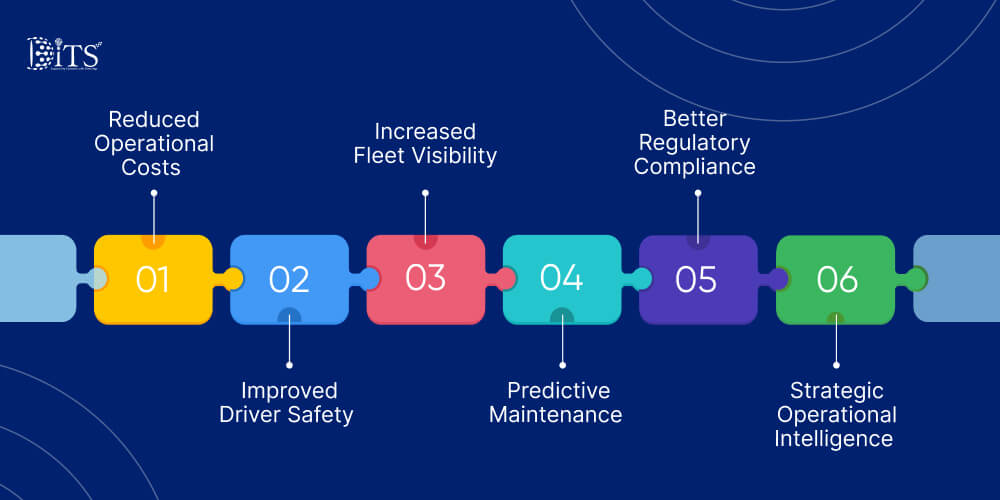
For many companies, fleet operations represent a large portion of operational spending. Vehicles move goods, support field services, and maintain supply chains across states. Yet without connected monitoring systems, many organizations struggle to understand where inefficiencies hide.
That is why businesses increasingly adopt IoT fleet management solutions. These systems don’t just track vehicles. They reveal patterns, risks, and opportunities that were previously invisible to operations teams.
Here are the most meaningful business benefits.
Reduced Operational Costs
Fuel waste, inefficient routing, and reactive vehicle maintenance quietly inflate operating costs.
Connected fleet platforms help businesses identify inefficiencies by monitoring:
- Fuel consumption patterns
- Idle time across vehicles
- Route performance across delivery zones
- Maintenance schedules and mechanical health
When these insights are used consistently, companies often reduce fleet operating costs within the first year of deployment. Some organizations report fuel savings of 10 to 15 percent simply by improving driving behavior and route planning.
Improved Driver Safety
Driver safety has become a critical concern for transportation-heavy industries. Accidents not only put employees at risk but also create liability issues and insurance costs.
Fleet monitoring platforms detect unsafe driving behavior such as speeding, harsh braking, or aggressive acceleration. Managers receive alerts and can intervene early.
Over time, companies use these insights to create safer driving programs. Drivers become more aware of their habits, and accident risks begin to decline.
Increased Fleet Visibility
One of the biggest frustrations for operations teams is limited visibility into daily fleet activity. Vehicles move across cities and states, but managers often rely on delayed updates or manual reporting.
Connected dashboards eliminate that uncertainty.
Fleet managers can see:
- Vehicle location across regions
- Active routes and delivery progress
- Idle vehicles or unexpected stops
- Delays caused by traffic or route changes
This level of transparency helps companies respond quickly when operations deviate from the plan.
Predictive Maintenance
Unexpected breakdowns disrupt schedules, delay deliveries, and frustrate customers. And they usually happen at the worst possible moment.
IoT-powered monitoring tools analyze vehicle health data and detect early warning signs before major failures occur. Maintenance teams receive alerts based on mileage, engine behavior, and diagnostic signals.
Instead of waiting for vehicles to fail, companies shift toward predictive maintenance planning.
Better Regulatory Compliance
Transportation operations must comply with strict regulatory frameworks. Electronic logging device requirements, safety monitoring, and reporting obligations can become complex for large fleets.
Connected fleet platforms simplify compliance by automatically recording vehicle activity, driver hours, and operational data. Reports can be generated instantly when regulators request documentation.
For many companies, this capability alone reduces administrative workload significantly.
Strategic Operational Intelligence
Perhaps the most overlooked benefit is long-term operational insight.
When fleet data is analyzed over months and years, executives begin to see deeper patterns in delivery performance, vehicle utilization, and operational costs. These insights often influence larger technology decisions, including investments in supply chain management software that align transportation operations with inventory and logistics planning.
In other words, connected fleets do more than improve daily operations. They help businesses make smarter strategic decisions.
Core Technologies Behind IoT Fleet Management Software
Behind every connected fleet platform sits a stack of technologies working quietly in the background. Vehicles collect operational data, networks transmit that information, and cloud systems analyze it to produce real-time insights for managers.
When businesses implement an IoT fleet management solution, they are essentially building a connected ecosystem where vehicles, software platforms, and analytics engines communicate continuously. The goal is simple: transform vehicle activity into actionable operational intelligence.
Here are the core technologies that make this possible.
IoT Sensors And Telematics Hardware
Hardware devices installed inside vehicles act as the primary data collectors. These sensors interact with the vehicle’s onboard systems and capture operational metrics in real time.
Typical telematics components include:
- GPS tracking modules
- Engine diagnostic sensors connected to onboard diagnostics systems
- Accelerometers that monitor driving patterns
- Fuel monitoring devices
- Environmental sensors measuring temperature or load conditions
These devices generate a steady stream of operational data that forms the foundation of connected fleet systems.
GPS And Geolocation Systems
Location tracking remains one of the most critical components of fleet monitoring.
Modern GPS technology provides accurate vehicle positioning and movement tracking across cities, highways, and remote regions. Fleet managers can view vehicle routes, detect unauthorized stops, and monitor delivery timelines through centralized dashboards.
Over time, route history data helps companies analyze delivery performance and optimize logistics planning.
Cloud Computing Platforms
Once vehicle data is captured, it must be processed and stored in scalable infrastructure.
Cloud-based platforms handle this responsibility by collecting vehicle signals from thousands of devices simultaneously. These platforms provide:
- Centralized fleet dashboards
- Real-time monitoring interfaces
- Large-scale data storage
- Integration capabilities with enterprise software
For companies managing large fleets, cloud platforms make it possible to monitor operations from a single control center.
Data Analytics And AI-Driven Insights
Collecting data alone is not enough. Businesses need meaningful insights.
Advanced analytics engines examine fleet data to identify patterns related to safety risks, operational inefficiencies, and maintenance needs. Predictive models can forecast mechanical failures, detect abnormal driving behavior, and suggest route improvements.
At DITS, these analytical capabilities go even further. Our development teams integrate artificial intelligence directly into software platforms to enhance software development, strengthen quality assurance processes, maintain code quality, and enable deeper customization for business needs. AI becomes part of the engineering process itself, not just a feature added afterward.
Mobile Fleet Management Applications
Operations teams rarely stay inside an office. Drivers, technicians, and dispatch managers need access to fleet data while on the move.
Mobile fleet management applications allow users to:
- Track vehicles from smartphones or tablets
- Receive alerts about maintenance or route changes
- Communicate with drivers in real time
- Review performance reports remotely
Many organizations complement these systems with expert guidance from IT consulting service providers to ensure that fleet platforms integrate smoothly with existing enterprise systems.
When all these technologies operate together, companies gain far more than vehicle tracking. They gain operational clarity, faster decision making, and the ability to manage complex fleets with confidence.
Need Smarter Fleet Management For Business Growth Today?
Build connected fleet systems with predictive maintenance, driver monitoring, and real-time analytics for better transportation and logistics performance.
Why Choose DITS For IoT Fleet Management Software Development
Selecting the right technology partner can make a noticeable difference in how successfully a fleet platform performs after deployment. Fleet monitoring systems must handle large volumes of vehicle data, integrate with existing enterprise platforms, and remain reliable even as fleet size grows.
At DITS, our engineering teams design scalable IoT fleet management solutions tailored to real operational workflows rather than generic tracking tools. The focus remains on building systems that deliver measurable business value for logistics companies, service providers, and transportation operators.
Key strengths of our development approach include:
- Custom-built fleet monitoring platforms aligned with business processes
- Integration with telematics hardware, GPS systems, and analytics dashboards
- Secure cloud architecture designed to support large vehicle networks
- Flexible APIs for connecting platforms with existing enterprise systems
Artificial intelligence also plays a role in how we engineer our platforms. At DITS, AI supports software development workflows, strengthens quality assurance processes, maintains code quality, and helps enable advanced customization. By integrating AI throughout the engineering lifecycle, we ensure every solution remains efficient, reliable, and adaptable to changing business needs.
Organizations seeking specialized expertise in connected fleet technologies often combine platform development with broader IT consulting support to align software systems with long-term operational strategy.
The result is a fleet platform that not only tracks vehicles but actively supports smarter operational decisions.
Conclusion
Fleet operations today operate under constant pressure. Rising fuel prices, tighter delivery timelines, and strict compliance requirements leave little room for inefficiencies. Businesses that still rely on manual reporting or basic vehicle tracking often struggle to maintain operational visibility across large fleets.
An effective IoT fleet management strategy allows companies to monitor vehicle activity in real time, improve driver safety, reduce fuel waste, and detect maintenance issues before they become expensive breakdowns. Over time, these insights help organizations move from reactive fleet management to proactive operational control.
And when those improvements begin to compound month after month, fleet management stops being a cost center. It becomes a strategic operational advantage.
Frequently Asked Questions
How long does it take to implement IoT fleet management software?
Implementation timelines depend on fleet size, hardware installation requirements, and system integrations. A small pilot deployment for 20 to 30 vehicles may take around 6 to 10 weeks, including sensor installation and platform configuration. Larger enterprise deployments with hundreds of vehicles and system integrations may take 3 to 6 months for full rollout.
What types of vehicles can use IoT fleet management systems?
IoT fleet monitoring systems can be deployed across almost any vehicle category. Common examples include delivery vans, long-haul trucks, construction equipment, field service vehicles, and utility fleets. The system adapts to different vehicle types through telematics hardware and configurable monitoring software.
How can DITS support IoT fleet platform development?
DITS offers IoT fleet management software development services to help businesses design and deploy custom fleet monitoring platforms that integrate telematics devices, GPS tracking, and analytics dashboards. Our development approach focuses on building scalable systems that support real-time monitoring, predictive maintenance insights, and integration with existing enterprise platforms.
Can IoT fleet systems integrate with existing business software?
Yes, most modern fleet platforms are designed to integrate with enterprise tools such as logistics platforms, dispatch systems, and operational dashboards. Through APIs and secure cloud architecture, fleet data can flow into broader operational systems to improve planning and decision making.
Why should businesses choose DITS for fleet management platform development?
Businesses partner with DITS IoT fleet management software development services because we design tailored fleet platforms rather than generic tracking tools. Our engineering teams focus on scalable architecture, secure cloud infrastructure, and intelligent analytics capabilities that help organizations gain deeper operational visibility and long-term efficiency improvements.

Dinesh Thakur
21+ years of IT software development experience in different domains like Business Automation, Healthcare, Retail, Workflow automation, Transportation and logistics, Compliance, Risk Mitigation, POS, etc. Hands-on experience in dealing with overseas clients and providing them with an apt solution to their business needs.
Recent Posts
Explore how prior authorization software uses AI to automate workflows, reduce administrative effort, improve request accuracy, streamline approvals, and minimize treatment delays for healthcare organizations.
Discover how AI to improve patient experience in hospitals streamlines scheduling, communication, triage, queue management, and personalized care while enhancing operational efficiency.
Learn how IoT powers smart factories with connected devices, automation, predictive maintenance, and analytics.