Cost to Implement Conversational AI in healthcare: Factors, Pricing, and ROI Explained
Table Of Content
Published Date :
22 Apr 2026
Key Takeaways
- Cost varies based on scope, integrations, and complexity
- Small clinics can start with low-budget implementations
- Enterprise deployments require long-term investment planning
- Integration with existing systems significantly impacts cost
- Hidden costs often come from compliance and change management
- ROI is driven by efficiency, cost savings, and patient experience
- Starting with focused use cases delivers faster returns
- Technology choice and vendor expertise influence success
Healthcare leaders are no longer asking whether to adopt AI. The real question is how much it will cost and what value it will deliver. According to a report by McKinsey, AI could generate up to $150 billion annually for the healthcare industry by 2026 . That number alone explains why hospitals and clinics are moving fast.
But here’s the challenge. Many decision-makers step into implementation without a clear view of the financial landscape. And that’s where things start to get complicated.
The cost to implement conversational AI in healthcare is not a fixed number. It varies widely based on complexity, integrations, and long-term goals. Some organizations spend a few thousand dollars. Others invest six figures or more.
This blog breaks it down. It explains, what drives the cost, how pricing models work, and what kind of returns businesses can realistically expect. It shares practical insights that help companies make informed decisions.
Why Healthcare Organizations are Investing in Conversational AI
Walk into any modern hospital today, and you’ll notice one thing immediately. The front desk is usually overwhelmed will customer queries. Patients expect quick answers, not long hold times.
This is exactly where healthcare conversational AI starts making a difference.
Healthcare organizations are investing in this technology not just for innovation, but for survival in a highly competitive and resource-constrained environment.
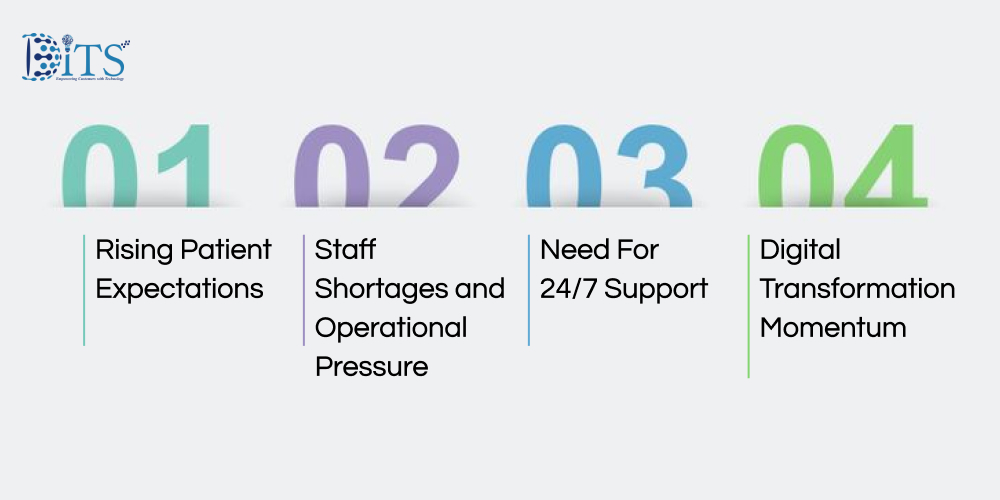
Rising Patient Expectations
Patients today behave more like consumers. They expect instant responses, easy scheduling, and clear communication.
A conversational interface, whether chat or voice, solves this by offering immediate assistance. It feels simple, but the impact is significant.
Staff Shortages and Operational Pressure
There’s a growing gap between patient demand and available staff. Administrative teams are stretched thin, often handling repetitive queries all day.
Automating routine interactions allows staff to focus on critical tasks. And frankly, that shift alone can reduce burnout.
Need For 24/7 Support
Healthcare doesn’t operate on a 9-to-5 schedule. Patients need help at odd hours, especially for urgent concerns or follow-ups.
Conversational systems ensure round-the-clock availability without increasing staffing costs. That’s a direct operational advantage.
Digital Transformation Momentum
Hospitals and clinics are already investing in AI in healthcare to modernize their systems. Conversational interfaces naturally fit into this transformation, acting as the front layer of patient interaction.
On top of that, these systems integrate with existing platforms, creating a more connected experience rather than adding another silo.
Where should you start with healthcare AI adoption?
Get strategic guidance on selecting the right use cases, minimizing risk, and accelerating time-to-value with a focused implementation roadmap.
Key Factors affecting Cost to Implement Conversational AI In Healthcare
When it comes to the cost of conversational AI, business executives often expecting a clean number. However, the investment depends on multiple moving parts, each influencing the final budget in a meaningful way.
Let’s break this down into what actually drives the cost.
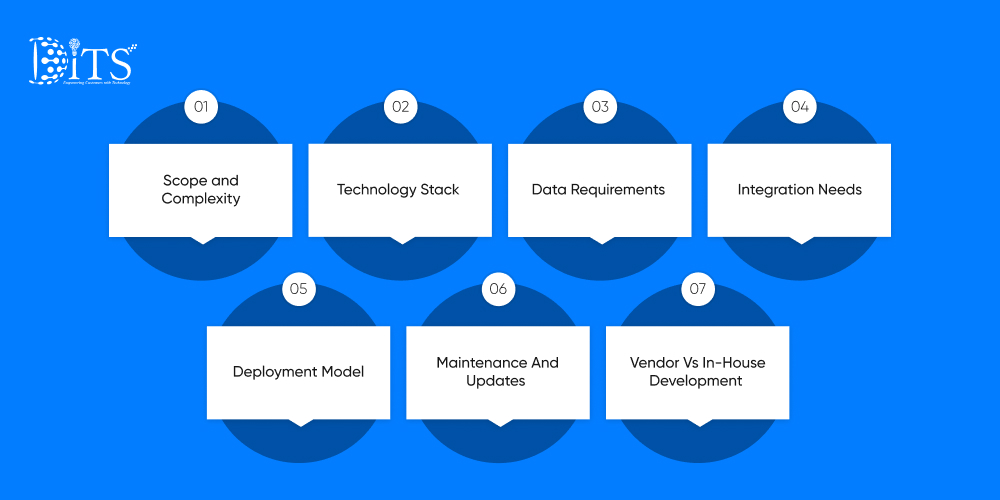
Scope and Complexity
A simple chatbot that handles appointment booking and FAQs may take a few weeks to deploy. But an advanced assistant that supports clinical triage, integrates with multiple systems, and understands context across conversations? That’s a completely different scale.
More use cases mean:
- More workflows to design
- More training data to process
- More testing cycles
And naturally, higher costs.
Technology Stack
The choice between pre-built platforms and custom development plays a big role.
- Pre-built solutions are faster and cheaper to deploy
- Custom-built systems offer flexibility but require deeper investment
The sophistication of the NLP engine also matters. Basic intent recognition is affordable. Context-aware, multi-language understanding is not.
Integration with EHR or EMR systems further adds complexity. These are sensitive environments where accuracy and compliance are non-negotiable.
Data Requirements
Data is the backbone of any conversational AI technology in healthcare.
If your organization already has structured datasets, you’re in a good position. If not, expect additional effort in:
- Data collection
- Annotation
- Validation
Then comes compliance. Handling patient data means aligning with strict regulations. Security infrastructure, encryption layers, and audit mechanisms all contribute to cost.
Integration Needs
This is where many projects quietly expand in scope.
Connecting the AI system with:
- EHR systems
- CRM platforms
- Billing tools
Requires APIs, middleware, and often custom connectors.
Each integration point adds development time, and legacy systems can slow things down even further.
Deployment Model
The deployment approach directly impacts both upfront and ongoing costs.
- Cloud-based solutions offer scalability and lower initial investment
- On-premise setups provide control but require infrastructure and maintenance
SaaS models spread the cost over time, while self-hosted systems demand higher initial capital.
Maintenance And Updates
Launching the system is only half the journey.
Ongoing costs include:
- Model retraining
- Performance monitoring
- Feature updates
Without continuous improvement, even the best system starts losing accuracy over time.
Vendor Vs In-House Development
- This decision often comes down to long-term strategy
- Vendors bring speed and expertise
- In-house teams offer control and customization
At DITS, for example, we approach this with a hybrid mindset. Our AI software development process integrates AI not just at the interface level but across the entire system. From quality assurance to maintaining code standards and enabling deep customization, AI becomes part of the foundation rather than an add-on.
So, what’s the takeaway?
There’s no universal price tag. The cost to implement conversational AI in healthcare is shaped by your ambition, your infrastructure, and how deeply you want AI embedded into your operations.
How much could AI reduce your operational costs?
Discover tailored cost estimates, efficiency gains, and ROI projections specific to your healthcare workflows and patient engagement requirements.
Estimated Cost Breakdown
Now comes the question every executive eventually asks. What does this actually cost?
The answer depends on scale. A small clinic and a multi-location hospital network will not operate in the same budget range. Still, there are realistic benchmarks that can guide initial planning.
| Organization Type | Estimated Cost Range (USD) | Typical Scope |
| Small Clinics | $5,000 – $25,000 | Basic chatbot, appointment scheduling, FAQs |
| Mid-Sized Hospitals | $30,000 – $100,000 | Multi-use case bots, integrations with EHR/CRM |
| Large Healthcare Systems | $120,000 – $300,000+ | Advanced AI assistants, full system integration, analytics |
What Drives These Numbers
For smaller setups, the focus is usually on quick wins. Automating front-desk queries, reducing call volumes, and improving response time. These projects move fast and stay within a controlled budget.
Mid-sized organizations often expand into multiple workflows. Think patient onboarding, insurance queries, and follow-ups. Integration costs start becoming visible here.
Large enterprises take a different route. They aim for deep integration, predictive capabilities, and long-term scalability. And yes, that comes with a higher price tag.
A Quick Reality Check
The upfront cost is only part of the story.
Ongoing expenses such as system upgrades, retraining models, and scaling usage often account for 20% to 30% of the initial investment annually.
Organizations that plan for this from the start avoid unpleasant surprises later.
In simple terms, the cost to implement conversational systems is less about the technology itself and more about how extensively you want to use it. Start small, expand smart. That approach tends to deliver better financial control and faster returns.
Hidden Costs to Consider
Most budgets look clean on paper. Development cost, integration cost, deployment cost. Everything seems predictable.
But once implementation begins, a few less obvious expenses start surfacing. And if they are not accounted for early, they can stretch timelines and budgets.
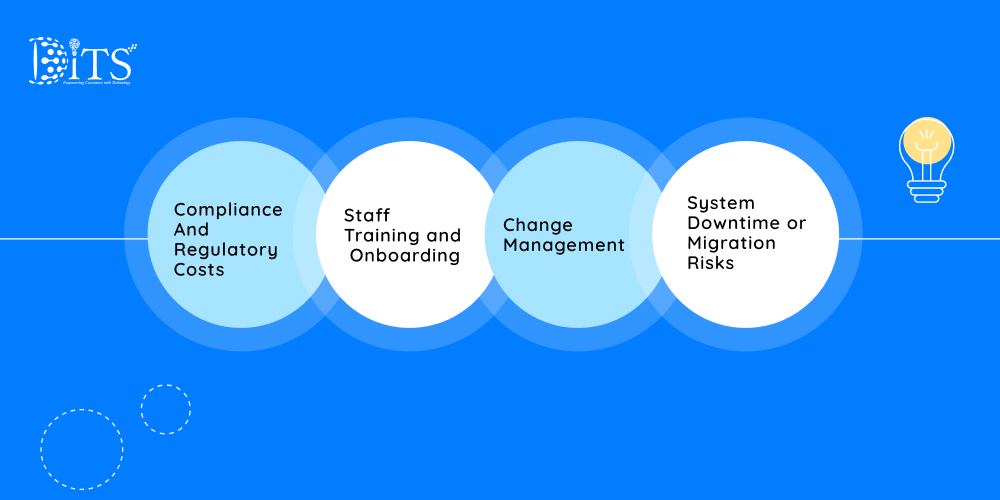
Compliance And Regulatory Costs
Healthcare operates under strict regulations. Whether it’s HIPAA or regional data protection laws, compliance is not optional.
This often requires:
- Additional security layers
- Audit trails and logging systems
- Regular compliance checks
These are not one-time efforts. They require ongoing investment.
Staff Training and Onboarding
Even the best system fails if teams don’t use it effectively.
Administrative staff, support teams, and sometimes even clinicians need training to work alongside AI systems. This includes:
- Understanding workflows
- Handling escalations
- Managing exceptions
And yes, training takes time. Time translates to cost.
Change Management
Introducing AI into healthcare operations isn’t just a technical shift. It’s a cultural one.
Some teams resist change. Others worry about job roles. Without proper change management strategies, adoption slows down.
Organizations often need workshops, internal communication plans, and leadership alignment to ensure smooth transitions.
System Downtime or Migration Risks
When integrating with legacy systems, things don’t always go as planned.
There can be:
- Temporary disruptions
- Data migration challenges
- Performance issues during initial rollout
Nobody likes costly surprises. Especially when it affects patient experience.
So, while planning budgets, it’s worth asking a simple question. What could go wrong, and what would it cost to fix it?
Because in most cases, hidden costs are not really hidden. They’re just underestimated.
Looking for a scalable AI solution for healthcare?
Explore customized conversational AI solutions designed to integrate seamlessly with your systems while ensuring compliance, security, and long-term scalability.
Why Choose DITS For Conversational AI In Healthcare
Choosing the right partner often matters more than the technology itself. Many projects fail not because the idea was wrong, but because execution lacked depth.
At DITS, the approach is slightly different. We don’t treat AI as an add-on feature. We build it into the core of every solution.
Our expertise in software development allows us to understand both the technical and operational challenges healthcare providers face. From patient workflows to compliance requirements, every layer is considered during development.
Here’s how we create value:
- AI-driven development approach: We use AI not just in the final product but throughout the development lifecycle, including coding, testing, and quality assurance
- Strong customization capabilities: Every organization has unique workflows. We tailor solutions instead of forcing generic templates
- Scalable architecture: Systems are designed to grow with your organization, avoiding costly rebuilds later
- Deep integration expertise: Seamless connectivity with EHRs, CRMs, and billing systems ensures smooth operations
Our broader capabilities in AI solutions for enterprise also help organizations align conversational systems with larger digital transformation goals.
The focus is simple. Build solutions that are practical, compliant, and ready for real-world healthcare environments. Not just prototypes that look good in demos.
Conclusion
Understanding the cost of implementing AI in healthcare is not just about numbers. It’s about clarity.
From scope and technology choices to hidden expenses and long-term returns, every factor plays a role in shaping the final investment. Organizations that take the time to evaluate these elements upfront tend to make better decisions and avoid unnecessary setbacks.
The cost to implement conversational AI in healthcare will continue to evolve. But one thing remains constant. Value comes from how effectively the technology is used, not just how much is spent.
For decision-makers, the goal should be clear. Start with defined objectives, invest strategically, and scale based on measurable outcomes.
Because in the end, it’s not about adopting AI. It’s about making it work where it matters most.
FAQs
What is the average cost to implement conversational AI in healthcare?
The cost can range from $5,000 for basic solutions to over $300,000 for enterprise-level systems. The final amount depends on complexity, integrations, and scale.
How long does implementation take?
A simple deployment may take 3 to 6 weeks. More advanced systems with multiple integrations can take 3 to 6 months or longer.
Is conversational AI secure for healthcare data?
Yes, provided it is built with proper compliance standards such as HIPAA and includes strong encryption and access controls.
Can small clinics afford conversational AI?
Absolutely. With SaaS-based models and modular deployments, even small clinics can start with limited budgets and scale gradually.
How does DITS support AI in healthcare development for businesses?
DITS approaches AI in healthcare development with a strong focus on real-world usability. Instead of offering generic solutions, the team builds systems tailored to specific clinical and operational workflows. From initial AI consulting to deployment, every stage is aligned with compliance, scalability, and performance. This ensures that healthcare providers not only implement AI successfully but also see measurable outcomes in efficiency and patient engagement.
Why choose DITS for AI in healthcare development projects?
DITS combines deep domain expertise with advanced engineering practices to deliver reliable solutions. Their experience in AI solutions for enterprise allows them to design systems that integrate smoothly with existing healthcare infrastructure. Additionally, AI is embedded throughout the development lifecycle, including testing and quality assurance, which helps maintain high code quality and long-term system stability.

Nidhi Thakur
With more than 19 years of experience - I represent a team of professionals that specializes in the healthcare and business and workflow automation domains. The team consists of experienced full-stack developers supported by senior system analysts who have developed multiple bespoke applications for Healthcare, Business Automation, Retail, IOT, Ed-tech domains for startups and Enterprise Level clients.
Recent Posts
Explore how prior authorization software uses AI to automate workflows, reduce administrative effort, improve request accuracy, streamline approvals, and minimize treatment delays for healthcare organizations.
Discover how AI to improve patient experience in hospitals streamlines scheduling, communication, triage, queue management, and personalized care while enhancing operational efficiency.

Learn how IoT powers smart factories with connected devices, automation, predictive maintenance, and analytics.